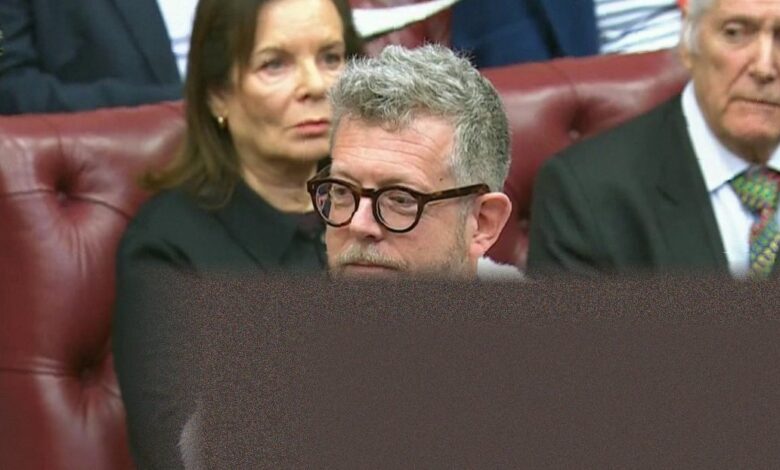
The government has announced it will introduce legislation to allow peerages to be removed in cases of misconduct, a step that is not possible under current rules. The bill is specifically designed to ensure the peerage of Peter Mandelson can be taken away, but it is likely to establish a general mechanism for such cases, as detailed by The Guardian.
This move comes amid controversy over the peerage of Matthew Doyle, following allegations that he did not disclose having campaigned for someone charged with sex offences before his appointment was announced. At a post-PMQs briefing, a No 10 spokesperson ducked questions on whether Doyle could lose his peerage, stating they would not comment to avoid getting ahead of an internal Labour investigation into the matter.
Pressed on why the government did not block Doyle’s peerage after a Sunday Times story revealed he had campaigned for a council candidate accused of possessing indecent images of children—a report published after the peerage announcement but before he took his seat—No 10 said there was “no established precedent for withdrawing a peerage nomination after the announcement stage.” The spokesperson added that this was why the government is “undertaking wider reform to both vetting and appointment processes.”
In a separate Tory briefing, a spokesperson for Kemi Badenoch stated that Matthew Doyle should never have been offered a peerage in the first place. The spokesperson claimed it would have been possible to withdraw Doyle’s peerage after it was announced but before he was sworn in, given that the Sunday Times had published the story by that time. However, when asked why this was not done, No 10 reiterated there was no precedent. The Badenoch spokesperson declined to say whether the party would like Doyle to lose his peerage.
Some senior Tories have expressed concern over the proposed bill, as they are not comfortable with the principle of a government using legislation to punish individuals viewed as political opponents.
Elsewhere, female Labour MPs have told Keir Starmer to appoint a woman as first secretary of state—a de facto deputy prime minister serving alongside David Lammy—to oversee a “complete culture change” in Downing Street, according to a report by Alexandra Topping.
At Prime Minister’s Questions, Keir Starmer displayed a more angry and combative style than usual. He told Kemi Badenoch that “only four people have ever led the Labour party to victory in a general election. I am one of them,” and was described as being in “full Labour tribalism mode” when criticising the Lib Dems. However, when Badenoch raised the Matthew Doyle case in her third question, Starmer was thrown on the defensive, resorting to distraction tactics. Both Ed Davey, the Lib Dem leader, and Stephen Flynn, the SNP leader at Westminster, also raised the Doyle case, with Flynn’s soundbites noted as particularly effective.
During the session, Ayoub Khan, an independent MP, made a joke about rubbish building up “right beneath my very nose,” referring to a bin strike in Birmingham and the Reform UK MPs sitting in front of him, which prompted loud laughter. Starmer responded that he hoped the strike would be resolved.
In other exchanges, Starmer addressed various issues: he thanked Bob Blackman for raising a school stabbing in Brent and agreed on the need to tackle knife crime; said he would look into Tom Tugendhat’s concern about civil servants taking bridging loans for retirement; mentioned a growth plan for Cambridge in response to Daniel Zeichner; committed to examining James Wild’s query about a foreign offender’s early release; endorsed community-based decisions when asked by Preet Kaur Gill about the Pride in Place programme; noted investment in flood defences for Caroline Voaden’s coastal erosion question; and stated the government is considering mandatory CCTV in nurseries after Munira Wilson’s inquiry.