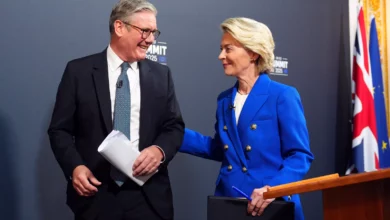
The escalating conflict between the United States and Iran has thrust the UK economy into a precarious position, with households and financial markets bracing for a fresh wave of inflationary pressure driven by soaring energy costs. With oil prices experiencing violent swings and the vital Strait of Hormuz under threat, the government is facing urgent calls to shield consumers from a potential “Donald Trump-made cost of living crisis,” as the Trades Union Congress has termed it.
Chancellor Rachel Reeves delivered a stark warning to MPs, stating the situation in the Middle East is “likely to put upward pressure on inflation in the coming months.” Her assessment came after a day of dramatic volatility which saw the price of Brent crude oil, the international benchmark, rocket to $119.50 a barrel—a 29% jump—before falling back below $90 after former US President Donald Trump suggested the conflict might end soon.
Energy markets on a knife-edge
At the heart of the economic threat is the UK’s vulnerability to disruptions in global energy supplies, despite government claims of improved resilience. The Strait of Hormuz, a narrow chokepoint at the mouth of the Persian Gulf, is the conduit for approximately 20% of the world’s oil and liquefied natural gas (LNG). The UK, while not a direct importer from Iran, sources gas from the Middle East and its wholesale energy prices are tethered to these volatile global benchmarks.
The conflict has already triggered a 50% spike in UK wholesale energy prices. Iran’s security chief, Ali Larijani, has explicitly linked the security of the strait to the war, stating on social media that safe passage would not be restored “amid the fires ignited by the United States and Israel in the region.” Analysts believe Iran aims to inflict enough economic damage through restricted oil flows and attacks on energy infrastructure to force the US to end its offensive.
For most UK households, the immediate sting will be blunted by the Ofgem energy price cap. However, about 1.5 million homes off the gas grid—unprotected by that cap—face a dire situation. A report by the Labour Rural Research Group found some rural households have seen the price of heating oil surge by up to 117% in mere days since the war began. Jenny Riddell-Carpenter, the MP for Suffolk Coastal, warned thousands of families now fear being unable to afford to heat their homes.
Inflation forecasts revised upwards
The prospect of prolonged conflict is forcing economists to recalibrate their forecasts. The British Chambers of Commerce (BCC) now predicts UK Consumer Prices Index (CPI) inflation will be at 2.7% by the end of 2026, a significant rise from its previous forecast of 2.1%. This elevated path is directly linked to higher oil and gas prices. Consequently, hopes for a Bank of England interest rate cut have been scaled back, with the central bank now expected to hold rates through 2026, with a possible rise in 2027.
The economic fallout extends beyond inflation. The BCC has also downgraded its UK GDP growth forecast for 2026 to 1%, from 1.2%, as the prospect of a prolonged conflict pushes global markets lower. Public anxiety is palpable: a YouGov poll found 74% of Britons expect the conflict to negatively impact their household finances, with over a third anticipating a “very” negative effect.
In response, the Chancellor has ordered the Competition and Markets Authority to vigilantly monitor fuel pump and domestic heating oil prices to prevent wartime profiteering. “Let me be absolutely clear: I will not tolerate any company exploiting the current crisis to make excess profits at consumers’ expense,” Reeves told the Commons. She also revealed the Treasury is ready to support a coordinated release of International Energy Agency (IEA) oil reserves, a measure discussed with G7 finance ministers.
Such a release, which could involve 300-400 million barrels, typically takes weeks to affect physical supply but can calm markets immediately upon announcement. Prime Minister Keir Starmer added that while a long-term war would affect everyone, the government would seek to “get ahead” of prolonged conflict, suggesting intervention at the next energy price cap.
Political battle over fuel duty
Despite these measures, pressure is mounting on the government to offer more direct relief. Over 40 Labour MPs in rural seats have highlighted the crisis facing off-grid households, calling for an energy price cap for them. Yet the Chancellor has rebuffed calls to abandon a planned 5p rise in fuel duty scheduled for September—the first increase in 15 years.
Defending the decision, Reeves argued drivers would still pay less overall due to the long freeze, but the political confrontation is set. The Conservatives have tabled a motion in Parliament seeking to block the rise, aiming to force Labour MPs to publicly choose sides.
Reeves struck a note of defensive optimism regarding the UK’s preparedness, stating, “Our energy system is now more secure than it was at the outset of the Russia-Ukraine conflict… we are less reliant on and less exposed to volatile international energy prices.” However, this assertion contrasts with a 2022 report which identified the UK as the most susceptible country in Europe to price shocks caused by changes in gas supply.
As US and Israeli warplanes launched new strikes and crowds gathered in Tehran, the geopolitical trigger for this economic uncertainty showed no sign of abating. With the AA advising drivers to consider cutting non-essential journeys, and the TUC demanding the government “pull out all the stops,” the Chancellor’s call for a “rapid de-escalation” is rooted in an acute domestic economic reality. The path of inflation, and the political cost of managing it, now hinges heavily on events thousands of miles away in the Persian Gulf.