Sadiq Khan has issued a stark warning to his own party following a seismic by-election defeat, declaring that Labour’s strategy of taking progressive voters for granted is “flawed” and risks opening the door to the “darkness and division” of a Trump-inspired right.
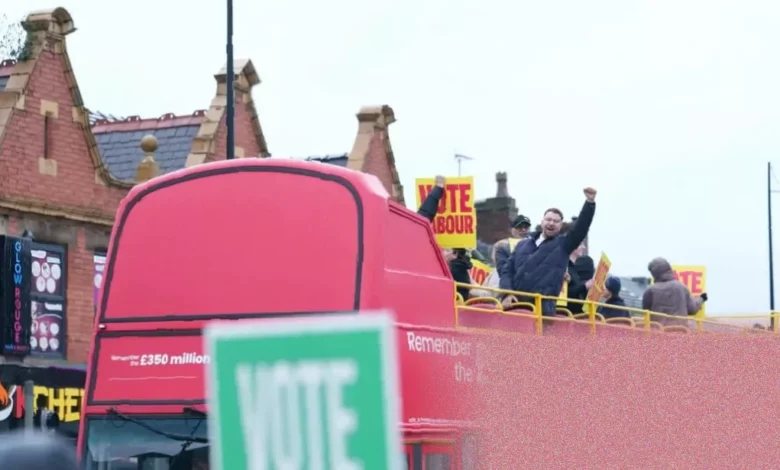
The Mayor of London’s intervention comes after the Green Party’s Hannah Spencer overturned a Labour majority of more than 13,000 to win the Gorton and Denton by-election on February 26, 2026. The plumber and Trafford councillor took 40.7% of the vote, marking the Green Party’s first by-election victory and securing its fifth MP in a seat Labour had held for nearly a century.
Labour’s candidate, Angeliki Stogia, came a humiliating third with just 25.4% of the vote, behind Reform UK’s Matt Goodwin on 28.7%. The result, the seventh largest Labour majority overturned in a by-election since World War II, has exposed deep fractures within the party and the wider political landscape.
In a Guardian article published on March 1, Khan wrote there was “no sugar-coating” the result, which he said spoke to “a far-reaching change and fracturing in our politics”. He challenged Prime Minister Keir Starmer’s branding of the Green Party and its policies as “extreme,” arguing that many of its supporters shared Labour’s values but were “disappointed with the government”.
“Calling them extreme will only turn more people away,” Khan stated, directly confronting a key line of attack from the Labour leadership. His comments highlight a long-standing internal divide, with Labour insiders having warned for some time that the party risks losing support on the left as it attempts to combat the rise of Reform UK.
The Green Party’s ascent under its new leader, Zack Polanski, has capitalised on this disillusionment. Polanski, who describes his politics as “eco-populist” and aims to attract former Labour voters, has been scathing of the government’s direction. He has accused Labour of echoing “the racist rhetoric of the far right” with its hardline immigration policies—a charge given weight by the Home Secretary’s planned reforms.
A Battle for the Progressive Vote
Shabana Mahmood is expected to double down on asylum policy changes inspired by Denmark’s system, which would make refugee status temporary and increase the wait for permanent residency to 20 years. She argues controlling migration is consistent with Labour values, but the approach has drawn fierce criticism from unions like Unison and left-leaning MPs.
Human Rights Watch has described the policy as a “profound retreat from the humane, pragmatic approach Labour promised voters,” creating a system of “managed insecurity”. For Khan, such a stance is emblematic of a disastrous strategic miscalculation. “Staying quiet on these issues and trying to compete with Reform on the right of politics not only feels inauthentic… but a betrayal of what Labour is supposed to represent,” he wrote.
He framed the threat in stark terms, warning that without a change in course, Labour faced an “existential threat” in parts of the country and risked losing large strongholds, just as it did in Scotland in the 2000s. The upcoming May elections, he cautioned, could bring “catastrophe” with Labour projected to lose hundreds of council seats in England and suffer bruising defeats in Scotland and Wales.
Polls for the Scottish Parliament election suggest a fragmented contest where the SNP may fall short of a majority, Labour’s momentum has reversed, and Reform UK is expected to make significant gains. In Wales, projections indicate Plaid Cymru and Reform UK could emerge as the largest parties, a dramatic shift from Labour’s former dominance.
The Shadow of Trump and ‘Project 2025’
Central to Khan’s warning is the nature of the party he believes Labour is mistakenly trying to challenge. He characterised Reform UK as a force that “takes Donald Trump as its inspiration,” a description borne out by its rhetoric and policy platform. The party has described immigration as an “invasion” and a “national emergency,” language reminiscent of Trump, and has promised an “ICE-style force” for mass deportations on Britain’s streets.
Reform UK leader Nigel Farage is a vocal Trump supporter, calling him an “inspiration,” and the party’s candidate in Gorton and Denton, Matt Goodwin, has discussed importing the authoritarian “Project 2025” blueprint—a plan for a potential second Trump presidency—into Britain. Critics, including Amnesty International UK, have warned such “Trump-inspired plans” risk fostering fear, aggressive raids, and discrimination.
“If we don’t unite progressives, we risk opening the door to the darkness and division of Reform,” Khan wrote, arguing that authenticity in defending progressive values was the only credible response. He pointed to his own re-election campaign for Mayor in 2024, where he pledged to build 40,000 new council homes, freeze TfL fares, and increase police numbers, while standing up for “equality, inclusion and respect for diversity”.
This included, he noted, calling out Trump for “racism and sexism” and lobbying for the UK to rejoin the EU customs union—positions that have at times put him at odds with the national party leadership, such as during the controversy over the expansion of London’s Ultra Low Emission Zone.
While Khan stopped short of calling for Starmer to resign—saying political instability at the top was not in the national interest—he made clear his view that the Prime Minister’s “good work” had been overshadowed by “missteps and political positioning”. He described Labour’s first year in government since July 2024 as difficult, with the party “2-0 down” amid slumping poll numbers, but insisted there was time to turn things around with “real change and a vision that provides hope”.
The resounding victory of Hannah Spencer, a political outsider who focused her campaign on the cost of living and inequality, and the rise of Zack Polanski’s “eco-populist” Greens, have redrawn the battlefield. For Sadiq Khan, the lesson from Gorton and Denton is unambiguous: Labour must abandon its flawed strategy or face being permanently displaced from the heart of Britain’s progressive politics.