Nine in 10 parents in the UK support an under-16 social media ban, according to official consultation figures, as the government prepares to announce its decision on a potential age limit for “high-risk” platforms next week. The scale of parental backing emerges from the consultation “Growing up in the online world”, which ran from March to May 2026 and received more than 116,000 responses. The government is expected to confirm an under-16 age limit for platforms deemed most harmful, alongside restrictions on features such as livestreaming, autoplaying video and infinite scrolling.
The strength of parental concern reflects widespread anxiety about the impact of social media on children’s mental health. Studies in the UK have found weak associations between heavy social media interaction and declines in life satisfaction, happiness and well-being, particularly among females, with increased rates of anxiety, depression, poor sleep and body image issues. The Royal Society for Public Health has linked platforms such as Snapchat, Facebook, Twitter and Instagram to higher levels of depression, loneliness and poor body image. Parents also cite risks including cyberbullying, exposure to harmful content, online predators, and interference with brain development and academic performance.
Teenagers’ Mixed Responses
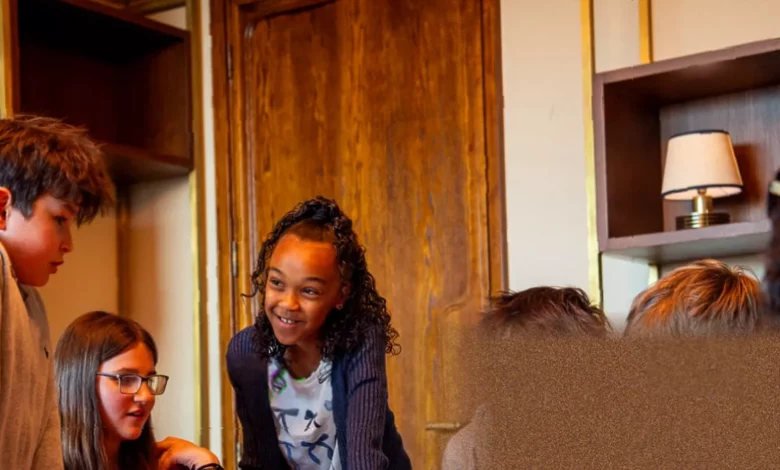
Among the children who would be directly affected, opinions are far more divided. A group of 12- to 16-year-olds in west London offered a spectrum of views — from support for a full Australia-style ban to calls for mandatory time limits and tougher content monitoring. Many acknowledged the dangers but argued that outright prohibition would be too blunt an instrument.
Precisa, 13, runs a roll-on deodorant business in her spare time and uses TikTok and Instagram for marketing. She also serves as deputy youth mayor of the London borough of Hammersmith and Fulham, where social media helps publicise the youth council’s work. “It will definitely be much, much harder to [run the business] without those apps to help me,” she said. She opposes a blanket ban, arguing instead for tougher monitoring of harmful content and limits on screen time. “I think it would be much better if it was controlled more or monitored, because there’s a lot of people posting very inappropriate things, even on TikTok.”
For young entrepreneurs like Precisa, a ban would cut off access to essential marketing and networking tools. The potential loss of educational and business use of social media is a key concern raised by opponents of the policy. Xander, 14, said he is against a ban because “there are positives like educational purposes”, though he believes parents should bear a greater responsibility for managing their children’s use. He warned that a “sudden” crackdown would probably be rejected by his peers and that, as has been seen in Australia, children would try to get around it.
The Australian legislation, effective from December 2025, prohibits social media companies from allowing under-16s to create or maintain accounts, with significant fines for non-compliance. It applies to platforms including TikTok, Instagram, YouTube, Snapchat, X and Facebook, but exempts messaging apps and services focused on health and education. UNICEF Australia has argued that improving platform safety is a more effective solution than simply delaying access, and concerns have been raised that the ban may interfere with children’s human rights.
Other teenagers in the group voiced different preferences. Zoe, 14, whose parents restrict her to Snapchat and WhatsApp, does not support a ban because she believes parental controls are sufficient. She dislikes personalised algorithms, calling them “an invasion of privacy” — a feature the government consultation is considering restricting by age. Kit, 12, who watches tennis highlights on YouTube with his brother, is in favour of a full ban, saying “it’s addictive and it can damage friendship and mental health”. Milei, 12, would prefer the government to be “not too drastic”, while Accurisa, also 12, supports banning unsafe material but would “definitely” sign up for TikTok when she turns 16 so she can connect with older friends.
Four 12-year-olds in the group all spend time on YouTube, despite the platform’s age limit of 13. Those who have tried YouTube Kids, the version for under-12s, said they dislike it — describing it as “just random cartoons, clips and stuff”. Sophia, 12, said she would “miss a lot of things” if YouTube were blocked, as it allows her to listen to music and watch art videos. Lekso, 16, supported strict time limits rather than a ban, saying social media are useful for communication. Andrew, 13, proposed banning access on weekdays because “you have a lot of homework to do”, allowing only one hour at weekends.
Expert Caution and Alternatives
Nino Dvalidze, a parent who helped organise the group and founder of Young Minds App, which aims to create a safer online experience for children, said a ban would make children fearful of technology. “The goal shouldn’t be to make children fearful of technology, but to help them use it safely and responsibly,” she said.
UNICEF has echoed that warning, cautioning that blanket bans carry risks and may backfire. The organisation advocates for tech companies to invest in safer platform design, effective content moderation and rights-respecting age-assurance tools, and stresses that decisions should be informed by evidence — including the voices of children. It also notes that restricting screen time is less likely to be effective than focusing on preventing online sexual abuse and bullying.
Alternative measures under consideration include stricter age verification systems — already mandated under the Online Safety Act 2023 for content related to pornography, self-harm and suicide — enhanced parental controls, educational campaigns on digital literacy, and “safety by design” principles that integrate protections from the outset. The government is also pushing Apple and Google to implement device-level nudity blocking by default, only deactivatable via age assurance, to prevent children from taking or sharing nude images.
One persistent concern about a ban is the “cliff edge” effect: when young people finally join social media at 16, they may encounter unsafe content on platforms that have not undergone a safety-first overhaul. The rapid pace of the government’s post-consultation decision-making has also raised the likelihood of judicial reviews, particularly over which platforms are targeted. Social media companies have expressed concern, reiterating their commitment to safety while adapting policies and exploring technological solutions.
As one child in the group observed, their online future is being shaped by adults who do not share their experience. “It’s easier to say ‘this will affect you now’ when it doesn’t affect them,” they said.