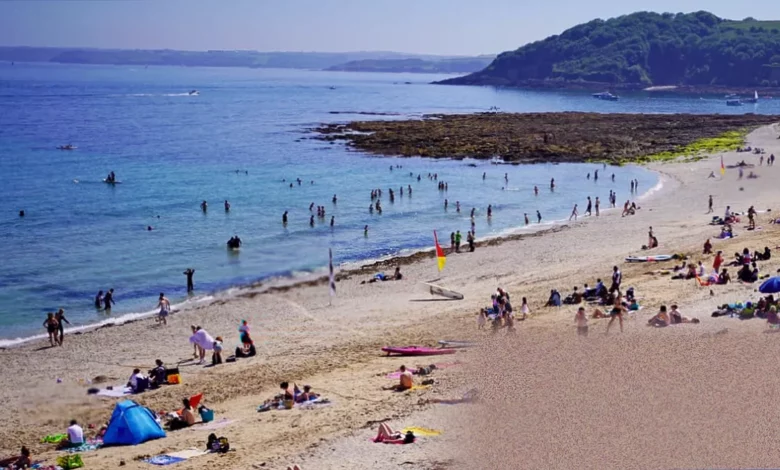
Britons fearful that summer flights will be cancelled are driving a surge in bookings for domestic holidays, as holiday park operators and analysts report a clear shift towards “staycations” amidst international travel uncertainty.
Companies across the UK tourism sector are experiencing a significant uplift in interest. Raoul Fraser, chief executive of the holiday park operator Lovat, said traffic to its website had increased following reports of jet fuel warnings and that its holiday bookings were up more than 30% this year. “It is a little bit like Covid, when people couldn’t get away and now they just want the certainty of a nice holiday in the UK,” he said.
Butlin’s reported “strong growth for the summer school holidays”, while Landal UK noted guests were increasingly choosing destinations closer to home that are easy to reach by car. Jeremy Hipkiss, Landal’s managing director, said its parks in Cornwall, Scotland, and Lincolnshire were “particularly popular”. Data from Airbnb supports this trend, showing a 15% year-on-year increase in searches for UK stays during the upcoming May bank holidays.
The Fuel Fears Grounding Travel Plans
This pivot towards domestic breaks is being fuelled by stark warnings from global energy and aviation bodies about potential jet fuel shortages across Europe this summer, triggered by the ongoing conflict involving Iran. The disruption to oil shipments, particularly via the critical Strait of Hormuz, has sent prices soaring and threatens supply.
Fatih Birol, head of the International Energy Agency, warned this week that Europe has only about six weeks’ worth of jet fuel supplies before shortages begin to bite, stating flight cancellations would follow if oil supplies were not restored. Echoing this, Willie Walsh, director general of the International Air Transport Association (IATA), said flights in Europe could be cancelled due to a lack of jet fuel starting from the end of May.
Some airlines are already reacting. While easyJet has stated it has no concerns about shortages, other carriers like KLM have begun cancelling flights on routes deemed no longer financially viable due to soaring kerosene costs. The price spike is severe: IATA reported the global average jet fuel price was $197.83 a barrel last week, more than double the average from the previous year.
Michael O’Leary, chief executive of Ryanair, has singled out Britain as the European country most exposed to these shortages, citing its reliance on Kuwait for roughly a quarter of its jet fuel supply. He warned that supply disruptions could begin as early as May and June.
Cost Pressures and Border Chaos Add to Uncertainty
Compounding the geopolitical crisis are persistent cost of living pressures. Peter Munk, chief executive of caravan manufacturer Willerby, said the reality of inflation “kicking off again” was influencing decisions, with people opting for fewer holiday days or destinations closer to home. Data from Barclays showed UK consumer spending on travel fell by 3.3% in March—the first decline since pandemic restrictions lifted—with spending on travel agents and airlines down 4.6% and 4.1% respectively.
Despite this, the appetite for a break remains strong. Sinead O’Connor, a travel analyst at Mintel, said its research showed 52% of Britons surveyed planned to holiday in the UK this year, with 49% planning to go abroad. Mintel forecasts the value of the domestic holiday market to grow by about 7% this year to nearly £14bn, outpacing the 4.8% growth forecast for overseas travel.
This demand is being met with increasingly late bookings, as families hesitate due to uncertainty. Jon Hendry Pickup, Butlin’s chief executive, noted the proportion of people booking in the last four weeks before their holiday has roughly doubled from a normal level of 15-20%.
Adding a further layer of deterrent for overseas travel is the chaotic implementation of the EU’s new Entry/Exit System (EES). Since its full rollout on 10 April, the system, which requires non-EU nationals to submit biometric data, has caused queues of up to three hours at borders. The airport industry has told the European Commission the situation is “unmanageable”. Last week, over 100 passengers missed an easyJet flight from Milan to Manchester due to EES delays, with Ryanair’s CEO, Michael O’Leary, describing the system as a “shambles”. Peter Munk of Willerby confirmed that reports of these delays were also putting people off booking overseas holidays this summer.