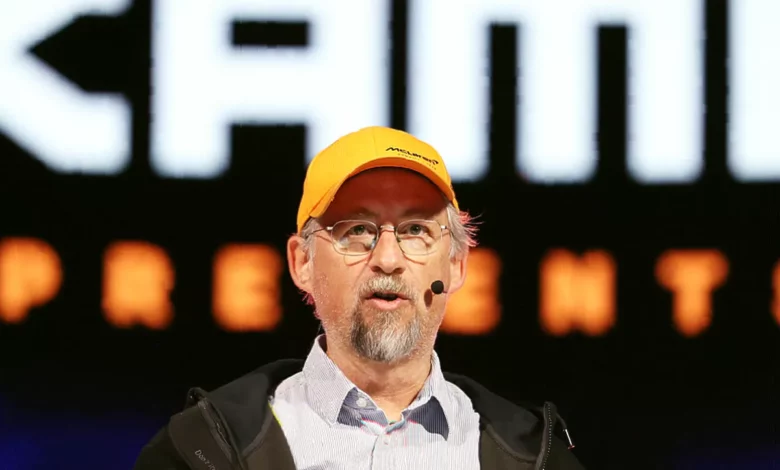
The biggest unsolved mystery in technology may have been cracked, according to a major new investigation. John Carreyrou, the Pulitzer Prize-winning journalist who exposed the Theranos scandal, believes he has definitively identified the pseudonymous inventor of Bitcoin, Satoshi Nakamoto, as the mild-mannered British cryptographer Adam Back.
In a 12,000-word investigation for The New York Times, Carreyrou asserts with near-total certainty that the 55-year-old, who now resides in Malta, is the figure behind the 18-year-old pseudonym. He describes Back, a developer active in Bitcoin from its inception who has since built a mini-empire of cryptocurrency companies, as having the air of “a dishevelled mathematician”.
The Forensic Case: Linguistics and Shared Passions
The core of Carreyrou’s two-year investigation rests on a detailed forensic linguistic analysis, which he claims reveals “striking similarities” between Back’s known writings and those of Satoshi Nakamoto. He commissioned a stylometric study that examined emails and forum posts, identifying a constellation of shared stylistic fingerprints.
These include the consistent use of British English spellings and idioms within otherwise American English texts, complex sentence structures with multiple clauses, and a habitual use of double spaces after full stops. The analysis also pointed to specific, uncommon phrases like “burning the money,” “partial pre-image,” and “a menace to the network” appearing in both corpora.
Beyond syntax, Carreyrou highlights shared enthusiasms, bugbears, and esoteric knowledge. He notes a “pathologically terrible” use of hyphens, consistent grammatical errors such as mixing up “it’s” and “its,” a tendency to end sentences with “also,” and a habit of frequently citing obscure cryptographic papers from the 1990s.
The investigation was reportedly sparked by a 2024 HBO documentary, “Money Electric: The Bitcoin Mystery,” in which Back appeared as an expert witness. Carreyrou found the film’s suggestion that another cryptographer, Peter Todd, was Satoshi unconvincing. However, a scene showing Back “fidgeting” nervously when asked if he was Nakamoto served as a “light-bulb moment”.
Technical Links and the Cypherpunk Crucible
The ties between Back and Bitcoin are deeply historical and technical. In 1997, Back invented Hashcash, a proof-of-work system designed to combat email spam. Satoshi Nakamoto directly cited Hashcash in the foundational 2008 Bitcoin white paper as the inspiration for Bitcoin’s mining mechanism.
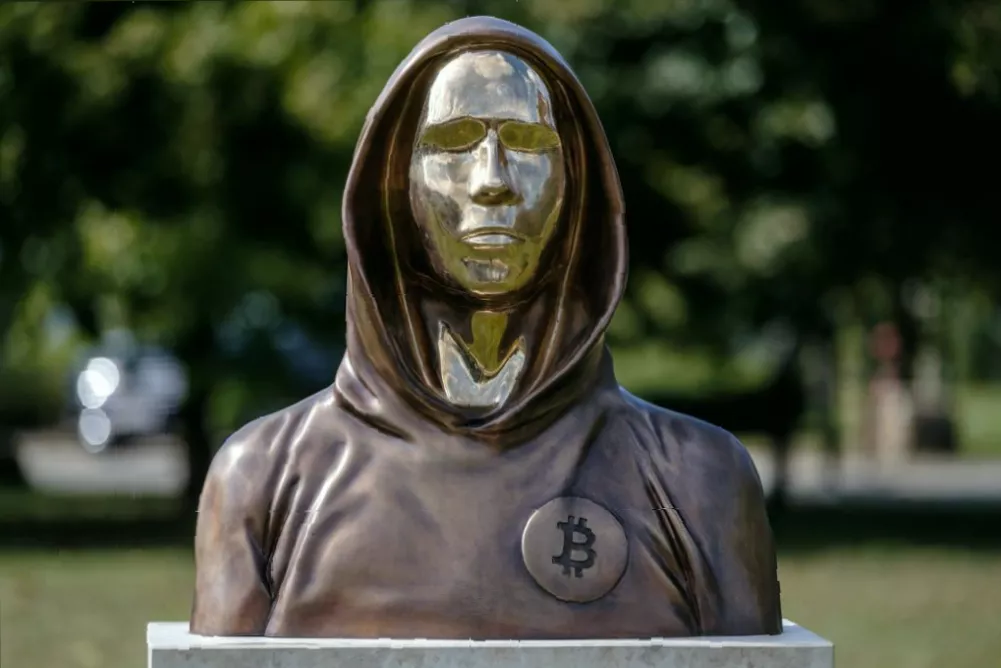
Both men were products of the libertarian Cypherpunk movement, an international online collective of mathematicians, cryptographers, and activists who debated privacy, cryptography, and digital cash throughout the 1990s. As a PhD student in computer science at the University of Exeter, Back was a prominent voice on the Cypherpunks mailing list. In 1996, he wrote that “crypto anarchy is a means to achieve a more libertarian government,” a decentralising philosophy echoed in Satoshi’s white paper over a decade later.
Carreyrou’s investigation points to a suspicious timing of online silence: despite being a consistent commentator on electronic cash for years, Back’s public posts ceased precisely during the period when Bitcoin was announced and Satoshi was most active. His first public comment on Bitcoin reportedly came six weeks after Satoshi disappeared in April 2011. Furthermore, Carreyrou claims evidence shows Back was the first to receive an email from the Satoshi address before the white paper’s publication, emails later entered into UK court records during the Craig Wright trial in 2024.
Denial and the Enduring Enigma
Adam Back has issued a categorical and repeated denial. “I’m not Satoshi, but I was early in laser focus on the positive societal implications of cryptography, online privacy and electronic cash,” he has stated. His company, Blockstream, released a formal statement dismissing The New York Times story as “circumstantial interpretation of select details and speculation, not definitive cryptographic proof.”
Skeptics of Carreyrou’s thesis note significant counterpoints. The linguist Carreyrou commissioned, Florian Cafiero, described his own stylometric results as “inconclusive,” noting that the late cryptographer Hal Finney nearly tied Back for the top spot. Others argue the pool of potential candidates with similar backgrounds—including figures like Nick Szabo—is not small, and that interpreting body language is highly subjective.
Ultimately, the cryptocurrency community maintains that the only definitive proof of Satoshi’s identity is cryptographic: a verified movement of the roughly 1.1 million bitcoin held in Satoshi’s early wallets, or a digital signature from the associated private keys. Without that, even the most detailed investigation remains a hypothesis.
Back himself, while guarded about his personal life, has echoed a sentiment from The Economist, suggesting that if Satoshi Nakamoto was exposed as a real person, “the world of bitcoin would lose much of its magic.” For now, despite Carreyrou’s conviction, the creator’s true identity persists as the technology world’s most captivating enigma.