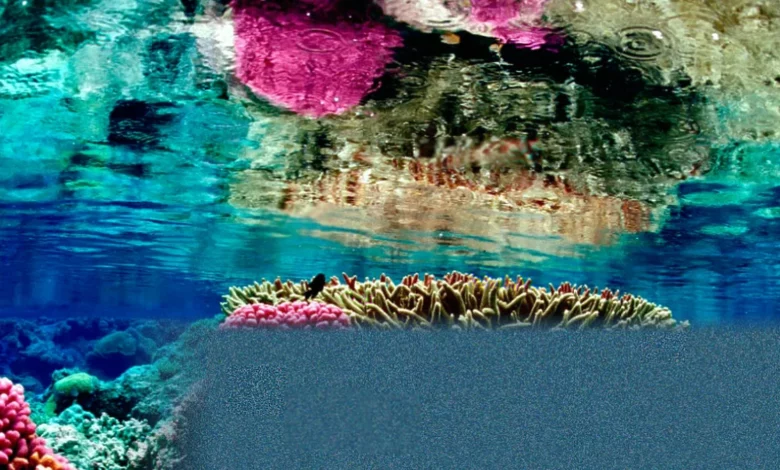
The planet’s most widespread coral bleaching event on record, an unprecedented crisis that persisted for 33 months into 2025, has starkly illuminated the fragile state of one of Earth’s most vital ecosystems. Scientists confirmed the event impacted a staggering 84% of the world’s coral reefs, its severity forcing the introduction of a new warning level—Alert Level 5—to indicate areas of immediate coral mortality.
A Multifaceted Assault on Fragile Ecosystems
While rising ocean temperatures—the primary driver of bleaching—pose an existential threat, experts warn that even if global climate targets are met, reefs face a brutal convergence of other pressures. The absorption of excess carbon dioxide is causing ocean acidification, weakening coral skeletons. Meanwhile, plastic pollution is catastrophic; research indicates it increases the risk of coral disease by up to 22 times, with microplastics disrupting the coral microbiome and making them more susceptible to stress.
On coastlines, development and agriculture deliver a double blow. Construction and dredging directly destroy habitats, while runoff laden with sediment, nutrients, and pesticides smothers corals and blocks sunlight. Perhaps the most pervasive local threat, however, is overfishing, which affects over 55% of reefs globally. The removal of key species, particularly herbivorous fish, allows algae to overgrow and smother coral, while destructive practices like blast fishing cause direct physical devastation.
The consequences of this degradation extend far beyond the underwater landscape. Coral reefs support approximately a quarter of all marine life, and their collapse means a catastrophic loss of biodiversity. Economically, the impacts are severe, with reef degradation projected to cause a 60-80% decline in fish biomass, threatening the livelihoods of millions. The loss of reefs as natural coastal barriers—which absorb up to 97% of wave energy—also leaves communities drastically more vulnerable to storm surges, flooding, and erosion.
The Spirit of Kuleana: Responsibility as a Blueprint
Confronting this scale of crisis requires a foundational shift in perspective, a concept embodied by the Hawaiian idea of kuleana—a deep, generational responsibility. This sense of duty, central to island and coastal societies for centuries, frames environmental care not as an external obligation but as an intrinsic act of self-preservation, recognising that humanity is part of nature, not separate from it.
In practice, this philosophy is already driving action. In French Polynesia, communities with deep ties to the reef are actively engaged in restoration work when provided with the necessary tools. This community-led model is being supported and scaled through international mechanisms like the Global Fund for Coral Reefs (GFCR), which, in partnership with the UN Capital Development Fund, is launching new investments in Kenya to tackle wastewater pollution and promote sustainable, reef-positive businesses.
Technological innovation is also being harnessed in this spirit. In Kenya, a partnership between Canon and the Oceans Alive Foundation uses advanced imaging for reef monitoring and restoration. Furthermore, initiatives targeting specific threats, such as the shift away from single-use plastics championed by entities like Mananalu Water—a company founded by UNEP Advocate for Life Below Water Jason Momoa—demonstrate how targeted action can address a key pollutant.
The Urgent Road from Awareness to Action
The coming months represent a critical inflection point. A series of major global gatherings, including the International Coral Reef Symposium in Auckland in July 2026 and the inaugural Global Coral Reef Summit in Saudi Arabia later that same year, are set to focus high-level attention on the crisis.
The hard truth, however, is that awareness alone is insufficient. The science is clear on what works: drastically cutting greenhouse gas emissions to stay below 1.5°C of warming, reducing plastic and agricultural pollution, protecting key marine species, and investing in sustainable coastal economies. This requires decisive legislation, smart finance, and a collective shift in behaviour—from individuals to industries—towards reef-positive choices.
Coral reefs do not have the luxury of time for perfect plans. As the longest global bleaching event on record has shown, the need for action is immediate. The path forward is defined by embracing that fundamental kuleana: taking responsibility, not as spectators, but as integral participants in the survival of an ecosystem that sustains life both in the sea and on the shore.