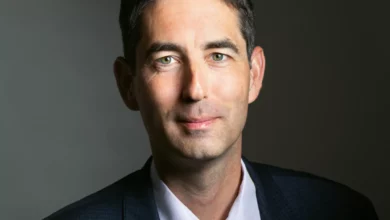
Concerns that a persistent narrative of London as a lawless, crime-ridden capital is beginning to influence business and diplomatic perceptions have prompted a concerted fightback from the heart of the UK’s financial district, with the City’s leadership warning that trade, recruitment and investment could suffer if falsehoods go unchallenged.
The Lady Mayor of London, Dame Susan Langley, is spearheading a campaign to counter what she describes as an “active disinformation campaign,” leveraging her one-year term to coordinate the City’s response. Her strategy involves working with major financial sector bodies, including TheCityUK, UK Finance and the Investment Association, to develop and disseminate “pragmatic, simple, key lines” promoting London’s strengths.
From Social Media to the Boardroom
The issue has moved from the fringes of social media and right-wing commentary into mainstream business concerns. It was highlighted last September when tech billionaire Elon Musk told a far-right rally via video link that London was “filled with crime,” a comment later condemned by the UK government. This echoed earlier, notorious claims by figures such as Donald Trump, who spoke of “no-go zones,” and Nigel Farage’s warnings against wearing jewellery in the West End after 9pm.
Dame Susan told of being confronted with these fears directly within weeks of taking office last November, when executives from Gulf state banks asked if their families would be safe in London, citing stories of rampant phone and watch theft. Similar concerns were later raised by a US firm. “I went, ‘Hold on a minute… we’re one of the safest cities in the world’,” she said. “They actually looked quite taken aback.”
One London executive said the topic had reached diplomatic circles, with UK representatives having to reassure international businesses. “What we tend to hear is about chronic levels of antisocial behaviour,” they said, describing a “persistent low-level background noise” over the past year, often from those less familiar with the capital.
The Statistical Reality
Official data paints a starkly different picture from the disinformation. London’s murder rate is at a historic low, with 97 homicides recorded in 2025, an 11% reduction from 2024 and the lowest total since 2014. This gives the capital a homicide rate of 1.1 per 100,000 people, lower than any other UK city and positioning it as one of the safest major cities in the Western world. The rate is significantly below that of New York (4.0 per 100,000) and compares favourably with Toronto (1.7), Berlin, Brussels, and Paris.
More broadly, Londoners are statistically less likely to be a victim of violent crime leading to injury than people in the rest of England and Wales, with such offences down 18% in the twelve months to March 2025. In the Square Mile, proactive policing under initiatives like Operation Swipe saw reports of phone theft fall by 28% in the first four months of 2025 compared to the same period the year before. Figures from the Metropolitan Police also show thefts of luxury watches, handbags and jewellery are down across London.
This is not to say crime is absent. Antisocial behaviour constitutes 20.5% of all reported crime in London and saw a slight increase in 2025. Mobile phone theft remains a high-volume issue city-wide, with over 116,000 devices stolen in 2024, a 50% increase since 2017. However, the trend in the financial district and the overarching violent crime statistics contradict the narrative of a city in the grip of a crime tsunami.
A Coordinated Response
Dame Susan Langley is urging an uncharacteristically vocal defence from the City’s business leaders. “It’s a natural British reticence,” she said. “But I think we’ve got worse over the last five or six years. People are not putting their head above the parapet.” She wants bosses to become “relentless cheerleaders,” emphasising London’s talent, availability of capital, and quality of life in their client meetings and at conferences. “Perception is reality,” she argued. “And hopefully we can start to turn it back.”
The UK government has acknowledged the threat of online disinformation, stating it is “working with international partners and industry leaders to counter malign activity online.” A government spokesperson said such tactics often aim to destabilise countries and impact trade, but stressed “the facts tell a different story – business investment is at a 20-year high and the UK is one of the safest countries in Europe.”
Legislative and structural responses are also in play. The Online Safety Act 2023 aims to hold technology platforms accountable for harmful content. Furthermore, the government has established the National Security Online Information Team (NSOIT), described in a government privacy notice as leading the operational response to state-borne and other information risks, focusing on building information resilience rather than censorship.
Economic Stakes and Unproven Origins
The motivation behind what some see as a targeted campaign remains unclear, though the stakes for the City are high. The longstanding debate over financial centre supremacy was intensified by Brexit, which pitted London against European rivals like Paris and Frankfurt. More recently, the trend of UK companies opting to list in New York has placed the City’s global status under scrutiny.
Dame Susan Langley believes recruitment and overseas talent could be the first casualties if the negative narrative persists. “It might just make people think twice about whether they want to come and work in London or expand,” she said. However, one banking executive said they had seen no direct impact on hiring or investment yet, cautioning that the goal was to prevent it from becoming “a self-fulfilling prophecy.”
Economically, the UK retains underlying strength. Business investment grew by 1.9% in the third quarter of 2024 and was 5.8% higher than the previous year. In the 2023/24 financial year, 1,555 foreign direct investment projects landed in the UK, creating over 71,000 new jobs, while private capital investment in UK businesses reached £29.4 billion in 2024.
Several City bosses have privately speculated that the disinformation could be linked to hostile state actors, such as Russia, though no concrete evidence has emerged. Dame Susan did not point to a specific source but agreed the campaign felt deliberate. “Naturally, it would benefit any other financial centre,” she noted. “Because if they’re trying to undermine the City that’s obviously a sweet spot.”
For now, the response is about reclaiming the narrative. “We had the Team GB spirit around the Olympics,” Dame Susan said. “So where’s the Team UK spirit around politely, and in a very British way, standing up for our industries, our city and all of the good things that we can actually do?”