A Belfast rapper will not stand trial on terrorism charges after the High Court definitively dismissed a prosecution appeal, bringing a contentious legal battle over free speech and procedural law to an end.
Two High Court judges upheld a ruling that the case against Liam Óg Ó hAnnaidh, 28, known by his stage name Mo Chara of the rap group Kneecap, had been “instituted unlawfully”. The judges agreed that prosecutors had missed a critical legal deadline, meaning the court had no jurisdiction to try him.
The rapper had been accused of displaying a flag in support of the proscribed terrorist organisation Hezbollah during a Kneecap performance at the O2 Forum in Kentish Town, London, on 21 November 2024. The charge was brought under the Terrorism Act 2000.
A Case Decided on a Deadline
The entire prosecution unravelled due to a strict six-month time limit for bringing criminal charges and the specific requirement for Attorney General consent in certain terrorism cases.
As detailed in the court’s judgment, prosecutors informed Ó hAnnaidh on 21 May 2025 that he would be charged. However, the permission of the Attorney General, required for the Director of Public Prosecutions to consent to the case, was not sought and granted until the following day, 22 May. A second written charge was issued that same day.
This placed the formal institution of proceedings outside the six-month window from the date of the alleged offence. At a hearing in January, the Crown Prosecution Service (CPS) appealed the initial dismissal, arguing there was an “important point of law which needs to be clarified”.
Dismissing that appeal, Lord Justice Edis, sitting with Mr Justice Linden, stated: “The judge was right to hold that he had no jurisdiction to try any summary-only offence alleged to have been committed on that date.” He emphasised that Ó hAnnaidh had not been tried or convicted, but also noted he had not been acquitted.
Political Activism and Legal Scrutiny
The case was set against the backdrop of Kneecap’s outspoken political activism. The Irish-language hip-hop trio from Belfast are known for lyrics that address themes of Irish republicanism, anti-colonialism, and international solidarity, including strong support for Palestinian rights.
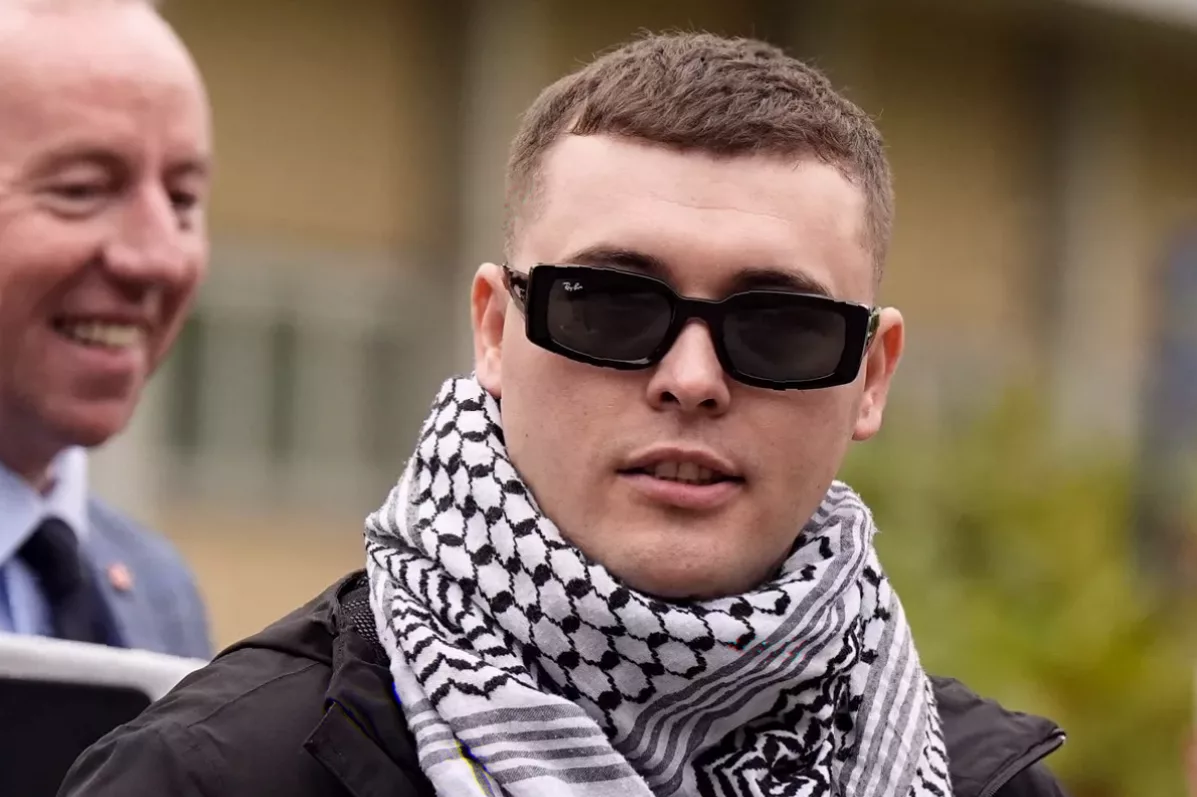
Hezbollah has been fully proscribed as a terrorist organisation in the UK since March 2019, making it a criminal offence to express support for the group.
In a statement issued through his legal team following the ruling, Ó hAnnaidh framed the prosecution as politically motivated. “This entire process was never about me, never about any threat to the public and never about ‘terrorism’, a word used by the British Government to discredit people you oppress both in Ireland and across the world,” he said.
“It was always about Palestine and about what happens if you dare to speak up. About what happens if you can reach large groups of people and expose their hypocrisy. I will not be silent. Kneecap will not be silent.”
Kneecap has faced previous controversy and legal issues, including a successful court battle over a blocked UK arts grant and visa problems affecting international tours. The group has also released music directly referencing their legal troubles.
Legal Precedent and Prosecutorial Process
The High Court’s decision establishes clarity on a point of legal procedure. It underscores that in cases requiring the Attorney General’s consent, that consent must be secured before a suspect is notified of a charge, ensuring the entire process fits within statutory time limits.
A CPS spokesperson acknowledged the ruling’s impact, stating: “The High Court has clarified how the law applies to the issuing of written charges in summary offences where Attorney General permission was required for the director of public prosecutions to consent to a prosecution. We accept the judgment and will update our processes accordingly.”
Ó hAnnaidh was represented by a specialist legal team with expertise in human rights, terrorism law, and freedom of expression. The outcome concludes a case that has highlighted the intersection of performance, political protest, and the precise mechanisms of the UK’s legal system.