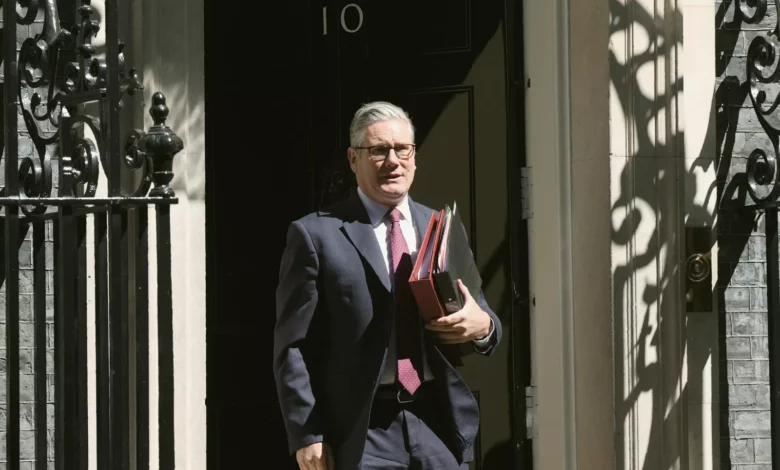
A Russian-speaking contact using the pseudonym “El Money” allegedly orchestrated a series of arson attacks on properties linked to Prime Minister Sir Keir Starmer, promising payment in cryptocurrency, the Old Bailey has heard.
The alleged orchestrator
Opening the trial on Wednesday, prosecutor Duncan Atkinson KC told jurors that the fires over five days last May went “beyond coincidence” and were “planned and directed”. At the centre of the prosecution’s case is a figure known only as “El Money”, who communicated in Russian via the Telegram messaging service — a language distinct from the Ukrainian otherwise used by the three defendants.
More than 320 messages between the alleged mastermind and the lead defendant, Roman Lavrynovych, were recovered, spanning seven months and dating back to September 2024. Mr Atkinson said the exchanges indicated a “good working relationship” and a willingness to recruit others, underlining that the motivation for the attacks was “not fear, but financial reward”. In one message after the fires, “El Money” encouraged Lavrynovych to flee London, writing: “Look, you attacked the home of a very high-ranking person in Britain. I’ll send you money, you need to leave the city.”
The contact added: “If the police detain you, secretly write the word, ‘geranium’ and I’ll send a lawyer to you, I’ll give you money for a week and a new phone. We won’t be in touch for a week.” The case has emerged against a backdrop of longstanding concerns about foreign interference in UK politics. The Intelligence and Security Committee’s 2020 Russia report warned that Russian interference in British politics is “commonplace” and that the UK is considered one of Russia’s “top Western intelligence targets”. Prime Minister Starmer has previously expressed concern about the use of proxies by foreign states for attacks in Britain and pledged new legislation.
Mr Atkinson told the jury they did not need to determine the true identity of “El Money” or the motivation behind the attacks, nor whether the defendants knew the properties were connected to the Prime Minister.
The attacks
The first fire, on 8 May, involved a Toyota Rav4 car that had once belonged to Sir Keir Starmer, set alight in Kentish Town. Lavrynovych allegedly bought white spirit as an accelerant from a B&Q store and was filmed by co-defendant Petro Pochynok after the car was burned. The woman who bought the Prime Minister’s car in September 2024 was woken by a “commotion” at 2.53am and saw the fire from her window. Initially not thought suspicious, the vehicle was later seized by police after the subsequent fires, and scientists concluded the fire was most likely deliberate. CCTV footage then allegedly showed Lavrynovych returning to B&Q to buy more accelerant and going back to Kentish Town to “finish the job” after complaining about the quality of the fire video.
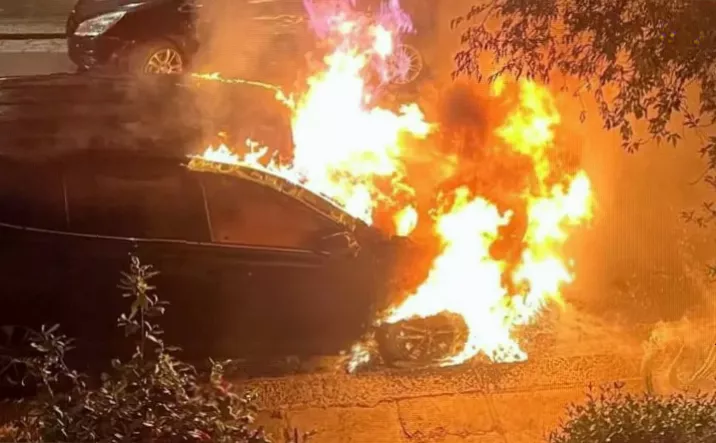
Three nights later, on 11 May, a fire was reported at a house in nearby Ellington Street. The property was managed by a company of which Sir Keir Starmer had once been a director and shareholder. Jurors were shown a video of a lit match being thrown onto accelerant on the doorstep, allegedly recorded by Lavrynovych. A resident of the top-floor flat was woken by the smell of smoke about half an hour later and escaped to the roof to call the fire brigade. Mr Atkinson said: “The fire had spread inside the building and into the hallway of these premises made up of four flats, posing you may think an obvious risk to those inside.”
In the early hours of 12 May, another house in Kentish Town was deliberately set alight. This property still belonged to the Prime Minister and was occupied by his sister-in-law. Each of the three fires was allegedly started by Lavrynovych in the “dead of night” while the occupants were asleep. Mr Atkinson told the jury: “The prosecution’s case is that when he did so he must have intended to endanger – to risk – the lives of the people living inside those houses. Why else would you set fire to the front door, blocking the residents’ escape?”
The defendants
Roman Lavrynovych, 22, a Ukrainian from Lewisham, south-east London, is accused of carrying out the attacks. Petro Pochynok, 35, also Ukrainian and from Islington, north London, is accused of assisting him. Stanislav Carpiuc, 27, a Romanian from Romford, east London, is alleged to have been involved in planning and receiving payment, and in recruiting Pochynok. All three are charged with conspiracy to damage property by fire between 1 April and 13 May last year. Lavrynovych faces two additional charges of damaging property by fire with intent to endanger life, or being reckless as to whether life was endangered, on 11 and 12 May.
All three have pleaded not guilty to the charges against them. The trial before Mr Justice Garnham was adjourned until Thursday.