The use of live facial recognition by police forces across England and Wales faces a critical challenge after the Information Commissioner’s Office revealed one force has suspended the technology over concerns about racial bias and accuracy.
Regulator intervenes as Essex Police pause live facial recognition
The ICO, the UK’s data protection regulator, confirmed that Essex Police have paused all deployments of Live Facial Recognition (LFR) technology. The force took the step “after identifying potential accuracy and bias risks,” the ICO stated, adding that it has warned other forces using the systems to ensure they have proper mitigations in place.
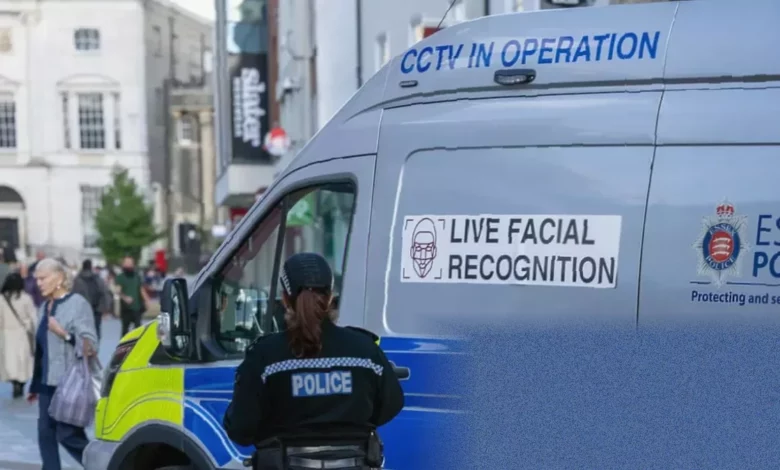
This intervention follows the publication last week of a study commissioned by Essex Police itself. Conducted by academics at the University of Cambridge, the research tested LFR systems mounted on marked police vans in Chelmsford using 188 actors. It found that while the system correctly identified about half of the people on a pre-determined watchlist and made incorrect matches extremely rarely, it exhibited clear demographic disparities.
The system was “statistically significantly more likely to correctly identify black participants than participants from other ethnic groups,” the report concluded. It was also more likely to correctly identify men than women.
Study author warns of ‘greater’ chance of identification for black individuals
Dr Matt Bland, a criminologist and one of the study’s authors, underscored the implications. “If you’re an offender passing facial recognition cameras which are set up as they have been in Essex, the chances of being identified as being on a police watchlist are greater if you’re black,” he told the Guardian and Liberty Investigates. The report stated this disparity “raises questions about fairness that require continued monitoring.”
The issue highlighted here is distinct from the more commonly discussed problem of ‘false positives’, where innocent people are incorrectly matched. Last month, a man was wrongly arrested for a burglary 100 miles away after retrospective facial recognition software confused him with another person of South Asian heritage.
However, data from the Metropolitan Police, a major user of LFR, indicates false positives are also a concern with live systems. The force reported that eight out of ten false positives in one period concerned Black individuals. In other cases, the Met’s LFR camera alerted officers to an identical twin of a suspect and misidentified a subject’s gender.
Algorithm bias a known issue across different facial recognition systems
Experts suggest the bias seen in the Essex study could stem from the algorithm being over-trained on the faces of Black people, and that adjusting system settings might rectify it. Technical testing by the government’s National Physical Laboratory (NPL) provides broader context on algorithmic performance.
While a separate NPL study of the same LFR technology found Black men were most likely to be correctly matched and white men least likely—an effect not deemed statistically significant—other NPL tests on different systems show more pronounced issues.
Testing on the algorithm used for Retrospective Facial Recognition (RFR) searches on the Police National Database found significant variation in error rates by ethnicity. At certain settings, the False Positive Identification Rate was 0.04% for white subjects, but rose to 4.0% for Asian subjects and 5.5% for Black subjects. For Black women specifically, the rate could be as high as 9.9%.
The Home Office has acknowledged historic bias within this RFR algorithm, a disclosure that the ICO has said it was disappointed not to have received earlier despite regular engagement.
National rollout continues amid calls for ban and legal uncertainty
The pause in Essex occurs against a backdrop of rapid national expansion. In January, Home Secretary Shabana Mahmood announced a five-fold increase in LFR vans, with 50 to be made available to every police force in England and Wales. At least 13 forces are already using or have used the technology, including the Metropolitan Police, South Wales, and Greater Manchester.
The Home Office points to operational successes, stating that LFR deployments in London from January 2024 to September 2025 led to more than 1,300 arrests for serious crimes including rape, domestic abuse, and grievous bodily harm.
Nevertheless, civil liberties groups argue the Essex findings validate long-held warnings. “Police across the country must take note of this fiasco,” said Jake Hurfurt, Head of Research and Investigations at Big Brother Watch. “AI surveillance that is experimental, untested, inaccurate or potentially biased has no place on our streets.” Both Big Brother Watch and Liberty are calling for an outright ban on LFR for public surveillance.
The controversy unfolds within what is widely described as a complicated and inflexible legal framework for police use of facial recognition. The government is currently consulting on new laws to provide clearer rules and safeguards. The ICO emphasises that robust data protection must be central to any future governance.
With public trust hinging on demonstrable accuracy and fairness, the findings from Essex—a force whose own Equality Impact Assessment for LFR was previously criticised by campaigners for poor methodology—present a significant hurdle for the technology’s proponents as its rollout accelerates.