The war between the United States, Israel, and Iran has entered a perilous new phase, with both sides deliberately targeting the energy infrastructure that powers the global economy in a stark escalation that threatens to unleash uncontrollable regional consequences.
Iranian retaliatory strikes have damaged critical oil and gas facilities across the Persian Gulf, while an Israeli attack on the massive South Pars gas field—a site shared with Qatar—has drawn international condemnation and highlighted a deepening rift between Washington and its allies over the conduct of the war.
Energy Infrastructure in the Crosshairs
The conflict’s centre of gravity has decisively shifted to the region’s energy heartland. In what the UAE’s Minister of Industry, Sultan Al Jaber, described as “global economic warfare” where “energy flows are being weaponised,” Iranian missiles and drones have struck targets in Qatar, Saudi Arabia, Kuwait, and the United Arab Emirates.
The most significant blow was landed on Qatar’s Ras Laffan Industrial City, a cornerstone of global liquefied natural gas (LNG) supply. State-owned QatarEnergy reported “extensive damage” to facilities responsible for 17% of its LNG export capacity, with repairs potentially taking three to five years. The company has halted all gas production, a move with immediate worldwide repercussions. Shell also confirmed its Pearl GTL facility at Ras Laffan was attacked, though the fire was contained.
In Saudi Arabia, the SAMREF refinery—a joint venture between Saudi Aramco and Exxon Mobil—was targeted. The attacks followed explicit evacuation warnings from Iran’s Islamic Revolutionary Guard Corps for several named facilities across the Gulf, a tactic underscoring the deliberate nature of the strikes.
The retaliation was triggered by an Israeli attack on Iran’s South Pars gas field, a critical asset accounting for up to 70% of Iran’s domestic gas production. Damage there threatens to worsen Iran’s existing energy shortages. The UAE condemned the Israeli strike as a “serious escalation” and a direct threat to global supplies, while Qatar had earlier labelled it a “dangerous and irresponsible step.”
Conflicting Narratives on US Involvement
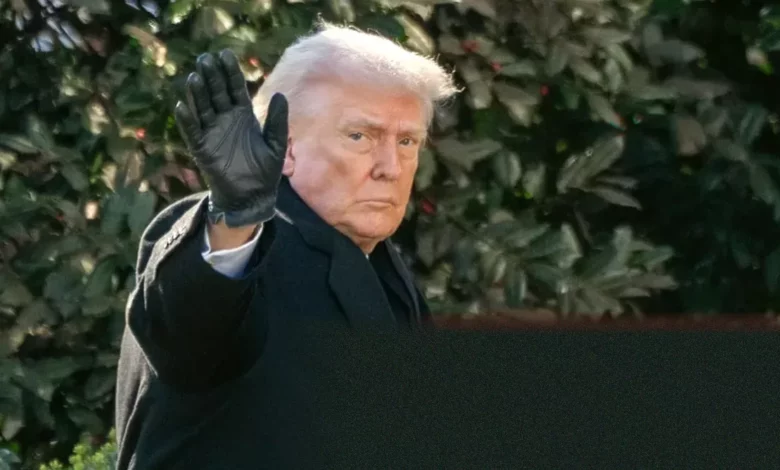
The strike on South Pars has exposed contradictory statements from Washington and Jerusalem regarding coordination. US President Donald Trump stated publicly that Washington “knew nothing about this particular attack” and suggested Israel acted “out of anger.”
However, three Israeli officials, speaking to Reuters on condition of anonymity, said the attack was coordinated with the United States. They described a dynamic similar to one following Israeli strikes on Iranian fuel depots weeks earlier. Furthermore, former US Ambassador to Israel Dan Shapiro stated there was “zero chance the IDF would conduct a strike in that location without giving CENTCOM full visibility” and that “Trump knew (and approved).”
When questioned, US Director of National Intelligence Tulsi Gabbard pointed to differing war aims between the allies, telling a House committee that Israel is “focused on disabling the Iranian leadership,” while the US president’s stated objectives are “to destroy Iran’s ballistic missile launching capability, their ballistic missile production capability and their navy.”
That focus on Iran’s navy was underscored by an Israeli military announcement that it had, for the first time, struck “key” Iranian naval infrastructure in the Caspian Sea, hitting vessels and a port command centre.
Gulf Allies Under Pressure
For Gulf Arab states, the targeting of their energy infrastructure represents their “worst nightmare,” according to analysts. While they have endured a campaign of Iranian missiles since the war began, hitting airports, ports, and financial districts, striking core energy assets crosses a red line.
Saudi Arabia’s foreign minister stated the kingdom “reserved the right to take military actions” against Iran if deemed necessary. The UAE condemned the “Iranian terrorist attacks” as a “dangerous escalation” and a violation of international law. Qatar expelled Iran’s military and security attaches, giving them 24 hours to leave.
Yet, there remains a profound reluctance to be drawn into a direct war. Fawaz Gerges, professor at the London School of Economics, noted, “I doubt very much whether any Arab Gulf state would ever join the American-Israeli war, because, as they have all said repeatedly: this is not our war.” He predicted further symbolic diplomatic actions rather than military engagement.
Oman, which had mediated nuclear talks, offered a scathing critique. Its foreign minister, Badr Albusaidi, claimed the US had “lost control of its own foreign policy,” accused Israel of persuading the Trump administration to go to war, and described the conflict as a “catastrophe” and “grave miscalculation.”
Global Economic and Humanitarian Toll
The economic shockwaves are immediate and severe. Oil prices have soared above $118 a barrel, and European natural gas prices have spiked. The International Energy Agency has authorised a coordinated release of strategic petroleum reserves. The European Central Bank warned the war “has made the outlook significantly more uncertain,” with a “material impact on near-term inflation through higher energy prices” and risks to growth.
The Strait of Hormuz, through which a fifth of the world’s oil passes, has become a flashpoint. Iran has demonstrated the intent and capability to effectively close it, and its foreign minister has floated the idea of charging transit fees. The UN’s International Maritime Organization has called for a “safe maritime corridor” to evacuate stranded ships and seafarers.
India, which relies on Qatar for half its LNG imports, condemned the strikes on energy facilities as “unacceptable,” warning they “further destabilise an already uncertain energy scenario.” At least 22 Indian ships with over 600 crew are stuck in the Gulf.
The human cost continues to mount. The Lebanese health ministry reported that Israeli attacks have killed 1,001 people in Lebanon since the war with Hezbollah began on 2 March, including 118 children and 40 health workers. The Climate Action Network, representing over 1,900 organisations, condemned the US-Israeli attack as an “illegal act of aggression” meeting the criteria for “ecocide,” citing the environmental harm from burning fuel depots.
Military Posturing and Diplomatic Manoeuvres
On the ground, strikes continued. An Iranian missile hit Israel’s oil refinery complex in Haifa, though officials reported no “significant damage.” Separately, a Palau-flagged chemical tanker, the *Parimal*, was struck by an unknown projectile off the UAE coast, causing a fire and leaving the captain missing.
In Washington, President Trump dismissed reports he was planning to deploy thousands more US troops to the region, stating, “I’m not putting troops anywhere.” This contradicted earlier reports that the administration was considering such a reinforcement.
The international diplomatic front saw concerted action. The UK, France, Germany, Italy, the Netherlands, and Japan issued a joint statement condemning Iran’s attacks on commercial vessels and energy facilities and expressed readiness “to contribute to appropriate efforts to ensure safe passage through the Strait of Hormuz.”
Japanese Prime Minister Sanae Takaichi, visiting the White House, told President Trump that only he could achieve peace, while condemning Iran’s attacks. Turkey’s foreign minister, Hakan Fidan, said Ankara was conveying “friendly” advice to Iran to avoid spreading the war, calling its attacks on regional countries “unacceptable.”
As the war enters this dangerous new chapter focused on energy, the risks of a prolonged global crisis and deeper regional entanglement grow ever more acute, with diplomatic avenues narrowing under the weight of sustained military action.