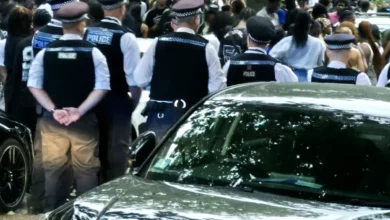
A gang believed to be behind more than half of all mobile phone thefts in London over a two-year period has pleaded guilty to handling stolen goods and involvement in an organised crime group, in what the Metropolitan Police has described as the dismantling of the UK’s largest phone smuggling network.
Amir Muhammad Khadikhel, 35, Ismat Miakhel, 33, and Mansoor Mohammed, 30, appeared at Southwark Crown Court on 29 April 2026 and entered guilty pleas. They are due to be sentenced at the same court on 12 May.
The three men were key figures in a sophisticated international operation that detectives believe trafficked up to 40,000 stolen mobile phones from the UK to China during 2024 and 2025 — a haul estimated to account for around 40 per cent of all phones stolen in London in that period.
How the network was uncovered
The breakthrough came almost by accident. On Christmas Eve 2024, a victim used the iPhone tracking feature to locate a stolen device at a warehouse near Heathrow Airport. When officers arrived they found a box containing approximately 1,000 iPhones destined for Hong Kong, nearly all of which were stolen. That discovery triggered Operation Echosteep, drawing in specialist detectives normally assigned to armed robbery and drug smuggling cases.
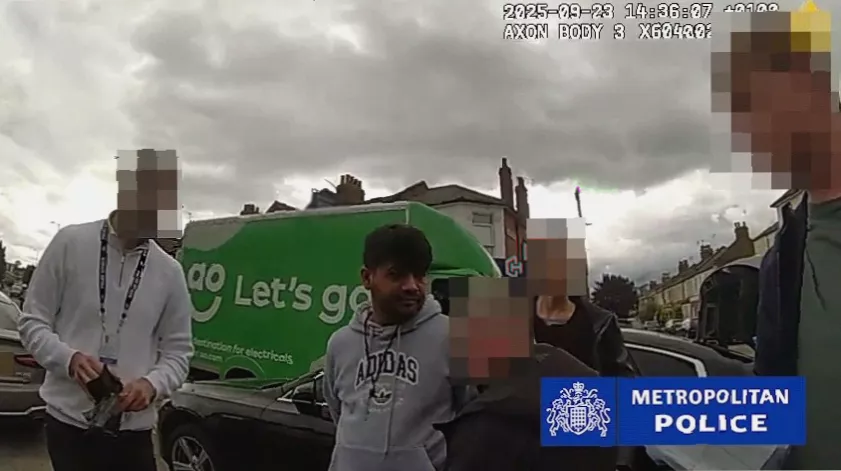
Police later intercepted additional shipments and used forensic evidence to link suspects to the operation. On 23 September 2025, officers arrested Khadikhel and Miakhel in north-east London. Hundreds of stolen phones were found in their car, with a further 2,000 devices recovered from linked properties. Mohammed was arrested later.
The gang operated a tightly controlled supply chain that started with street-level thieves, who were paid up to £300 per handset. The stolen devices were then passed to handlers and finally to international exporters. Detectives say the group specifically targeted high-end Apple iPhones because of their profitability overseas, where some devices could be resold for as much as £4,000 — or around $5,000 — particularly in China.
To avoid detection, the stolen phones were often digitally wiped or repurposed before shipping. Evidence gathered during the investigation showed that some devices were wrapped in foil or placed in Faraday bags to block tracking signals. Hong Kong served as a crucial transit hub, with the final destination frequently being Shenzhen’s Huaqiangbei district, a major centre for the second-hand phone market.
The scale of the operation
As part of Operation Echosteep, police have so far made 14 arrests, seized more than 10,000 stolen iPhones and recovered over £250,000 in cash. More than 1,000 victims have been reunited with their phones. In the wider crackdown, a total of 46 individuals have been arrested in connection with the investigation, including people suspected of theft, handling stolen goods, conspiracy to steal and money laundering. One man was charged after being stopped at Heathrow with 10 suspected stolen phones, two iPads, two laptops and two Rolex watches. Inquiries revealed he had travelled between London and Algeria more than 200 times in two years.

Commander Andy Featherstone, the Met’s lead for tackling phone theft, said: “We are dismantling criminal networks at every level – from street thieves to international exporters – making hundreds of arrests and recovering thousands of stolen phones. This is the largest crackdown on mobile phone theft and robbery in the UK in the most extraordinary set of operations the Met has ever undertaken.”
Detective Inspector Mark Gavin, senior investigating officer for Operation Echosteep, added: “Finding the original shipment of phones was the starting point for an investigation which uncovered an international smuggling gang which we believe could have been responsible for exporting up to 40 per cent of all the phones stolen in London. This group specifically targeted Apple products because of their profitability overseas.”
Impact on London’s phone theft epidemic
The investigation forms part of a wider, intensified effort by the Metropolitan Police to combat a surge in mobile phone thefts across the capital. In 2024, more than 116,000 phones were stolen in London — an average of 320 a day — representing a 50 per cent increase compared with 2017. Another measure put the figure at 70,137 for that year, up 34 per cent from 2023 and a 244 per cent rise since 2020. Westminster and the West End remain key hotspots, with Apple iPhones the most commonly targeted devices.

Despite the scale of the problem, prosecution rates have been extremely low. In 2024, only 169 suspects were charged and seven cautioned for phone theft in London, meaning just over 1 per cent of such crimes resulted in a charge or conviction.
Police have been employing a range of tactics to reverse the trend, including data-led intelligence, specialist investigative teams, drones, high-powered e-bikes, live facial recognition technology and increased officer presence. Operations Reckoning and Skylord are among the targeted enforcement initiatives under way. The Met reports that mobile phone theft offences have dropped by 13,000 compared with the previous financial year — a fall of roughly 12.3 per cent, with around 10,000 fewer phones stolen in 2025 than in 2024.
Commander Featherstone said the crackdown is continuing. Mayor Sadiq Khan, who described the operation as “without doubt the largest operation of its kind in UK history”, has called on phone manufacturers including Apple and Samsung to improve device security and make stolen phones unusable, and has proposed additional investment to combat the crime.