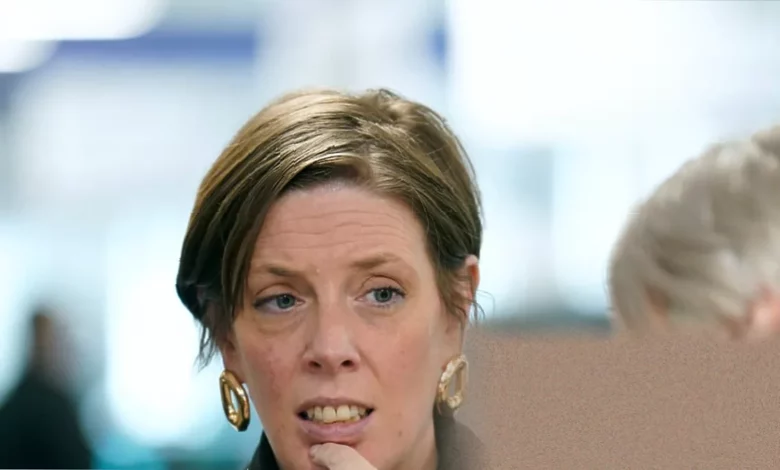
The government is urgently reviewing the sentences handed to three teenage boys who avoided custody for the rape of two girls in Hampshire, following a wave of public and political outcry. The Attorney General’s Office has confirmed it has received “multiple” requests to examine the penalties under the Unduly Lenient Sentence (ULS) scheme, with law officers now scrutinising the case “with the utmost care and attention”.
Review launched under unduly lenient sentence scheme
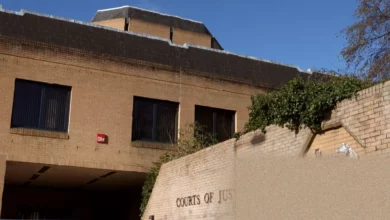
The review, announced by a government spokesperson, came after the three boys were sentenced at Southampton Crown Court on Thursday, 21 May 2026. Under the ULS scheme, which allows the Attorney General or Solicitor General to refer a Crown Court sentence to the Court of Appeal if it is deemed “significantly too low” for the offence, requests must be submitted within 28 days of sentencing. Any referral could result in a harsher penalty being imposed by the appeal judges. The government said it “shares the public’s shock at the details of this horrific case” and said its thoughts were with the young victims.
Two separate attacks in Fordingbridge
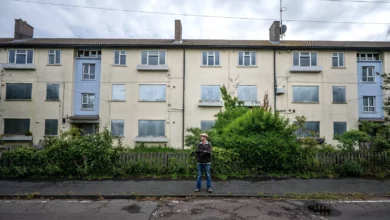
The boys – two aged 15 and one aged 14 at the time of sentencing – were convicted of raping two teenage girls in separate incidents in Fordingbridge, Hampshire. In the first assault, in November 2024, a 15-year-old girl was raped by two of the defendants, who were both aged 14 at the time. The second attack took place in January last year, when the three boys threatened a 14-year-old girl with a knife. Two of them then took turns raping her while the others encouraged the offending and filmed the assaults.
The sentences imposed
At court, the two 15-year-old defendants each received a three-year youth rehabilitation order (YRO) with a requirement for intensive supervision and surveillance (ISS). The third boy, aged 14, was given an 18-month YRO. Youth rehabilitation orders are community-based disposals for young people aged 10 to 17, designed to focus on rehabilitation rather than punishment. They can last up to three years. The court also heard the specific convictions: the first 15-year-old was found guilty of two counts of rape and one count of taking indecent images of a child. The second 15-year-old was convicted of six counts of rape and pleaded guilty to four counts of taking indecent images. The 14-year-old was convicted of two counts of rape and one count of indecent images.
Judge’s rationale: rehabilitation over criminalisation
Delivering the sentences, Judge Nicholas Rowland said he had to balance the seriousness of the offences against the need to avoid criminalising the boys unnecessarily and to support their reintegration into society. He told the court: “I should avoid criminalising these children unnecessarily and understand the effects of their behaviour and support their reintegration into society.” The judge also cited “peer pressure” as a major factor in what occurred. In explaining the non-custodial outcome, the court was told about the boys’ personal circumstances. One of the 15-year-olds had been diagnosed with attention deficit hyperactivity disorder (ADHD) and “longstanding anxiety”. The other, who also had ADHD, was described as having an IQ in the “bottom 1% of his contemporaries”. The 14-year-old was said to have “mild cognitive impairment”. Under the legal framework for children aged 10 to 17 in England and Wales, the age of criminal responsibility is 10, but the system treats young offenders differently from adults, with a presumption towards rehabilitation where possible.
Reactions from politicians and police commissioner
The sentences drew immediate condemnation. Jess Phillips, the former minister for safeguarding and violence against women and girls who resigned earlier this month, told BBC Radio 4’s Today programme that the penalty appeared “unduly lenient” and sent a “bad message”. She said: “For those young women, going through a rape trial like this will not have been a simple thing to do, it will have been many, many months, if not years, to achieve any sort of justice, and I am afraid to say it sends a bad message.” Phillips added that the boys were “essentially raping for content in order to put it on social media and share it to their friends, gloating about raping these poor young women.” Her criticism was echoed by the Hampshire police and crime commissioner, Donna Jones, who offered to support the victims’ families if they wished to appeal. Jones, a former magistrate of 16 years, said: “This is an extremely disturbing case. I’m deeply concerned these boys felt they could carry out such terrifying acts and share them online and not go to prison. Their sentences reflect a clear focus on rehabilitation rather than criminalisation. They are far too lenient. As they stand, they offer little comfort to their victims as they try to rebuild their lives after such harrowing experiences.” Jones also stressed the importance of educating young people about sexual violence and misogynistic attitudes to prevent future crimes.
Victim impact: ‘I feel like I am grieving the person I used to be’
The girl targeted in the second attack described in a victim impact statement how she continues to suffer from nightmares. “The person I was before the incident has completely gone and sometimes I feel like I am grieving the person I used to be,” she said. The victim of the first attack said she will “never get that innocence back again”. The case has also reignited broader concerns about the influence of social media and online misogyny on young people. The government recently introduced new guidance for Relationships, Sex and Health Education (RSHE) that includes lessons on “incel culture”, AI, deepfakes and the link between pornography and misogyny – an issue seen as relevant given the defendants’ alleged sharing of the assaults online. Under the Sexual Offences Act 2003, the maximum penalty for rape is life imprisonment. The ULS review will determine whether the sentences passed by Judge Rowland fall significantly below what would be appropriate for such serious offences.