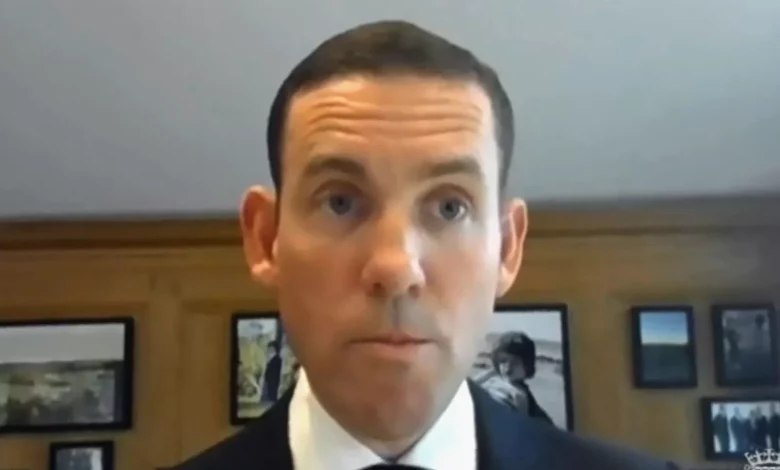
Lex Greensill faces a nine‑year ban from directing UK companies after the Australian financier agreed to a disqualification undertaking, bringing an end to a looming High Court trial.
The ban, which takes effect on 23 June 2026, prevents Mr Greensill from acting as a director or being involved in the promotion, formation or management of any company in the United Kingdom without the permission of a court. The Insolvency Service confirmed that the undertaking – a legally binding agreement in which Mr Greensill does not dispute certain facts – was accepted by the Secretary of State for Business and Trade on 2 June 2026.
Mr Greensill had previously sought to challenge the Government’s bid to disqualify him, and a six‑week trial was due to begin on 8 June. By signing the undertaking, he has avoided that litigation. Duncan Beach, chief executive of the Insolvency Service, said the nine‑year ban is “a significant period – above the average for director disqualifications – and reflects the serious nature of Lex Greensill’s conduct”.
The misconduct allegations and their financial impact
The disqualification follows an investigation by the Insolvency Service, launched in May 2022, into Mr Greensill’s conduct as founder and chief executive of the Greensill Group. The Department for Business and Trade began disqualification proceedings in March 2024 after investigators concluded that Mr Greensill had engaged in misconduct. He denies the allegations.
Central to the case is a series of alleged misrepresentations and non‑disclosures that the Insolvency Service claims were made to insurers, investors, and the boards of Mr Greensill’s own companies. These actions are said to have led to the loss of billions of dollars.
One specific set of transactions, which took place in late 2020, lies at the heart of the allegations. Mr Greensill is accused of causing companies within his group to restructure arrangements that removed legal protections from a Credit Suisse fund’s investment linked to the US construction group Katerra. The changes allegedly resulted in the cancellation of security and insurance obligations. When notes tied to Katerra later defaulted, the Credit Suisse fund suffered losses of $440 million (£349 million). The Insolvency Service contends that Mr Greensill’s conduct in this episode, along with broader misrepresentations to investors and insurers, directly contributed to the financial catastrophe that followed.
The collapse of Greensill Capital (UK) Limited and related entities came in March 2021, when the lending firm entered administration. The company had built a business model based on providing short‑term loans to businesses, but the model unravelled after a key insurer declined to renew the cover that underpinned the loans. That decision triggered Credit Suisse to freeze $10 billion (£7.9 billion) of funds invested in Greensill’s financial products, leaving investors facing heavy losses. The UK arm of the group alone carried liabilities exceeding £1.6 billion.
The agreement and its aftermath
Duncan Beach, who took up his role as chief executive of the Insolvency Service on 5 January 2026 after senior positions at HSBC, emphasised that director disqualifications exist “to protect the public from those who have demonstrated they are unfit to run companies”. He described the nine‑year ban as a reflection of the gravity of the case.
A spokesperson for Mr Greensill said that after four years of investigation the matter had concluded “with no finding that Mr Greensill acted dishonestly or in bad faith”. The spokesperson noted that Mr Greensill’s separate legal proceedings against the Department for Business and Trade concerning the alleged unlawful disclosure of his private information during the investigation remain ongoing.
The Greensill scandal also prompted scrutiny of lobbying activities by former prime minister David Cameron, who acted as an adviser to the company after leaving office. A Treasury committee report found that while Mr Cameron had not broken any rules, the rules themselves had “insufficient strength” and that the former prime minister had shown a “significant lack of judgement”.