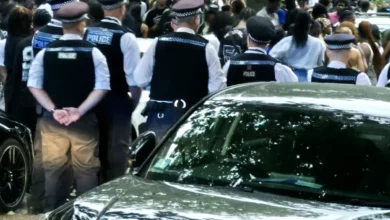
Metropolitan Police Commissioner Sir Mark Rowley has defended the actions of officers who were filmed repeatedly kicking a suspect in the head during an arrest, describing them as “nothing short of extraordinary” and accusing critics of undermining public confidence.
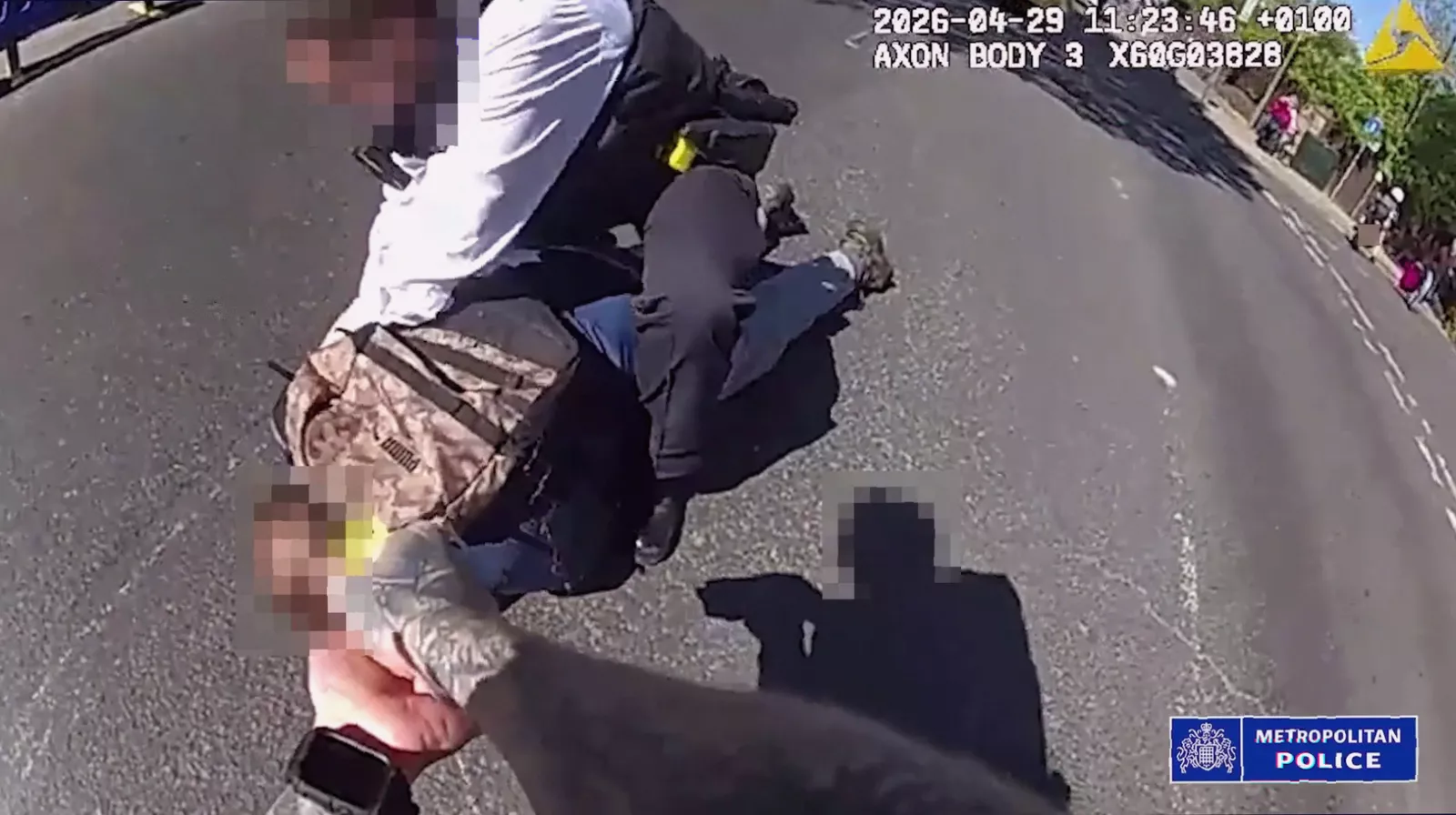
Footage shared widely on social media showed two officers using a Taser and then stomping and kicking the suspect as he lay on the ground. The Green Party leader, Zack Polanski, reposted a message that accused officers of “repeatedly and violently kicking a mentally ill man in the head when he was already incapacitated by Taser”. Sir Mark said he was “disappointed” in Polanski – who is Jewish – for sharing what he called an “inaccurate” post. In an open letter to the political leader, the Commissioner wrote: “Those officers are nothing short of extraordinary. They were on the scene within a few minutes, and their actions undoubtedly prevented further injury and saved lives.”
Sir Mark emphasised that the officers confronted a man they believed to be a terrorist, who refused to show his hands, was violent, and continued to pose a clear threat. Crucially, the officers were not armed with firearms and feared the suspect was concealing an explosive device. “Using only their training, equipment and a substantial level of bravery and courage, they detained him while he continued to try and attack and stab them,” Sir Mark said. He described the apprehension of violent and dangerous criminals as a “full-contact and messy task which may appear shocking to observers with little experience of policing in the real world”.
The incident unfolded on Highfield Avenue in Golders Green on Wednesday morning. The suspect, identified as Essa Suleiman, 45, was arrested on suspicion of attempting to murder two Jewish men: Shloime Rand, 34, and Moshe Shine, 76. Rand has since been discharged from hospital, while Shine remains in a stable condition. Suleiman, a British national born in Somalia who came to the UK as a child in the 1990s, has been charged with two counts of attempted murder and one count of possession of a bladed article in connection with that attack. He also faces a separate charge of attempted murder for an incident earlier the same day in Great Dover Street, Southwark. Police have stated that Suleiman has a history of “serious violence and mental health issues” and has previously been admitted to mental health hospitals. He was known to the Prevent programme, a government anti-extremism initiative, having been referred in 2020, but the case was closed that same year.
A spokesperson for the Green Party said: “Zack has seen the video like everyone else, and doesn’t know the full picture and knows it was a very difficult situation for the authorities, but we do need to understand more about the response.”
Taser use and police guidelines
Police previously said the suspect attempted to stab officers and was hit with a Taser weapon before being arrested. A Taser is a popular brand of stun gun manufactured by Axon Enterprise. A discharge, known as a “cycle”, immobilises a person by jolting them with 50,000 volts of electricity for about five seconds. The shock has been described as painful, drawing criticism from human rights groups. College of Policing guidelines state that only highly-trained officers can deploy a Taser in authorised situations, described as “where any person could reasonably perceive the action as a use of force”. The Metropolitan Police’s own policy dictates that Tasers are only deployed when officers may face an individual who is armed or otherwise dangerous to the extent that the use of a firearm might be necessary, and they are considered an option among others such as negotiation or batons. The College of Policing stresses that Taser use must be a proportionate response to an identified threat and not simply to gain compliance. Axon has developed newer models, such as the TASER 10, which offers a longer range, the ability to deploy up to ten probes, and de-escalation features including a pulsing light and audible alerts.
Terror threat level raised
Following the Golders Green attack and other incidents targeting the Jewish community, the UK’s terrorism threat level was raised to “severe” by the Joint Terrorism Analysis Centre (JTAC). This indicates that a terrorist attack is now considered “highly likely” within the next six months. It is the first time the threat level has changed since February 2022, when it was downgraded from “severe” to “substantial”. The decision to raise the level was not solely based on the Golders Green attack but also on a general rise in threats.
Laurence Taylor, Head of Counter Terrorism Policing, said this evening that the UK has seen a “gradual increase” in terrorist threats from far-right and Islamic groups. “Our casework is increasing across a number of ideologies and within that we are seeing an elevated threat to Jewish and Israeli individuals and institutions in the UK,” Taylor added.