Britain is facing an unprecedented surge in child sexual abuse, with the National Crime Agency revealing that police are arresting approximately 1,000 potential offenders every month and safeguarding 1,200 children from harm in the same period.
This represents a 50% increase in the number of children rescued over the past five years, with leads about individuals interested in sexually abusing children having risen tenfold in a decade. The NCA’s Child Sexual Exploitation Referrals Bureau now receives an average of 1,700 reports each week, underscoring the scale of the threat. In a single week this January, UK forces made 252 arrests, charged 118 people, safeguarded 407 children, and saw 35 individuals sentenced.
The Technological Engine of Abuse
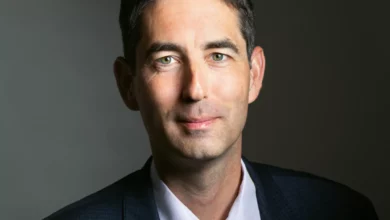
Rob Jones, the NCA’s director general of operations, stated that the growth in offending is “driven by technology” and intrinsically linked to the radicalisation of offenders in online forums. “If you go into an online forum and you’ve got a sexual interest in children, you’ll be told that you are normal,” he said, describing how algorithms on mainstream social media platforms push paedophilic material to users with a previous interest, creating echo chambers that normalise and encourage abuse.
Offenders are increasingly using the dark web to collaborate and coordinate activities, while leveraging the open web as a discovery platform to identify and abuse vulnerable children, Jones explained. Law enforcement has taken down dark web sites hosting abuse material, leading to arrests of UK users.
The AI Threat and Recent Cases
Compounding the crisis is the explosive rise of artificial intelligence. Reports of AI-generated child sexual abuse material have more than quadrupled in a year, with a 380% increase noted between 2023 and 2024. In 2025, the Internet Watch Foundation detected a record 3,440 AI videos of child sexual abuse, a staggering 26,362% rise from the previous year. This hyper-realistic content can include the likenesses of real children, leading to re-victimisation. The UK is introducing new laws to criminalise AI models optimised for creating such material.
The severity of offending is exemplified by recent convictions. Vincent Chan, a former London nursery worker, was jailed for 18 years for sexually abusing toddlers and for offences at a primary school; his crimes spanned nearly two decades and involved over one million indecent images. Joao-Carlos Jardim Dos Santos Teixeira, 26, from Eastbourne, was sentenced to 11 years and four months for sharing and discussing child sexual abuse material, including AI-generated images, across multiple messaging platforms. He possessed nearly 20,000 indecent images, over 1,000 of which were Category A, and encouraged another user to engage in sexual activity with a 13-year-old boy.
Law Enforcement Under Pressure
Police are “racing” to apprehend the worst offenders, who include those in positions of trust or with access to children, constituting 15% of the more than 33,000 leads received last year. The number of recorded offenses for the collection and distribution of child abuse images rose by 25% in 2022/23 to over 33,000, with overall child sexual abuse and exploitation crimes exceeding 115,000 in 2023. In 2022, UK police recorded 107,000 child sexual abuse offenses. Historically, monthly arrests for such offenses ranged between 400 and 450, highlighting the recent escalation.
The Tech Company Imperative
There is “barely concealed annoyance” in UK law enforcement at the perceived lack of action by technology companies, even as their cooperation remains vital for the tens of thousands of leads generated annually. Jones emphasised that tech firms have the ability to stop the circulation of “known images” – which represent the majority of abuse material – by using AI to detect and remove them from unencrypted environments. “They could stop a lot more… improvements by tech companies are nowhere near what’s actually needed to protect children in this day and age,” he said.
The Online Safety Act, which imposes duties of care on tech companies, is seen as a step forward but insufficient on its own. It requires platforms to prevent children from accessing harmful content, redesign algorithms to reduce harm, and implement robust age verification measures. Ofcom, as the online safety regulator, is responsible for enforcement and has issued draft Codes of Practice. However, concerns persist about the effectiveness of age verification and the ease with which children can bypass restrictions using virtual private networks.
Emerging Threats and Vast Scale
Emerging threats include the livestreamed sexual abuse of children, which can be purchased online for as little as £20, and financially motivated sexual extortion, which predominantly affects young males aged 14 to 17, representing 90% of victims in relevant reports. The proliferation of end-to-end encryption on messaging platforms also hinders the detection of abuse material.
The scale of risk is staggering. The NCA estimates that between 710,000 and 840,000 adults in the UK pose varying degrees of sexual risk to children. This aligns with findings from the Independent Inquiry into Child Sexual Abuse, which estimated up to 840,000 offenders, with 400,000 searches for online child sexual abuse material occurring monthly in the UK. The Centre for Expertise on Child Sexual Abuse estimates that 500,000 children are sexually abused every year in the UK.
Broader historical data shows that approximately 7.5 million women and 6.1 million men in England and Wales experienced abuse before the age of 18. Globally, the National Center for Missing and Exploited Children received over 20 million reports of suspected online child sexual exploitation from tech companies in 2024 alone.
Becky Riggs, the acting chief constable for Staffordshire police and the National Police Chiefs’ Council lead for child protection, warned that every victim suffers “unimaginable consequences, which are often lifelong and, sadly in the online world, are often relived as well because the images are shared across a network of individuals.” Jones dismissed a proposed ban on under-16s using social media as “not a silver bullet,” emphasizing that with offenders determined and adaptive, the challenge requires urgent and comprehensive action from all sectors.