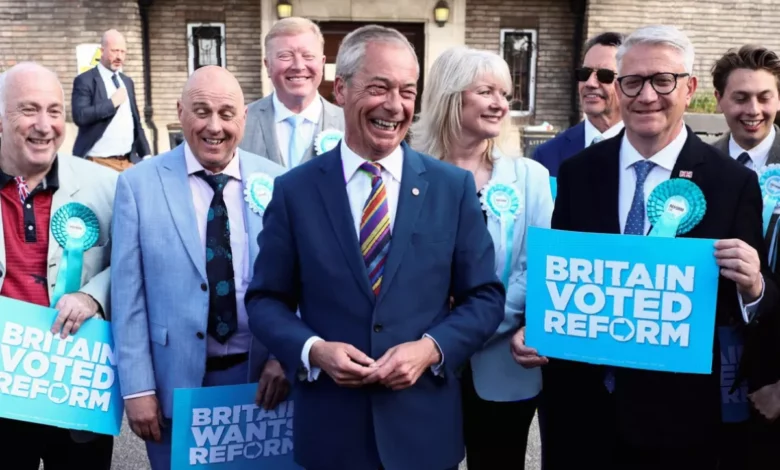
Reform UK is facing a mounting bill that could exceed £320,000 for by-elections triggered by a wave of resignations among its newly elected councillors, new figures obtained by The Independent show – as the party’s own leader insisted the candidate vetting process was “thorough”.
Stuart Prior: The latest resignation
The most recent departure is Stuart Prior, who won seats on both Essex County Council and Rochford District Council in the May 2025 local elections, part of Reform’s historic victory that ended 25 years of Conservative control in the county. Days after taking office, Prior resigned after being confronted by the Mirror over social media posts allegedly written six months earlier. The posts reportedly celebrated a Sikh woman being raped in the Midlands, described Muslim people as “rats” and referred to white people as the “master race”. When challenged by the journalist, Prior said he did not recall the tweets, despite the reporter pointing out that pictures of the candidate’s house and dog also featured in the same account. Reform UK revoked his party membership and stated he resigned for “personal reasons”.
His departure forces two by-elections – one for Essex County Council and one for Rochford District Council – each at a cost that must be borne by the local authority. Estimates provided by Rochford council put the combined figure at £35,000. Unlike general elections, which are funded by central government, local by-elections are paid for by the council in which they are held, meaning the financial burden falls directly on local taxpayers.
Financial impact: Taxpayers footing the bill
The data, obtained by The Independent through Freedom of Information requests, shows that 11 former Reform councillors have already cost local taxpayers an estimated £287,000 in by-election costs. Adding Prior’s two vacancies pushes the total to at least £322,000. Since May last year, 17 Reform UK councillors have vacated their seats. In 12 of those cases – 70 per cent – the circumstances related to vetting or conduct issues, a lack of engagement with council duties, or basic administrative problems that were not spotted by the party. By contrast, Labour has so far lost three councillors from its 2025 cohort of 98, none over vetting issues; one resignation was due to death.
Liberal Democrat Cabinet Office spokesperson Lisa Smart said: “If Nigel Farage spent half as much time vetting his candidates as he does looking for a TV camera, he might have avoided saddling the British taxpayer with a gigantic bill for his party’s incompetence. Reform’s record of dodgy councillors is eyewateringly expensive for the British public and proves that Farage’s party is simply not fit for office. Local communities deserve better.”
Mark Kieran, chief executive of the campaign group Open Britain, added: “Voters elected these councillors in good faith, expecting a party as well-funded as Reform UK to have carried out reasonable due diligence – and for the councillors they elected to be around long enough to deliver on their campaign promises. Now Reform’s back-of-a-fag-packet vetting has denied voters their democratic representation and landed them with a collective £300,000 bill – draining scarce funding from libraries, social care and bin collections.”
Reform UK dismissed the analysis as “misleading” and pointed to an estimated £1.3 million in combined costs arising from by-elections triggered by Labour and Conservative councillors over the same time period, noting that after the May 2025 elections the two parties had a combined 10,527 councillors while Reform had 804. A party spokesman said: “This analysis is a transparently selective and deeply misleading attempt to manufacture a political attack on Reform UK. It conveniently ignores the fact that last year the Conservatives and Labour together saddled taxpayers with at least £1.3 million in local by-election costs. In this parliament alone, Labour has cost the public purse almost £1 million after the resignations of two scandal-hit MPs. The public is now being expected to fork out another £500,000 for a by-election in Makerfield as a result of Labour’s internal psychodrama.”
Other resignations: A pattern of failures
Prior is not an isolated case. The party’s first resignation after the 2025 local elections was Andrew Kilburn, who left Durham Council after just nine days when it emerged he was an employee of the local authority – as such, he was ineligible to stand. Wayne Titley resigned from Staffordshire County Council two weeks after being elected, following criticism of Facebook posts where he advocated for small boats attempting to reach Britain to be sunk with a “volley of gun fire”. He cited personal reasons and said he and his family had faced abuse.
Lynn Dean stood down from Newcastle-under-Lyme Borough Council in April after being suspended from Reform UK for allegedly publishing racist posts on X. Her vacated seat was already scheduled to be contested on May 7 as part of the wider local elections, and she remains an independent councillor on Staffordshire County Council.
Barry Martin, also of Staffordshire County Council, is the latest of the 2025 intake to go, resigning earlier this week. Two formal complaints against him relating to his social media activity were upheld by the authority last year. He allegedly wrote shortly after his election that the role was “so dull and boring” and that he was “thinking of resigning”. Reform council leader Martin Murray said that Mr Martin resigned for health reasons and a family bereavement.
Other cases include Robert Bloom of North Northamptonshire, who resigned in August after being charged in October with two counts of racially or religiously aggravated harassment; David Cumming of Durham, who resigned in January after a period of extremely low attendance (20 per cent); and Adam Smith of West Northamptonshire, who was expelled from the party in August for bringing it into “disrepute” and resigned in March.
Beyond these formal resignations, further controversies have emerged. Glenn Gibbins, a Reform councillor on Sunderland City Council, was suspended and apologised for an alleged racist social media post from March 2024 in which he suggested Nigerians should be used to “fill in pot holes”; he claimed the post was intended as a joke made with poor judgment before joining Reform. Linda McFarlane of Gateshead was identified by campaign group Hope Not Hate for social media posts calling for a “white Britain” and suggesting Keir Starmer should be shot. Ben Rowe of Plymouth was accused of antisemitic comments, including suggesting “the Jews” were “creating division by forcing other races on our societies” and that the Covid epidemic had a “Hebrew” source; he also urged protesters to throw bricks at police defending a mosque. Nathaniel Menday of Sheffield described himself as an “ethno-nationalist”, allegedly blamed Jews for antisemitism, and made comments about the Olympiastadion in Berlin calling its builders “real visionaries”.
When asked in April if all of Reform’s candidates in Essex had been vetted, Nigel Farage said: “I know that our candidates will be held to a higher standard than any of the other parties. That’s because we are the challengers. We are the ones taking on the establishment. Yet we have done a good, thorough professional job.” The party’s application process for approved candidates includes an application fee, a deep digital vetting process of online footprints, potential interviews, and checks such as DBS. Critics, including Hope Not Hate, have described the vetting as “inadequate” and a “systemic failure”.