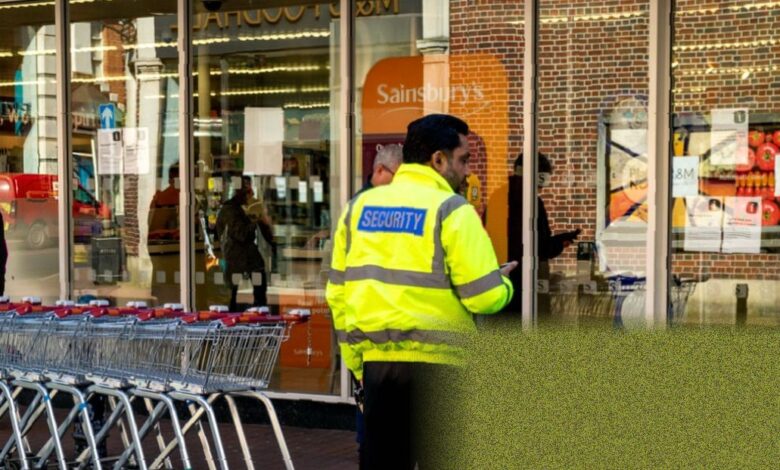
The violent threats faced by shop workers across the UK remain at crisis levels, with new industry figures revealing that retail staff are subjected to over a thousand incidents of abuse or violence every day, a number that has more than tripled since before the pandemic.
According to the British Retail Consortium’s annual crime survey, there were 1,600 incidents of violence and abuse against retail workers per day in the last financial year. While this marks a fall of a fifth from the 2,000 incidents a day recorded in 2023-24, the figure is still the second highest on record and a stark increase from the 455 incidents a day seen before Covid-19. The number of physical assaults remained stubbornly unchanged at 118 per day, with an average of 36 incidents involving a weapon.
Organised Gangs and Tens of Thousands in Stolen Goods
Behind this wave of abuse lies a staggering scale of theft, which retailers warn is increasingly driven by organised criminal gangs. The BRC survey detected 5.5 million incidents of shoplifting last year, costing the industry an estimated £400 million. The true figure is believed to be far higher.
Helen Dickinson, chief executive of the BRC, stated that criminal gangs are “systematically” targeting stores, “stealing tens of thousands of pounds worth of goods in one go.” These groups are increasingly focusing on high-value, easily resold items, with chocolate notably becoming a prime target, stolen to finance organised crime operations to the extent that some retailers now lock bars in security boxes.
This organised theft has a direct and brutal link to violence against staff. Evidence from the shop workers’ union Usdaw indicates that two-thirds of attacks on retail staff are triggered by theft or armed robbery. Joanne Thomas, Usdaw’s general secretary, said the 5.5 million thefts are “in no way a victimless crime,” noting that persistent offences cause significant anxiety for workers.
Police Response and New Laws
There are signs of a shifting response. The BRC reports a slight improvement in retailers’ perception of the police, with 13% rating the response as good or excellent, up from 9% the previous year. This follows heavy investment by retailers themselves, who have spent over £5 billion on security measures in the last five years, including more guards, facial recognition, and security tags.
The government is also enacting new legislation, expected this spring as part of the Crime and Policing Bill. The measures will create a standalone offence for assaulting a retail worker and remove the £200 threshold for so-called “low-level” theft, which carries a maximum six-month sentence. A further £7 million has been pledged over three years specifically to support the response to retail crime, as part of a wider plan to improve local policing.
Dickinson welcomed the funding but warned that “turning this into real impact requires sustained prioritisation and dedicated resourcing from police.”
The Wider Picture: Record Numbers and Contributing Factors
The scale of the challenge is corroborated by official statistics. Police in England and Wales recorded 516,971 shoplifting offences in the year to December 2024, a 20% increase, according to the Office for National Statistics. This is the highest level since current recording practices began in 2003, following a 37% year-on-year increase the previous year.
The Commercial Victimisation Survey for 2023 found that theft was the most prevalent crime against businesses in England and Wales, affecting 14% of premises. Supermarkets were hit hardest, experiencing theft at 76% of premises and assaults or threats at 43%.
Experts point to a confluence of factors driving the problem. The rising cost of living, including increased prices for basics, is frequently cited. Other prevalent drivers include poverty, drug addiction, and mental health issues. Some analysts also suggest retailers’ own cost-cutting, such as the wider use of self-checkouts, may have contributed.
The fallout extends beyond in-store theft. The BRC survey also noted that parcel theft cost retailers over £100 million last year. For the industry’s 3 million employees, the daily reality remains fraught. As Usdaw’s survey found, 70% of retail workers suffered abuse from customers, with 18% experiencing a violent attack in the last year, a significant rise from 8% in 2022.
“No one should go to work fearing for their safety,” said Helen Dickinson. “We must redouble our efforts to bring these numbers much further down once and for all.”