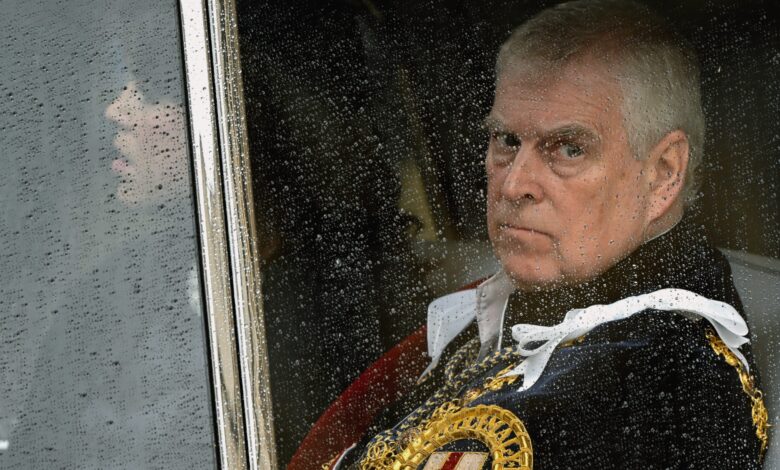
In a historic development that has plunged the monarchy into one of its gravest crises in decades, Andrew Mountbatten-Windsor was arrested last week on suspicion of misconduct in public office, with the government now actively considering legislation to remove him from the royal line of succession for the first time in nearly a century.
The arrest occurred on Thursday, 19 February 2026—his 66th birthday—at his residence on the Sandringham Estate. He was held for approximately 11 hours before being released under investigation, with no charges filed. Thames Valley Police are leading an investigation into allegations that, while serving as the UK’s trade envoy, he shared confidential trade information with the disgraced financier and convicted child sex offender Jeffrey Epstein.
These claims emerged from a new tranche of emails in the so-called Epstein files, released by the US Department of Justice last month. Police searches have been conducted at his former home, Royal Lodge in Windsor, and his current Sandringham residence, with these operations expected to continue.
Constitutional Moves and Palace Stance
Prime Minister Keir Starmer is reportedly reviewing plans for an Act of Parliament to enable Andrew Mountbatten-Windsor’s removal from the line of succession, a move that would prevent him from ever ascending to the throne. Defence minister Luke Pollard stated on BBC Radio 4’s Any Questions that the government had “absolutely” been working with Buckingham Palace on the plans, arguing that “British values” point towards ensuring he cannot become king.
Royal sources have told The Guardian that King Charles III will not oppose such legislation. A spokesperson for Buckingham Palace told The Independent that the issue is “a matter for Parliament,” while the King himself has stated that “the law must take its course” and that the police have “our full and wholehearted support and co-operation.”
Removing Andrew from the succession would require fresh legislation passed by the UK Parliament and the agreement of the 14 other Commonwealth realms where the King is head of state. The government has said it will consider this step once the ongoing police investigation has concluded, having indicated no plans for such a change as recently as November 2025.
Public and Political Pressure
Public sentiment appears overwhelmingly in favour of this constitutional shift. A YouGov poll of 7,242 adults, released on Friday, showed that 82 per cent of Britons believe Andrew Mountbatten-Windsor should be cut from the line of succession, with only 6 per cent opposed.
This pressure is echoed in political circles. Former security minister Tom Tugendhat has said Parliament should investigate whether Andrew and Lord Peter Mandelson committed treason through their links to Epstein, according to The Sun. Separately, former prime minister Gordon Brown has called for a probe into whether Andrew used RAF jets and bases to meet Epstein, writing to six police forces this week with concerns over the alleged misuse of public money and the leaking of confidential information. He has further demanded a full investigation into Andrew’s former role as trade envoy.
The released Epstein files have also led to allegations that Epstein facilitated sex trafficking through UK airports, with emails reportedly detailing his use of Stansted Airport. Gordon Brown has called for Andrew to be interviewed regarding these claims.
A Fall from Grace and Ongoing Reckoning
Andrew Mountbatten-Windsor, stripped of his titles of “Prince” and “Duke of York” by King Charles III in October 2025 and now known formally as Andrew Mountbatten Windsor, remains eighth in line to the throne. Despite stepping down from public duties in 2019, he is still technically a counsellor of state, though removing him from the succession would officially resolve any question over him deputising for the monarch.
His legal troubles are not new. He paid a reported £12 million settlement to Virginia Giuffre in February 2022 after she accused him of sexual assault; Giuffre died by suicide in April 2025, with her family expressing gratitude to police for their current investigation. Andrew was also required to vacate Royal Lodge, his home for over 20 years, on 4 February 2026, and has moved to Wood Farm cottage on the Sandringham Estate.
Historical Precedents and a Unprecedented Arrest
This arrest marks the first time a senior member of the British Royal Family has been detained in nearly 400 years, since the arrest of King Charles I during the English Civil War. The crisis is considered the most severe to affect the House of Windsor since the abdication of King Edward VIII in 1936, which was the last occasion an individual was removed from the line of succession through an Act of Parliament.
The legislative process for altering succession or removing titles has precedents, such as the Titles Deprivation Act 1917, though modern changes are governed by acts like the Succession to the Crown Act 2013, which reformed inheritance rules but did not apply to Andrew Mountbatten-Windsor. The Liberal Democrats have backed the call for his removal from the succession, underscoring the broad political will that now surrounds this historic constitutional moment.