Advisory panel lets flora and fauna select representatives as birch expresses anxiety about overpopulation

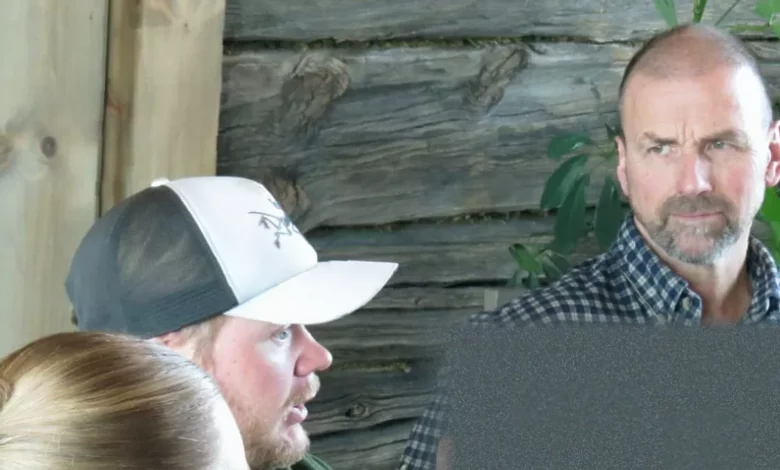
In a conference centre in Norway’s Drivdalen valley, the air filled with an unusual kind of political discourse. A birch tree expressed anxiety about its own proliferation. A river’s voice broke with emotion, lamenting years of being treated as a mere resource. These were not fairy-tale characters, but the embodied voices of Oppdal’s non-human residents, spoken by local people gathered to discuss the region’s future in an “interspecies council”.
An Experiment in Oppdal’s Governance
The mountain municipality of Oppdal, nestled between the Dovrefjell and Trollheimen ranges, is at a crossroads. With an economy mixing tourism, agriculture, and industry, it is planning for growth, including new apartments to accommodate more visitors and mitigate against warming winters. This development has sparked ongoing debate about balancing economic needs with ecological health, a tension familiar to many communities. As mayor Elisabeth Hals notes, while residents live with their “shoulders lower,” discussions over land allocation between farming, tourism and conservation persist, albeit animated by a shared sense of stewardship.
It was this context that led architect Katerine Chada, part of the multidisciplinary Common Ground research project exploring integrated land management, to propose an unconventional solution. After hearing scientist and activist Phoebe Tickell speak at the University of Cambridge in 2025, Chada pitched the idea of an interspecies council to her colleagues. The initial reaction was sceptical. “Are we going to go on this weird trip?” wondered fellow architect Patricia Schneider-Marin. Yet, the team agreed to try, curious whether giving nature a formal voice could cut through conflict and enable more ecological decisions.
In the Bjerkeløkkja conference centre, 38 local people, all new to the practice, gathered. Through floor-to-ceiling windows, conifer forest and snow-dusted foothills provided a fitting backdrop. After icebreakers that saw half the room stand to acknowledge their family history in Oppdal, the embodiment began, eliciting odd squawks, wing flaps, and lumbering strides. Chada represented a spider, Schneider-Marin a Norwegian spruce, and facilitator Margrete Vognild Blokhus a purple saxifrage flower. Mayor Hals would later join as a cloudberry.
The ceremonial discussions that followed revealed a landscape of concerns and relationships invisible to standard planning meetings. A rockfoil flower wished humans would slow down and listen “to where nature can tolerate more human activity and where it needs space.” The birch tree confessed, “I’m worried there’s too of me. I thrive in open spaces, but I can take over.” The River Driva lamented, “I’ve just been seen as a resource, and not even acknowledged for how much I’ve given this landscape.” Even interspecies bonds were noted, with a fox exclaiming, “I like him!” while pointing at a wader.
The council produced a draft set of principles for human governance, set to be published as a manifesto. Concrete ideas emerged, including holding an interspecies council every six months and forming a *höringsgruppe*, or hearing group, dedicated to listening to Oppdal’s non-humans. Participants plan to reconvene in June to discuss implementation.
From Ceremonial Ritual to Governance Methodology
The roots of this practice stretch back to the 1980s and the work of environmentalists John Seed and Joanna Macy. Seed, an Australian activist who co-founded the Rainforest Information Centre, co-authored “Thinking Like a Mountain: Towards a Council of All Beings” with Macy, Pat Fleming, and deep ecology philosopher Arne Naess. They developed the Council of All Beings as a ceremonial practice where humans embody other species to confront ecological grief and interconnectivity.
This spiritual ritual has since been adapted for practical governance. Phoebe Tickell, a mentee of Joanna Macy and founder of the organisation Moral Imaginations, is a key figure in this evolution. In 2021, she developed the interspecies council as a formal “decision-making methodology that expands who has voice and representation in governance beyond humans alone.” Her approach is a participatory, semi-improvisational roleplay, guided by factual issues but brought alive by intuition and imagination, positioning it as a pioneering tool within the broader “nature-centric governance” movement.
The methodology addresses a specific issue: facilitators and ecologists first identify the multispecies stakeholders, then assign and brief human representatives, chosen randomly or for expertise. The process concludes with an output, like a manifesto, and an impact evaluation. The ultimate aim is to establish what Tickell calls “institutional trace”—meaningful decision-making power grounded in robust methodologies, accountable protocols, and longitudinal research. She warns the practice will have failed if it becomes “sophisticated greenwashing or window-dressing.”
Cultivating Empathy and Challenging a Deep-Rooted Divide
The primary value of these councils is not the unearthing of new ecological data. “I work a lot with numbers,” says architect Patricia Schneider-Marin. “We know the numbers.” Instead, the core intention is to cultivate interspecies empathy and actively dissolve what proponents argue is the illusory but deeply entrenched human-nature divide—a concept rooted in Western philosophy, particularly Enlightenment thought and Cartesian dualism, which posits humans as separate from and superior to the natural world.
“To take care of nature, we have to know it and feel it and think like it,” says Margrete Vognild Blokhus. This process of embodied representation is deliberately challenging. Speaking for a Norwegian spruce, a being without sight, smell, hearing, or taste, was “a bit of a brain-twister” for Schneider-Marin. Yet, she sees that difficulty as “a healthy point,” acknowledging the profound sensory and cognitive differences between species. Tickell frames the inherent imperfection of the exercise with a stark comparison: “Is it sillier to ask someone to imaginatively inhabit the perspective of a different species for an hour, or to continue running governance systems that have driven a 70% collapse in wildlife populations in 50 years?”
The act of speaking *as* a non-human also disrupts conventional human dynamics, creating an unusually “fantastic atmosphere of listening,” according to Katerine Chada. Schneider-Marin observed that it helped “people to hear concerns without feeling offended, because they could be like: ‘OK, wait, I’m a species.'” An ongoing evaluation in Oppdal is tracking whether this positive experience translates into lasting change, measuring participants’ connectedness to nature and openness to non-human perspectives from before the council to six months after.
This work in Norway is part of a growing international movement. In the UK, 13 councils have recognised river rights since 2023, and a Nature’s Rights Bill is building support, aiming to establish a legal duty of care towards the natural world. Specific applications are multiplying: an interspecies council was held for London’s River Roding in April 2023, a collaboration between Moral Imaginations, Policy Lab UK, and DEFRA Futures to explore freshwater governance. A coalition of artists, ecologists, lawyers and others is exploring interspecies biodiversity governance around the North Sea, while organisations are experimenting with nature charters and appointing nature to boards.
Tickell envisions a future where such councils are a standard requirement, “as unremarkable as environmental impact assessments“—the statutory UK process for evaluating a project’s ecological effects. For the participants in Oppdal, shared scepticism has transformed into a sense of sowing potential. They now see themselves, as Vognild Blokhus puts it, planting “little seeds that we have to plant to make sure that in the end, maybe, we have a change.”