A 1,100-hectare (2,500-acre) Yorkshire estate, owned by the same family for nearly a thousand years, is embarking on what experts describe as one of the most significant rewilding projects in the country, backed by a “natural capital asset manager” that treats nature as critical infrastructure.
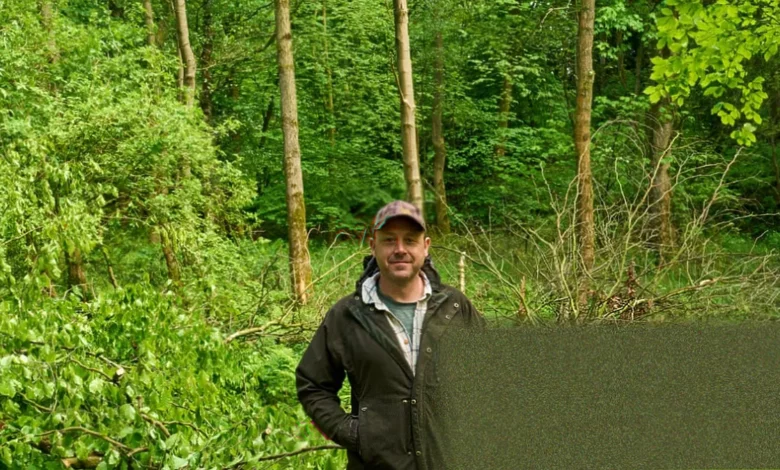
The Broughton Sanctuary estate near Skipton, at the gateway to the Yorkshire Dales, has been under the stewardship of the Tempest family since 1097. The current custodian, Roger Tempest, the 32nd generation, inherited the land as a child and found the main house derelict, with “no heating and bats flying around”, and much of the pasture degraded after years of intensive farming.
Now, investment from the fund Rebalance Earth – described as “a few million” by its co-founder and chief executive Rob Gardner – will allow the estate to “unlock the next level of rewilding” across roughly two-thirds of the land, approximately 700 hectares, according to Kelly Hollick, the estate’s nature recovery manager.
A historic estate’s evolution
Before the rewilding could begin, Tempest spent years restoring the estate’s built fabric. Derelict agricultural buildings were converted into a business park that now houses around 50 companies employing about 700 people. The main house and surrounding cottages have been renovated and have appeared on screen in Channel 4’s A Woman of Substance and the BBC’s Gentleman Jack – where Broughton Hall played the Black Swan Inn. The estate also runs year-round yoga retreats and a spa complex.
“We regenerated all the buildings and the architecture, and I think we were guilty of forgetting about the land,” Tempest said.
That changed in 2021, when he launched a nature recovery programme to restore woodlands, wetlands, grasslands and meadows. The timing coincided with two sheep farmers ending their tenancies, freeing large areas. Over the past five years, 330,000 native trees have been planted. Otters and wading birds such as curlews have returned. A pair of beavers introduced last April have already had a second litter, and on a recent visit the cries of two kits were audible from their enclosure.
Rebalance Earth’s investment will allow the estate to fell spruce trees and replace them with native species and shrubs, creating diverse habitats. Iron Age pigs and Dales ponies will roam fields where sheep once grazed, breaking up compacted earth to allow grasses and plants to thrive. Food production will continue from orchards, allotments and around 60 cattle.
Previously, tempest said, “all that was funded was trees”, referring to grants the estate had received before the Rebalance Earth deal.
How nature credits and biodiversity net gain make rewilding pay
The project is not just about restoration. Rebalance Earth insists it can generate “financial, environmental and social returns” by transforming degraded land into a thriving ecosystem. The company’s core mission is to treat nature as a “critical, income-generating infrastructure asset” and to deploy £10bn over the next decade across the British Isles, targeting an internal rate of return of 8 to 12 per cent over 15 years from stable, contractual revenues.
The key financial mechanisms at Broughton are nature credits, biodiversity net gain (BNG) units and carbon credits linked to long-term carbon sequestration.
Since February 2024, all new major developments in England have been legally required to deliver at least a 10 per cent net gain in biodiversity or habitat. If, for example, woodland is destroyed by a road-building project, an equivalent or better habitat must be recreated on-site or elsewhere. Where developers cannot achieve this, they are permitted to buy biodiversity units from third parties. Rebalance Earth is tapping into this market at Broughton through credits calculated by the rewilding consultancy Ecosulis and its fintech spin-off CreditNature.
Ecosulis, described as the longest-standing ecological contractor and consultancy in the UK and a B Corp-certified company, has been involved at Broughton for several years. CreditNature has developed the NARIA framework – Natural Asset Recovery Investment Analytics – which includes an Ecosystem Condition Index to measure ecosystem health, underpinning digital Nature Impact Certificates and Units designed to make nature “genuinely investable and tradeable”.
Gardner said the companies buying these credits at Broughton include “national players who operate up and down the country but have [developments] nearby and a lot of businesses that are in the region, and then hyper-local ones which might even be on the [Broughton] business park”.
The financial model is backed by institutional investors. The West Yorkshire Pension Fund (WYPF) – part of the Local Government Pension Scheme – has committed £25m to Rebalance Earth’s cornerstone portfolio, marking a significant allocation to nature-based investments in the British Isles. Darran Ward, WYPF’s head of alternatives, has described place-based, nature-based infrastructure as a key component for both resilience and returns.
Broader institutional appetite is also evident: the £3.6bn Bedfordshire Pension Fund agreed earlier this month to a 3 per cent allocation to natural capital investments to expand its climate solutions portfolio.
Gardner, a City veteran who previously co-founded Redington and served as an investment director at St. James’s Place, said the sweltering days and record-breaking temperatures across much of the UK in May and June had highlighted the urgency of nature restoration. “People start connecting the dots … There is a shift in mindset from ‘this is an episodic thing, aren’t we unlucky’ to ‘actually this is now going to happen more and more,'” he said.
Rebalance Earth also funds larger ecosystem restoration projects, including building oyster reefs off the north Norfolk coast to rebuild marine ecosystems, and working with 50 farmers in the north-east Cotswolds to “rewiggle” the River Evenlode in Oxfordshire. The Evenlode – like 90% of UK rivers, according to the company – was artificially straightened by farmers to drain land for crops, but that caused faster water flow, more erosion and increased downstream flooding. The project restores original curves so the river can reconnect with its floodplain, reducing flood risk, improving soil and boosting biodiversity.
Alastair Driver, former director of Rewilding Britain and a specialist adviser on projects including Broughton, has been involved with the estate for several years. He said Rebalance Earth’s investment will help with “the difficult bit” of rewilding. “The hard bit is the work we are doing, holding water on the land, keeping the soil wetter for longer, that’s really tough,” he said.
The scale of intervention is critical. Driver noted that rewilding large blocks of land alongside agriculture and parkland achieves the biggest transformation. “It’s really difficult to be doing things at this kind of scale, but now we’ve got this opportunity. It’s difficult because it’s hard to find the funding and it’s hard to get permissions. We’ve now got this all in one land ownership. It’s really exciting and is going to be one of the most significant projects in the country.”
The context of intensive farming makes the project more urgent. Research shows that approximately 40% of UK farmland suffers from soil degradation, diminishing its capacity to store water and carbon. Degraded soils cause rapid water runoff, exacerbate floods and, in dry spells, reduce resilience – threatening food security and driving up prices. Agricultural pollution is the leading cause of harm to water quality in England, and experts have called for changes in subsidies and policies to reward soil restoration.
At Broughton, the beavers are already demonstrating nature’s engineering power. Their dams can hold water, reduce flood peaks by up to 60% and slowly release stored water during drought. Studies show beaver ponds also reduce nitrogen pollution and trap sediments. But reintroductions require careful community engagement – a consideration Rebalance Earth and the Tempest family have built into their plan.
In the beaver enclosure at Broughton, the cries of the second litter of kits were audible from the fence – a small sound of a large transformation now underwritten by a financial model that aims to prove nature can pay its own way.