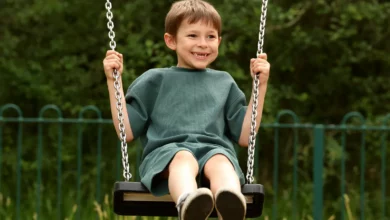
The government has announced a £132.5 million funding package for after-school clubs, positioning the initiative as a direct counterbalance to plans to restrict social media access for under-16s. The programme, named “Every Child Can”, is designed to expand enrichment activities in schools and communities, offering music groups, debating societies, engineering clubs, and sports as what ministers describe as a real-world alternative to time spent online.
After-school clubs as an alternative to screen time
The funding, drawn from the Dormant Assets Scheme using money from long-unused financial assets, will support activities delivered through schools, community programmes, weekend schemes, and holiday provisions. Education Secretary Bridget Phillipson said the aim was to ensure that access to enrichment was not limited by background or income. “Every child should be able to enjoy sport and the creative arts, not just the lucky few,” she said. “Whether it’s performing on stage, playing sport, exploring nature or getting involved in their community, these experiences build confidence, spark ambition and help young people discover what they are capable of.”
Culture Secretary Lisa Nandy stressed the programme’s role in tackling inequality, stating: “A child who loves the arts shouldn’t have to be born into the right postcode to pursue it.” The government’s rationale for linking the clubs to online safety is rooted in a broader effort to reduce pressure on young people’s mental health. Ministers argue that structured after-school activities provide a vital alternative to screen-based childhoods, which they say can lead to isolation and loneliness. The Department for Education pointed to a survey of more than 14,000 young people that found that despite being the most digitally connected generation, many report high levels of loneliness. Research has reinforced these concerns: a 2023 UK Youth report found that 70% of young people believe social media harms their mental health, while a 2017 Royal Society for Public Health study linked heavy social media use to anxiety, depression, loneliness and poor body image. Ofcom data from 2024 shows that 91% of 16- to 24-year-olds use social media daily.
Ofsted will also take a school’s enrichment offer into account when assessing personal development, in a move intended to place greater weight on extracurricular provision. The regulator’s focus on personal development includes character, resilience, confidence and preparing pupils for life in modern Britain.
Social media restrictions for under-16s expected within days
The funding announcement comes as Prime Minister Keir Starmer is expected to bring forward measures to restrict children’s access to social media in the coming days. The government is understood to be considering an Australian-style ban, alongside options such as app curfews and limits on addictive design features. Technology Secretary Liz Kendall has previously stated that a ban is “on the table”, adding that parents are “crying out for help and support”.
The proposed restrictions would prohibit under-16s from accessing “high-risk” social media platforms, while imposing limits on “safer” platforms including restrictions on disappearing messages, live streaming, and contact from adult strangers. A ban on romantic or sexual AI chatbots for under-18s is also expected. The Australian model, enacted in December 2025, prohibits individuals under 16 from having accounts on major platforms including YouTube, X, Facebook, Instagram, TikTok, Snapchat, Reddit, Twitch, Threads and Kick, with penalties for non-compliant companies.
A government consultation on children’s online safety, which closed in early June after running from May 26, received more than 116,000 responses, making it the second-largest consultation response in recent years. Nine in ten parents who responded backed an under-16 social media ban. The measures are also set against the legislative backdrop of Part 3 of the Children’s Wellbeing and Schools Act 2026, which will require the government to impose some form of age or functionality restrictions for children under 16, following previous defeats in the House of Lords that sought to ban social media for that age group. The existing Online Safety Act 2023 already mandates age verification for pornography sites.
The issue has drawn cross-party attention. Conservative leader Kemi Badenoch added to the pressure this week, saying: “Social media is for adults, it’s not for children.”
Implementation challenges and legal concerns
But the pace of reform has raised questions about implementation. Sources have suggested the government could face judicial review over how it distinguishes between platforms subject to tighter restrictions and those deemed lower risk. The US embassy in London has expressed concerns that a broad ban could impose disproportionate compliance burdens on American companies and affect freedom of speech, instead favouring “narrowly targeted requirements” for adult content. Scotland’s children’s commissioner, Nicola Killean, has questioned the effectiveness of a ban, arguing it would do “little to address underlying issues such as exploitative algorithms” and could shift responsibility away from platforms.
School leaders, while welcoming the government’s ambitions for after-school clubs, have warned that delivery could be challenging. Pepe Di’Iasio, general secretary of the Association of School and College Leaders, said schools were already under financial and staffing pressure. “Those pressures will not disappear simply because the government announces new policies,” he said. “It has to focus more on how to turn aspirations into realities.”