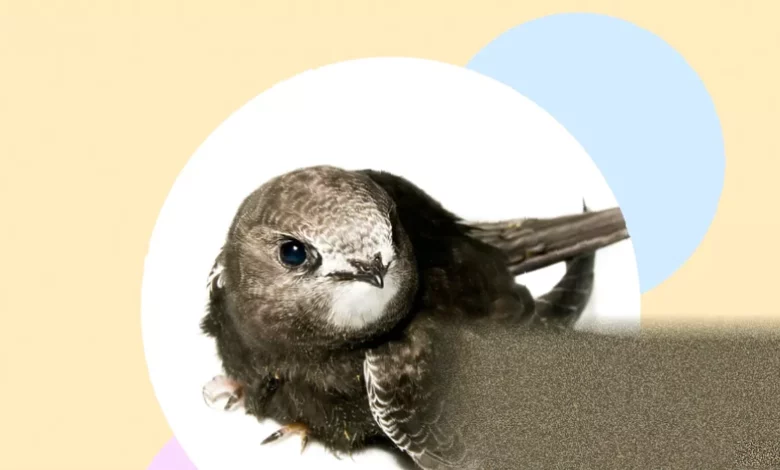
The number of swifts gracing British skies has plummeted by more than two-thirds in less than three decades, with a 68% decline recorded between 1995 and 2023. This relentless drop has placed the enigmatic migratory bird, a beloved herald of summer, firmly on the UK’s Red List of Birds of Conservation Concern.
A Life in Perpetual Flight, Under Threat
Swifts are aerial marvels, spending up to nine months of the year entirely on the wing, flying from sub-Saharan Africa to breed in the UK and covering an estimated 14,000 miles annually. Their dramatic, “screaming” flocks are a signature seasonal spectacle. Yet data from the Breeding Bird Survey shows significant declines across England, Scotland, and Wales since 1995. Conservationists warn that if current trends continue, the UK population could fall below 25,000 breeding pairs within five years.
The Primary Culprit: Sealed Buildings
Experts point to a confluence of pressures, but the loss of nesting sites is identified as a fundamental driver. “In the past 100 years or so, we’ve started to change the way that we manage, build and renovate our structures,” says Dr Guy Anderson, migratory birds programme manager for the RSPB. Modern construction, renovation, and the “tidying up” of older buildings have systematically eradicated the nooks, gaps under eaves, and loose roof tiles where swifts traditionally nest. It is estimated that 20,000 new swift nesting spaces are needed annually just to offset this ongoing loss.
This urban dependence makes them uniquely vulnerable. As Edward Mayer, founder of Swift Conservation, notes, their very name in German translates to “wall-sailor”. The campaign for “swift bricks” – specially designed nest cavities built into walls – has thus become a frontline conservation effort. Scotland has become the first UK nation to introduce a legal requirement for them in new buildings. In England, reforms to the National Planning Policy Framework encourage such features, though campaigners like author and advocate Hannah Bourne-Taylor argue that without statutory enforcement, the policy lacks teeth. Wales has rejected mandatory swift bricks, while Northern Ireland is exploring legislative options.
An Empty Larder and a Changing Climate
The second major threat is the alarming decline of the swifts’ exclusive food source: flying insects. A 50-year study by the Game & Wildlife Conservation Trust on English farmland recorded a 37% decline in insect abundance, with other research suggesting even steeper falls. Pesticide use and habitat loss are key factors. This creates a stark problem for a bird that feeds on the wing.
Compounding this is climate volatility. Cold, wet springs can hamper migration and reduce insect availability during critical breeding periods. Recent analysis suggests changes in juvenile survival rates, linked to poor weather and scarce food, are a significant driver of the population crash. Furthermore, swifts are arriving earlier in the UK and leaving earlier, a shift that may misalign with peak insect hatches.
How the Public Can Help Reverse the Decline
Conservation efforts are mobilising at national and local levels, with numerous actions available to the public. Becoming a “nest detective” is a critical first step. The RSPB’s Swift Mapper app, developed with Natural Apptitude, is a citizen science tool that has gathered over 100,000 records of nesting sites, helping target conservation work.
Providing nest sites is the most direct intervention. Swift boxes can be installed under eaves at least five metres high, while swift bricks can be incorporated into new builds or renovations. “It’s arguably the simplest nature recovery action ever,” says Bourne-Taylor, who campaigns for mandatory installation. The push is supported by organisations like Swift Conservation, which has trained hundreds of planners, builders, and architects. For those unable to install boxes themselves, specialist installers like TV aerial fitters can often help.
Supporting insect populations is equally vital. Planting native species with flowers, nectar, fruit, and berries in gardens and community spaces helps sustain the swift’s food chain. Playing recordings of swift calls in June and July can attract prospecting young birds to new nest sites. Furthermore, helping grounded birds—usually fledglings—by contacting a swift carer (lists are maintained by Swift Conservation) can aid individual survival.
Local action is coordinated nationwide through over 130 groups connected by the Swifts Local Network, an informal body founded by Action for Swifts. Annual Swift Awareness Week in late June and early July highlights these efforts. Citizen science also extends to broader surveys like the BTO/RSPB/JNCC Breeding Bird Survey.
The decline of the swift, a key biodiversity indicator, signals wider ecological trouble. Yet its future in the UK may increasingly rest in the walls of our homes and the health of our insect life, making its recovery a shared responsibility.