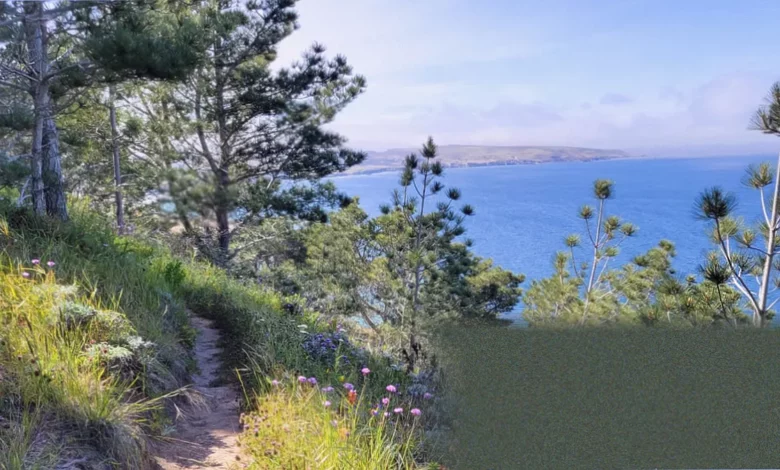
A wildfire tearing through Santa Rosa Island – one of the rarest events in the region’s history – is threatening to wipe out plant species found nowhere else on Earth. The fire, which began on 15 May and is believed to have been started accidentally by a stranded sailor, has already scorched roughly a third of the island’s surface and is now the largest wildfire ever recorded on any of the California Channel Islands. As containment reached 87 per cent by 24 May, the greatest concern centres on a small grove of Torrey pines on the island’s south-eastern corner, where some of the trees have stood for more than 250 years.
The Torrey pines at the front line
The Torrey pine is one of the rarest native pines in the United States. It occurs naturally in only two places on the planet: the cliffs of Torrey Pines State Reserve near San Diego and this isolated grove on Santa Rosa Island. Biologists classify the island population as a distinct subspecies – Pinus torreyana ssp. insularis – differing from its mainland cousin in growth habit, bark and cone shape. When the wildfire threatened to overrun the grove, firefighters raced to shield it. Drone footage has since offered “cautious optimism”, according to Sierra Frisbie, a fire information officer assigned to the incident, with green canopy still visible. Yet Frisbie warned that “delayed mortality can occur months or even years later, especially in species that are not well adapted to wildfire”.
The fire burned through the Torrey pine grove at relatively low intensity, and initial assessments suggest many of the ancient trees may have survived. The species’ slow seed dispersal – seeds are released over several years rather than all at once – can be beneficial after a burn, but scientists stress it is far too early to determine long-term survival.
A fragile ecosystem under siege
Santa Rosa Island is part of the Channel Islands National Park, a chain often described as the Galápagos of North America because of its extraordinary biodiversity. The islands are home to hundreds of native plant species, including 281 endemic plants – species that grow nowhere else. Santa Rosa Island alone hosts six of these endemics, and Dr Heather Schneider, director of research and conservation at the Santa Barbara Botanic Garden, noted that 10 per cent of the island’s plants are considered rare. The wildfire threatens all six endemics, many of which had only recently begun to recover after more than a century of damage from non-native livestock and imported wild game. The National Park Service has closed the island to visitors and evacuated 11 staff members. Three historic structures – the Johnson’s Lee Equipment Shed, the Wreck Line Camp Cabin and an adjacent storage building – have been destroyed, though the South Point light station survived.
Among the endemics, the soft-leaved Indian paintbrush, a yellow-flowering herb listed as federally endangered, has had part of its range directly impacted by the fire. Its range extends to the north of the island, which has not yet burned, offering some hope. The East Point dwarf dudleya, a succulent whose entire known distribution lies on the eastern end of the island, has already been torched. “Their response to fire is not known at all,” said Steve Junak, a biologist who has studied Channel Island flora for nearly four decades. “I hope they survive this event.”
Evolutionary responses to fire
Wildfires have historically been extraordinarily rare on the Channel Islands. Natural fires were typically sparked only by lightning strikes, and evidence suggests that such events occurred on Santa Rosa Island only tens of thousands of years apart. Human activity became a factor in the late 1800s, when grass burning was documented, but the current blaze – caused by a 67-year-old sailor who crashed his boat on the shore and fired emergency flares to attract help – is the largest ever recorded on any California Channel Island. This extreme rarity of fire raises a fundamental question: do the island’s unique plants possess the evolutionary adaptations needed to survive a severe burn?
The answer appears to vary dramatically between species. The Santa Rosa Island manzanita, an endangered shrub found primarily on the eastern side of the island, belongs to a genus that tends to thrive after fires. Similarly, the Santa Rosa Island live-forever (Dudleya virens ssp. hassei) grows in open areas with sparse vegetation, and Hoffman’s slender-flowered gilia occupies sandy habitats that provide little fuel for flames. Both are considered less vulnerable.
But for the Torrey pine and the East Point dwarf dudleya, the outlook is far less certain. Delayed seed dispersal may help the pines, but their overall response to fire is poorly understood. The dudleya’s reaction is entirely unknown. The soft-leaved Indian paintbrush, a hemiparasitic plant that depends on host species such as Menzies’ goldenbush, faces the additional threat of losing its host plants. Its rarity has already been compounded by habitat destruction from feral ungulates and competition from invasive plants. Beyond the plants themselves, Junak warned that the fire’s effects will ripple through the ecosystem. “We need to consider how the endemic insects and animals that interact with them are being affected,” he said. “The island’s plants provide nectar, pollen, food and shelter for them.”
The fire has also damaged the delicate soil crusts that cover the ground around some of these plants. These biological crusts – composed of lichens, algae, mosses and liverworts – play a critical role in suppressing invasive, non-native plants and reducing soil erosion, particularly during heavy rainfall. Their loss could accelerate the spread of weeds and worsen erosion in future storms.
A helping hand from the seed bank
If natural recovery fails, the Santa Barbara Botanic Garden stands ready to intervene. The institution has spent decades building a Conservation Seed Bank that now holds more than two million seeds from 288 species, serving as what Dr Schneider calls “an insurance policy against extinction”. Among its holdings are seeds from the island’s Torrey pine subspecies, and the garden maintains a conservation grove of 40 trees grown from those seeds. “This is why we do what we do,” Schneider said. “There’s always the hope that nature will recover on its own. But if it doesn’t, we have been gathering the seeds we need to help.” The Santa Rosa Island Research Station, a partnership between California State University Channel Islands and the US Geological Survey, also supports ongoing work on rare plant ecology and restoration. Biologists will have to wait until the fire is fully controlled to assess the true scale of the damage – and to see which of the island’s ancient, fire-naïve species can endure an event that has no precedent in their evolutionary history.