Tube staff have secured an above-inflation pay rise that keeps drivers on course to earn around £80,000 by the end of the decade. The 3.6% increase from April 2026 is the second stage of a three-year deal struck after a five-day strike last September, which will see the wages of all 16,500 London Underground workers rise by approximately 10% compared to April 2025. While the rise is backdated to April, staff will not see it in their pay packets until July or August due to administrative processing. The deal guarantees a minimum total package of 9.2% over three years, with potential for more if inflation remains high. Currently, Tube drivers earn £71,160.
Infrastructure Upgrades and Investments
Beyond pay deals, a series of upgrades and investments are reshaping London’s rail network. From May, passengers will see more London Overground trains running between Clapham Junction and Shepherd’s Bush. The increase in services is being directly funded by a local property developer, a mechanism where private capital contributes to public transport improvements often linked to local development gains.
Meanwhile, a major proposed orbital route promises longer-term transformation. The West London Orbital scheme, which would turn freight lines into a new London Overground service from Hendon to Hounslow, is viewed by proponents like Brent Council as a “mission-critical piece of economic infrastructure.” It aims to support up to 29,000 new homes and connect areas like Neasden and Harlesden to HS2 at Old Oak Common. The project has received £400,000 from the Mayor of London for its next development phase, with public consultation expected this summer and a final decision due by the end of 2027. If approved, services could begin in the 2030s.
More immediate works will cause significant disruption. Berrylands station in southwest London will close for around four months from 11 May for a £6 million overhaul. Network Rail is replacing its 1930s timber platforms with glass-reinforced plastic versions, widening narrow sections and installing new lighting and CCTV. A rail replacement bus service will run between New Malden and Surbiton.
Similarly, after a six-year wait, work to rebuild the entrance to Lea Bridge station is finally expected to start this summer. On a larger scale, a six-day shutdown over Easter on the West Coast Main Line will cancel all intercity services between London Euston and Milton Keynes, part of a £400 million project to improve line reliability.
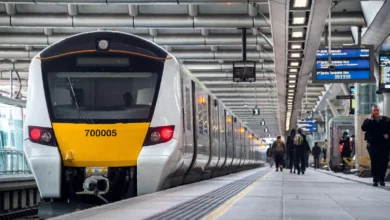
Investment in rolling stock continues, with HICL Infrastructure spending £52 million to double its stake in Cross London Trains, the company that owns the fleet of 115 Siemens trains used on the Thameslink route.
Legal Rulings, Crime, and Other Developments
A Westminster Magistrates’ Court case has clarified the legal standing of train operators to prosecute fare evasion. In Govia Thameslink Railway v Charles Brohiri, a district judge ruled in January that the company’s use of “lay prosecutors” – non-legally qualified staff – to initiate summonses was lawful under the Legal Services Act 2007. In a subsequent sentencing hearing in February, Mr Brohiri, 29, was fined over £3,600 and given a suspended prison sentence for 112 instances of fare evasion between February 2024 and November 2025, after he continued to travel without a ticket despite bail conditions.
Crime on the transport network remains a pressing issue. While a recent report noted a 46% increase in offences on the Tube since the pandemic, more detailed British Transport Police figures show a 75% rise in violent incidents on the Underground in the two years to October 2023. Overall crime on Transport for London services reached a record 47,518 offences in 2023/24, with the Underground accounting for over half. TfL and the BTP state that the rise reflects both returning passenger numbers and a concerted push to encourage reporting.
In other news, the expansion of London-style contactless ticketing across the South East has been used for more than 8.6 million journeys by February 2026, according to TfL. A holiday suitcase thief who targeted a family on a Gatwick train has been jailed for 16 weeks. And two MPs, Sir Edward Leigh and Martin Vickers, made an unusual plea in the House of Commons by kneeling to demand a direct rail link between London and Grimsby. Transport Secretary Heidi Alexander acknowledged trains could run on the route without major new infrastructure, but said funding would be needed for new stopping patterns.
Finally, the head of HS2, Mark Thurston, was named Britain’s highest-paid public servant, with remuneration of £652,569 in his final year, while LNER opened its refurbished first-class lounge at King’s Cross to the public for the first time. Looking further ahead, future Crossrail 2 trains under Oxford Street are predicted to be library-quiet, and a disused signal box at Highams Park Overground station could be revived as a community hub.