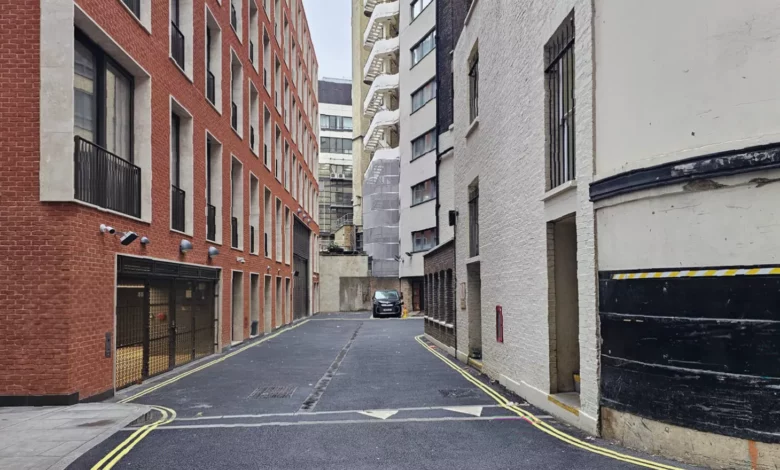
The short, unassuming alley known today as Yarmouth Place, tucked behind the grandeur of Mayfair’s Piccadilly, holds a curiously restless piece of London history in its name. Since first appearing on maps in the 18th century, this tiny thoroughfare has been rebranded no fewer than four times, each change a footnote in the evolution of one of the world’s most exclusive districts.
From Court to Mews: A Name in Flux
The story of the alley is inextricably linked to the rise of Mayfair itself, an area which began its transformation from rural fields to an affluent enclave in the 1660s. The land, acquired by the Grosvenor family through marriage in 1677, became the canvas for a planned Georgian estate of grand terraces and squares. It was against this backdrop of rapid development that the alley first gained an identity.
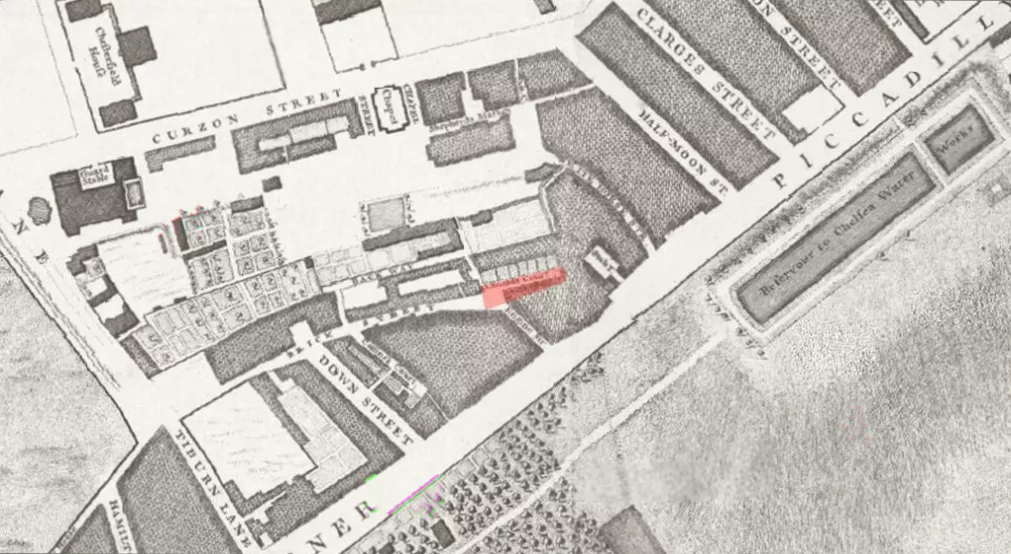
On the cartographer John Rocque’s detailed map of London in 1746, the space is marked as Sneads Court. The designation “Court” suggests it was originally wider, more of a courtyard than the narrow passage it later became, likely serving the early housing that was springing up. Its function was more practical than prestigious, acting as a through road linking Brick Street—a street likely named for the brickworks supplying Mayfair’s expansion—to White Horse Street, itself named for a former tavern.
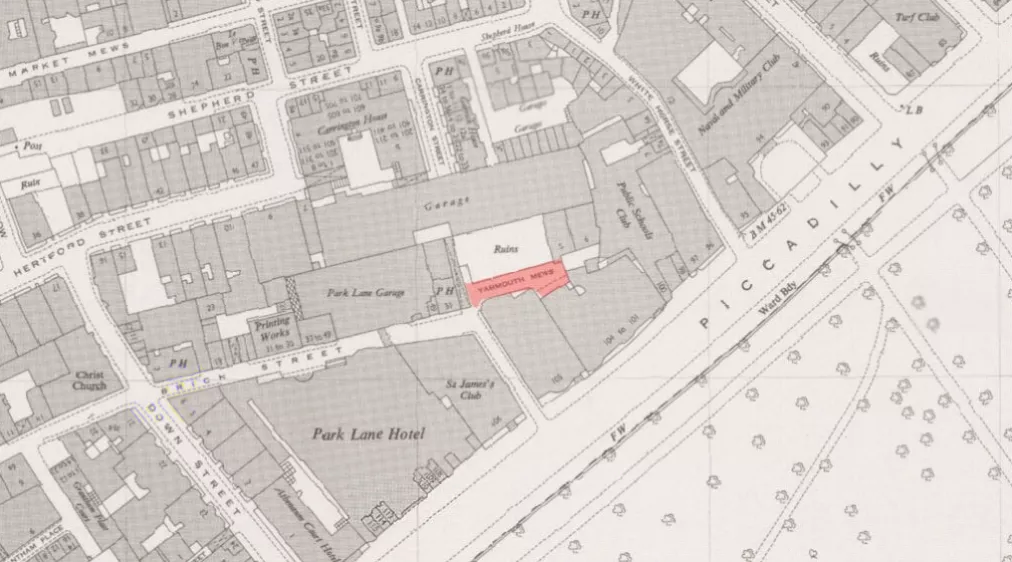
As the area ‘poshed up’ over the following century, with smaller homes replaced by grand houses and hotels, the courtyard shrank. By the middle of the 19th century, it had been genteelly rebranded as Hertford Place, taking its name from the nearby Hertford Street, which was itself named after a vanished local pub, the Hertford Arms. The alley’s utility shifted again by the 1890s, becoming Yarmouth Mews, a name evoking the stable blocks and service areas that supported the grand residences.
The final change came following the Second World War. The north side of the alley lay in ruins, cleared for the construction of a stark 1970s brick office block called International House. It was in this post-war era of pragmatic modernisation that the alley received its current and seemingly settled title: Yarmouth Place.
The Modern Reinvention
The most dramatic physical change to Yarmouth Place in decades has occurred only recently. The ageing International House and a neighbouring multi-storey car park have been demolished, making way for a development of modern luxury flats. This continues a contemporary trend in Mayfair, where prime locations see a constant cycle of redevelopment, often converting older commercial buildings into high-end residential apartments with extensive amenities.
The new development has tidied the alley, but its most significant upgrade is hidden from view. Beneath the new flats lies an automated, underground car park. In this system, a motorist leaves their vehicle on a movable bay, which is then automatically transferred to an available space in the garage below—a sophisticated parking solution now common in Mayfair’s space-constrained, high-value property market. Above ground, access for delivery vehicles is now strictly controlled by size restrictions, a policy that has altered the alley’s daily rhythm.
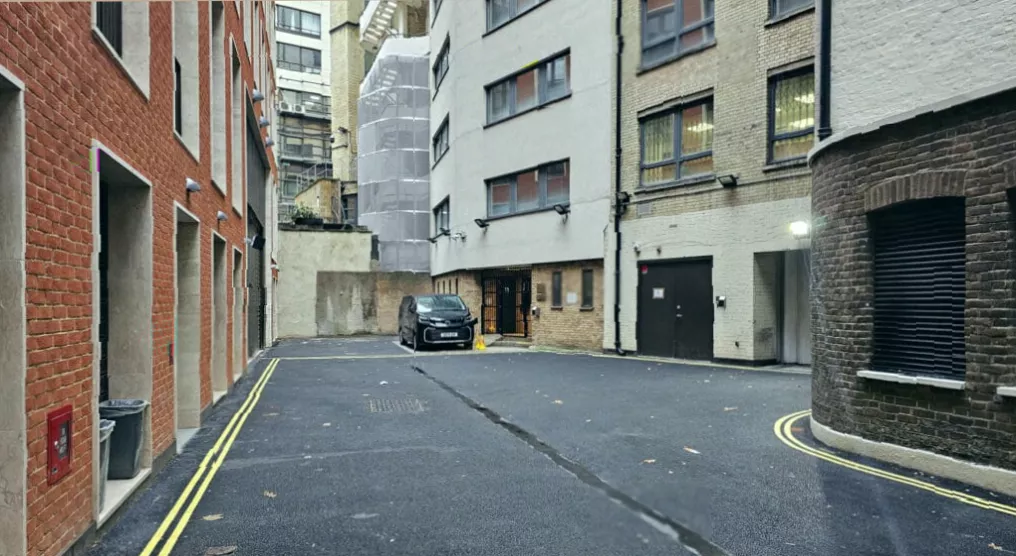
The south side of Yarmouth Place, however, remains a testament to the area’s enduring character. It still presents the classic, unadorned backs of the grand buildings whose façades grace Piccadilly, a street with a history stretching back to medieval times and home to institutions like Fortnum & Mason since 1705. This contrast between the historic Piccadilly elevation and the service alley behind encapsulates Mayfair’s layered reality.
The most eloquent physical evidence of the alley’s working past is found on its curved corner. Here, a building’s lower floor is clad in heavily scuffed and dented metal protection, a clear testament to decades of delivery vans struggling to navigate the tight turn. This battered armour plate serves as a tangible archive of the alley’s former life, a relic that now stands preserved, its purpose made obsolete by the new development’s delivery protocols.