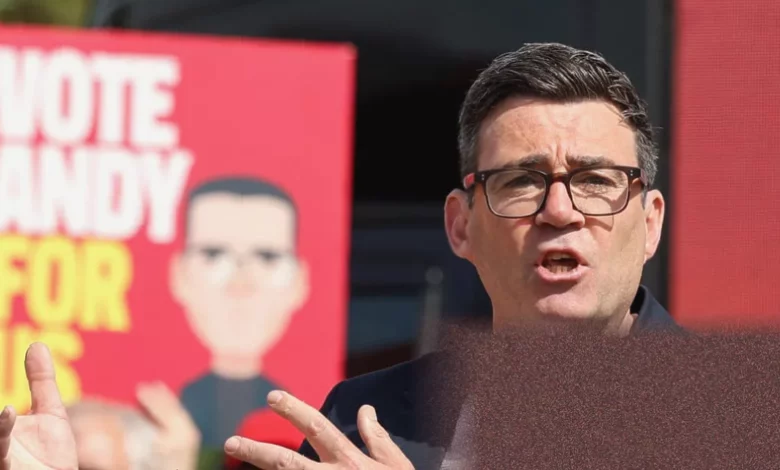
Andy Burnham has sought advice from Sue Gray, Keir Starmer’s former chief of staff, on how to manage a potential transition into Downing Street if he returns to Westminster and succeeds the prime minister, as Labour’s internal succession debate intensifies ahead of the Makerfield by-election.
Lady Gray is understood to have advised the Greater Manchester mayor on how a future government could be formed, a development that underscores how seriously senior Labour figures are treating Burnham’s path back to parliament after weeks of speculation about Starmer’s long-term future following a bruising set of local election results.
Sue Gray’s role and history with Burnham
The discussions between the two are built on a relationship stretching back decades. Burnham and Gray are understood to have known one another since his time as a minister in Tony Blair’s government, when Gray was working in the Cabinet Office. It is not expected that Gray would take any formal role in a future government should Burnham reach Downing Street.
Gray’s own departure from Number 10 in October 2024 was abrupt and acrimonious. She resigned after less than four months as chief of staff, citing “intense commentary” around her role as a distraction to the government’s work. During her tenure she faced accusations from some Labour colleagues of “control freakery” and of creating a bottleneck that delayed policy decisions and appointments. Her salary – reportedly £3,000 more than the prime minister’s – also drew criticism. Starmer later said her appointment had been his “wrong choice” and that she “wasn’t the right person for this job.”
Before her political appointments, Gray was a senior civil servant who led the “Partygate” investigation into gatherings at Downing Street during Covid-19 lockdowns, a probe that contributed to Boris Johnson’s resignation. After leaving the chief of staff role, she was announced as the prime minister’s envoy for the regions and nations, a position she ultimately did not take up. She was granted a life peerage in December 2024.
Burnham’s allies said he remained focused on the Makerfield by-election, widely seen as a pivotal moment for Labour’s direction and his own political trajectory. The contest, scheduled for 18 June 2026, was triggered by the resignation of the sitting Labour MP Josh Simons specifically to allow Burnham to re-enter parliament – the first time a by-election has been arranged in such a way since 1965.
Internal Labour debate and leadership jockeying
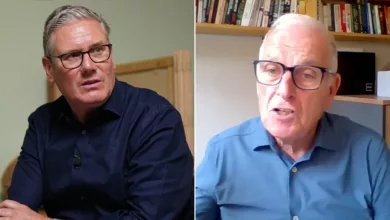
Darren Jones, the chief secretary to the Treasury and a senior ally of Starmer, criticised the internal manoeuvring. Speaking on the BBC’s Sunday with Laura Kuenssberg, he said: “There’s a lot of fantasy politics going on right now inside the Labour party … in terms of who is up, who is down, who will be in what position.” He acknowledged that a debate inside the party had “to happen off the back of bad local election results”, but insisted it must not distract from “our primary focus on the country.” Jones added: “I’m all up for having a debate inside the Labour party about how we improve our electoral performance in the years ahead, because we don’t want to hand the country to Reform.”
Despite the leadership speculation, Jones confirmed he would be campaigning for Burnham in Makerfield and called him a “brilliant politician”. He cautioned, however: “Irrespective of individual ambitions from any of my colleagues, the big questions the country faces are still the big questions the country faces. There’s no magic answer to any of them, because if there was we would have implemented it.”
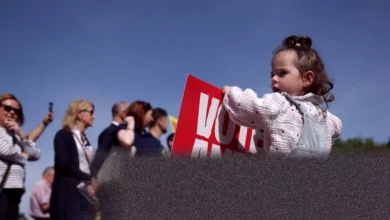
Senior Labour figures have been pictured rallying for Burnham’s campaign. Wes Streeting, the former health secretary widely viewed as a potential rival in any future leadership race, campaigned for him over the weekend alongside Labour’s deputy leader Lucy Powell. The chief whip Jonathan Reynolds, still seen as an ally of Starmer, was also spotted holding a Burnham for Makerfield poster last week. Streeting has sought to position himself separately, calling for a “proper contest” over Labour’s direction and arguing for a “wealth tax that works”. He has also declared he could win a future leadership contest.
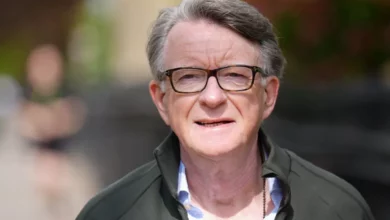
The former foreign secretary David Miliband, speaking at the Hay literary festival on Saturday, said Labour needed to “get on to the pitch” and that there had not been enough change under Starmer’s prime ministership. While the government had “done a lot of good things” regarding apprenticeships, breakfast clubs, renewable energy and welfare-to-work, he argued they all needed to be “five times or 10 times what they’ve been done”. “If those who are arguing to change the prime minister don’t change the policy, nothing will be different,” Miliband said, adding that the “what” matters more than the “who”. He said a “mistake” of the government had been giving the impression it spent “all its time thinking about a vote in three years’ time”. Asked about reports that his brother Ed might be appointed chancellor if Burnham made it to Number 10, David Miliband said: “It’s not something I’ve discussed with him, and even if I had, I wouldn’t be talking about it with you.”
Polling data and the electoral landscape
The pressure on Labour is underscored by polling for the Makerfield seat. A Survation survey published this week showed Burnham on 43% and Reform UK’s Robert Kenyon on 40%, with Labour still on course to win but in a much tighter contest than the party would have expected in what was once safe territory. Another estimate from the same pollster suggested a three-point gap (Labour 45%, Reform UK 42%). Reform UK has demonstrated significant strength in the constituency, having won all eight wards in the recent Wigan Council elections. According to a More in Common survey published last week, under Burnham’s leadership Labour would poll at 30% nationally, only slightly ahead of Reform UK on 27% and the Conservatives on 20%.
National polling shows Reform UK leading, with figures around 27% compared to Labour on 19-20%, according to a PollCheck average. Burnham is seen as the most popular senior Labour figure and a frontrunner to replace Starmer in opinion polls. His candidacy in Makerfield is regarded as crucial: without him, Reform UK is predicted to win the seat comfortably. His appeal is attributed to retaining 2024 Labour voters, winning back former Reform voters, and mobilising non-voters. The presence of Rebecca Shepherd for Restore Britain is noted as a potential spoiler that could take votes from Reform UK.
Over the past week Burnham has continued to distance himself from calls for Britain to rejoin the EU – a stance he has repeated since the last Labour conference – and argued for greater public control over transport, housing and energy. His position on Brexit marks a shift from earlier comments in which he said he hoped to see the UK rejoin in the long term, but is seen as a strategic move given that Makerfield voted to leave in 2016.