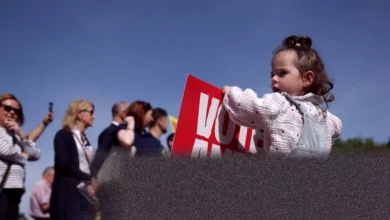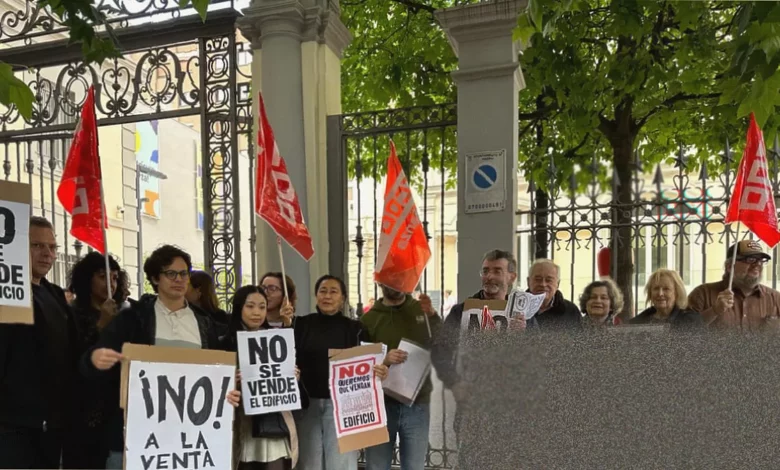
British Council staff in Madrid have taken to the streets to protest against the planned sale of the historic Palacete building in the upmarket Chamberí district – a dramatic symptom of the organisation’s deepening debt crisis, which has forced it to sell assets across Europe in an attempt to stave off collapse.
The Palacete at 31 Paseo del General Martínez Campos has been the home of the British Council in Spain for some 70 years, teaching English to around 5,000 students annually in its 35 classrooms and serving as a hub for hundreds of thousands of Madrileños and the expat community. Now, with no confirmed relocation plan for the 320 staff based there, employees fear their jobs could be at risk. The sale of another building in Barcelona is also proposed, it is understood.
Madrid protest and no-confidence vote
Anger among Spanish staff has coalesced into a formal letter of no confidence in the British Council’s senior leadership team, addressed to the board of trustees in London and signed by 298 of the 560 employees in Spain. The letter, seen by the Guardian, accuses leadership of “shortsighted decisions, weak leadership and poorly communicated changes made without sufficient regard for staff or organisational stability”. It also cites “round after round of restructuring, investments with little return, short-termism, lack of accountability and centralised decision making”.
Stuart Anderson, the Workers’ Commission (CCOO) union representative and chair of the British Council European Works Council, described the management strategy as “very centralised decision-making and, you might dare say, it’s a colonial attitude: ‘London knows best’ with little consideration of local markets or on-the-ground expertise built up over decades in those markets.” He added: “It’s a great concern in the UK that people don’t actually, or don’t necessarily, understand what the British Council means to millions of people around the world. The analogy is the BBC World Service. The organisation has a really, respected brand globally, and is being run into the ground.”
Staff are also calling on the UK government to halt what the union describes as a “death spiral”. Anderson said the union “would hope that a government trying to reset the relationship between the UK and the EU would not damage the soft power organisations that have been there for well close to 100 years.”
Wider European backlash
The Madrid protest is part of a growing revolt across Europe. This week, staff in Italy staged a national strike against plans to cease English-language teaching after 80 years in the country, which would result in the loss of 108 of 130 jobs. A separate letter of no confidence has been sent by Italian staff, and further letters have come from France, with more understood to be following. There are also concerns that the British Council’s Paris building could be at risk of sale in the future, and that services are being reduced in Latvia, Lithuania, Estonia, Croatia and Austria.
The organisation’s senior management has warned that without radical cuts and restructuring, the world’s leading soft-power agency could disappear “within a decade”.
The debt that drove the crisis
At the heart of the financial turmoil is a £197m emergency loan taken from the Conservative government during the Covid-19 pandemic. The loan was made on commercial terms – with interest rates reportedly between 12 and 15 per cent – costing the British Council an estimated £12–15m annually in interest repayments. Originally due for repayment in September 2026, the loan has been rolled over for another 18 months, but the burden remains severe.
The Foreign, Commonwealth and Development Office (FCDO) has stated that the commercial terms were necessary to comply with the UK’s subsidy control regime and that the government remains committed to recovering the loan. However, the FCDO also says it continues to support the British Council with more than £160m in 2025–26, and that Official Development Assistance (ODA) funding will be protected until 2028–29, with non-ODA funding increasing.
Despite that support, the organisation is described as “nearly insolvent”. Its chief executive, Scott McDonald, has said the British Council is “selling everything the British Council has that we are able to sell”. The latest annual report and accounts for 2024–25, published on 26 March 2026, show a net loss of £51m. Globally, the British Council has been asked to model spending plans that could lead to closures in as many as 60 countries. In 2021, it announced the closure of 20 offices worldwide due to budget cuts and income shortfalls.
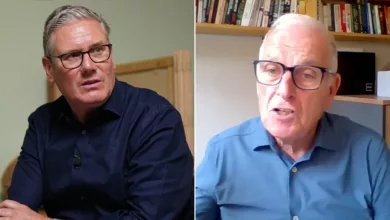
There have been discussions about writing off the debt, including a proposal to transfer the British Council’s art collection – valued at around £200m – to the government in exchange for loan relief. That offer has not been accepted. Neil Kinnock, the former Labour leader who chaired the British Council from 2004 to 2009, said the organisation “does not want to make these cuts. They are being forced into it by the conditions required by the Treasury.” He added: “What the government should do is either find a way of cancelling the debt, or even rescheduling the debt. Because it’s to absolutely nobody’s advantage to lose the British Council.”
The FCDO has commissioned an independent review of the British Council’s proposed financial turnaround plan, signalling that the government is still weighing its options.
Soft power under threat
The British Council was founded in 1934 – initially as the “British Committee for Relations with Other Countries” – to promote British culture, language and enterprise overseas, and to counter the rise of communism and fascism. It was granted a Royal Charter in 1940. Neil Kinnock described it as a force that “combated fascism and communism with understanding of Britain and its values – soft power as it’s now called. And they’ve done it brilliantly for 92 years.” He warned: “In a world in turmoil where the far right is on the march and we don’t pretend to be a leading military or even political power now, especially in the wake of Brexit, the soft power deployed by the British Council is absolutely invaluable.”
Concerns that a weakened British Council could create an international vacuum, potentially filled by Russia and China, have prompted a letter to the prime minister signed by numerous high-profile figures, including former ministers and military chiefs, urging that the council’s funding not be cut and highlighting its contribution to national security. The organisation currently works in more than 100 countries.
Broader controversies
The financial crisis has been accompanied by allegations of poor employment practices. The British Council has been accused of exploiting agency teachers on zero-hour contracts, forcing them into a “feeding frenzy” for lessons on its English Online platform. In 2021, nearly 100 former British Council staff in Afghanistan were reported to be in hiding after being refused relocation to the UK, despite having promoted British values. And in 2022, the organisation launched an inquiry into allegations of systemic racism by white executives against Black Kenyan staff.
The British Council has also faced diplomatic disputes. In 2007, the Russian Foreign Ministry ordered it to close its offices outside Moscow, leading to a diplomatic row. Stephen Kinnock – Neil Kinnock’s son, a former British Council country director in Russia – was detained and interrogated by Russian authorities in 2008 before being forced out.
What the British Council says
A spokesperson for the British Council said it “remained committed to building connections, trust and understanding between people in the UK and countries across Europe”. The organisation continued to face financial challenges and was “taking all necessary steps to significantly cut costs and grow our revenue” including the proposed sales of some buildings to protect as many jobs as possible, maintain its “vital” work, and secure its long-term future across Europe and around the world. “We understand that the proposed changes may be worrying for colleagues, students, and partners and we are committed to managing this process with transparency and care.”
The organisation, which has operated in Spain for 85 years, is understood to have no intention of withdrawing from Madrid or Barcelona despite the property sales.