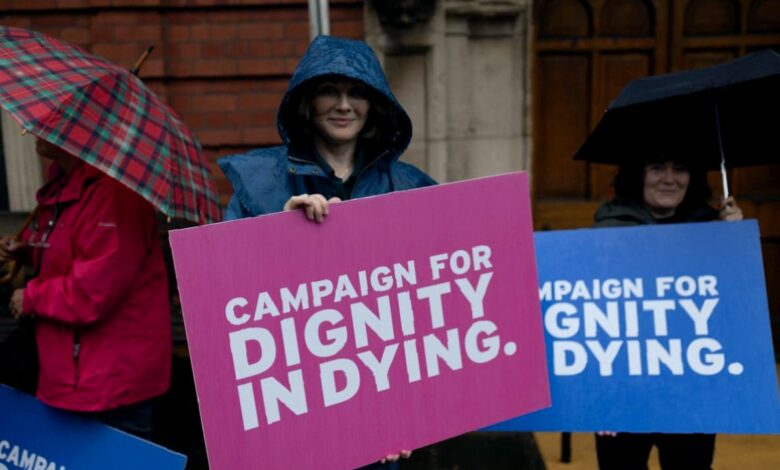
The Isle of Man stands poised to become the first jurisdiction in the British Isles to legalise assisted dying, following the passage of a landmark bill that now awaits only Royal Assent. The legislation, steered through parliament by Ramsey MHK and GP Dr. Alex Allinson, represents a profound shift in the long-standing debate over end-of-life choices.
Dr. Allinson’s Private Member’s Bill, introduced in June 2022, would enable terminally ill, mentally competent adults with a life expectancy of no more than 12 months to request assistance to end their own lives. The bill passed its third reading in the House of Keys on 23 July 2024 by a vote of 16 to 8, later cleared the Legislative Council, and was sent for royal assent in March 2025. Key criteria were tightened during its passage: the prognosis requirement was extended from six to twelve months, and the residency stipulation was increased from one to five years. Under the proposed law, patients must self-administer the medication; doctors would be prohibited from doing so.
However, the final step has been subject to delay. Dr. Allinson has expressed concern over the pace of the Royal Assent process from the UK’s Ministry of Justice, writing to the Lord Chancellor to seek assurance it is not being artificially impeded. Even after the bill becomes law, a significant implementation phase lies ahead. “It will take quite a lot of time to do the right consultation with our medical, nursing and pharmaceutical professions to get the code of practice, the various legislation that needs to be put in in terms of what substances we use, what medications we use, the backup, the training that’s necessary, and also the support for patients, their families and the staff involved,” Dr. Allinson stated. The service is hoped to be operational by 2027.
Diverging Paths Across the Isles
While the Isle of Man moves forward, other parts of the British Isles are at various stages of considering reform. In Scotland, the Assisted Dying for Terminally Ill Adults (Scotland) Bill, introduced by Liam McArthur MSP in March 2024, is at Stage 3 of the parliamentary process. Its criteria include being over 16, a resident for at least 12 months, and having a prognosis of six months or less.
Jersey’s States Assembly voted to legalise assisted dying in November 2021, with a draft law published in September 2025 and a final vote expected in December 2025. If passed, the first assisted death could occur in summer 2027 under proposals allowing terminally ill adults with six months or fewer to live, or 12 months for neurodegenerative conditions, to exercise the right if mentally competent.
In Ireland, assisted dying remains illegal under the Criminal Law Suicide Act 1993. An Assisted Dying Bill introduced in 2024 lapsed in November of that year, though an Oireachtas Committee has recommended decriminalisation under strict conditions.
In England and Wales, assisting a death remains a crime under the Suicide Act 1961, carrying a penalty of up to 14 years’ imprisonment. While prosecution guidelines exist, legislative change has stalled; a private member’s bill from Labour MP Kim Leadbeater has been postponed until after the next election, potentially delaying any reform until at least 2029. Assisted dying is also illegal in Northern Ireland and throughout the Channel Islands.
Safeguards and Significant Opposition
The move towards legalisation has not been without controversy. In the Isle of Man, opposition groups such as Churches Alive in Mann have raised concerns about the potential for coercion and a lack of effective safeguards, warning that vulnerable people, including the disabled, elderly, sick, or depressed, could be pressured to end their lives.
Despite this, public opinion appears broadly supportive. A public consultation on Dr. Allinson’s bill received a high number of responses, with 76% in favour of the proposals. Polling across the UK has consistently shown a majority of the public and doctors support legalisation. The British Medical Association adopted a neutral position on assisted dying in 2021, having previously opposed changes to the law.