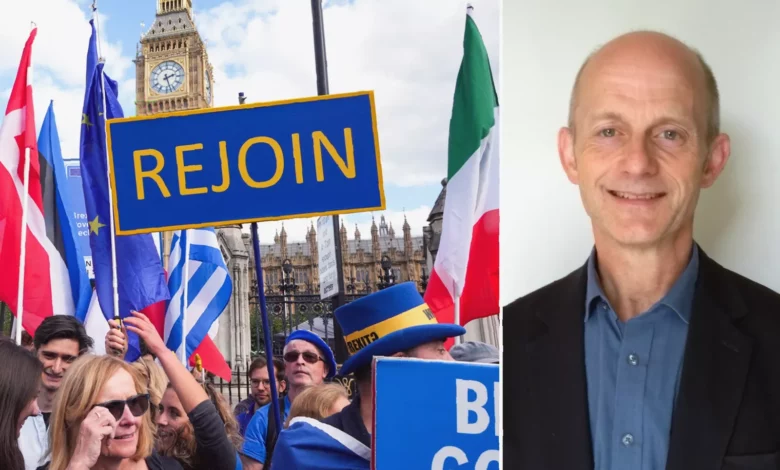
Philip Rycroft, the former senior civil servant who led Britain’s preparations for leaving the European Union, has told political leaders it is time to open a national debate on whether the UK should rejoin the bloc, arguing that “Brexit is not done” and that the country’s long-term interests demand a fresh conversation about its relationship with Europe.
Rycroft, who served as permanent secretary at the Department for Exiting the EU from 2017 to 2019, said the dramatic geopolitical and economic shifts since the 2016 referendum meant assumptions made at the time had been “badly hit”. He pointed to Russia’s full-scale invasion of Ukraine and the threat it poses to western Europe, as well as the UK’s diminished economic performance after leaving the single market, as reasons for a fundamental reassessment. “Brexit is not done, Brexit will never be done,” he said. “We can never not have these debates because they are so critical to our economic, defence and security future.” He added that the country’s political class had a responsibility to “seek to open out these questions in a way that gives the public the chance to think through where they believe our long-term interests lie”.
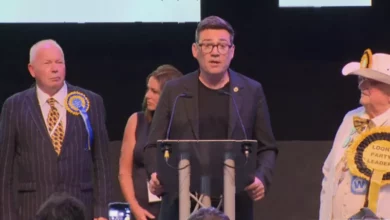
Rycroft’s intervention comes amid a growing push within the Labour Party for a closer alignment with the EU, even as leader Sir Keir Starmer maintains his manifesto commitment to honour the 2016 result and rules out rejoining the single market or customs union or restoring free movement. Starmer has faced pressure from senior figures to pursue a reset of relations, and last month he vowed to set a “new direction for Britain” with tighter links ahead of a UK-EU summit. Wes Streeting, the former health secretary and a potential contender in any future leadership contest, has openly said the UK should rejoin the bloc, describing Brexit as a “catastrophic mistake”. Andy Burnham, another figure seen as a possible successor, has adopted a more cautious stance, focusing on domestic issues and respecting the referendum outcome in the short term while campaigning in a by-election in Makerfield, a constituency that voted strongly to leave in 2016. Polling carried out by LabourList indicates that 35% of Labour members want Britain to become an EU member state again, with a plurality favouring re-entry into the single market and customs union without full membership.
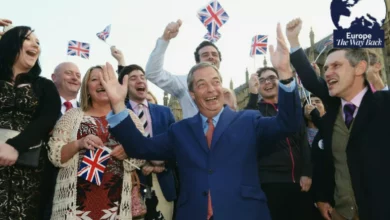
However, any move toward closer ties faces strong opposition. Reform UK, which has continued to perform well in opinion polls, is firmly against any return to EU structures. Its platform emphasises immigration control and a withdrawal from international institutions, and the party views any rapprochement as a surrender of the opportunities gained from Brexit.
Economic toll of leaving the single market
The economic consequences of the UK’s departure from the EU’s single market have become a central element in the debate, with Rycroft repeatedly citing the tangible losses already recorded and projected. The Office for Budget Responsibility’s long-term modelling predicts a 4% reduction in UK gross domestic product growth over 15 years as a direct result of leaving the single market. Economists have produced a range of estimates that suggest the actual impact may be significantly larger. The National Institute for Economic and Social Research has calculated a loss of 5-6%, Goldman Sachs puts the figure at 8%, and the National Bureau of Economic Research estimates a hit of 6-8% by 2025. These losses are attributed to lower productivity, weaker business investment, and reduced trade volumes caused by non-tariff barriers that have raised the cost of doing business across the Channel.
Rycroft argued that the UK’s economic interests are “congruent with the interests of the EU” and that the closer the alignment between the two economies, the more the UK benefits. “The risk is that if we don’t follow our European vocation, we find ourselves isolated in the world, less able to pursue our economic and defence interests, and therefore, relatively speaking, poorer as a nation and less able to assert our influence and our interests on a global basis,” he said. He dismissed the notion that the UK could rely solely on its Commonwealth and Anglosphere partnerships, particularly at a time when security threats from Russia and an uncertain relationship with the United States demand closer European cooperation.
The UK has already committed up to £21.8 billion in military and non-military support to Ukraine, a level of engagement that Rycroft said underscored the need for solidarity with European neighbours. “We are a European country; our future lies ineluctably in Europe because that’s where we are,” he said, while acknowledging that the debate remains “deeply contested territory”. He called for a “dispassionate, honest” discussion that moves beyond the “old, boring remain-leave arguments” of the referendum period.
Recent attempts by the UK government to advance a more pragmatic trading relationship have met with setbacks. Ahead of the forthcoming UK-EU summit, British officials proposed a single market for goods trade with the bloc, but the move was reportedly rejected by the EU in favour of a suggestion that the UK join a customs union or pursue closer economic alignment through the European Economic Area. The rejection underlines the difficulty Sir Keir Starmer faces in striking a “pick-and-choose” deal without revisiting his red lines on the single market, customs union or freedom of movement. Chancellor Rachel Reeves has described deeper integration with the EU as an “imperative” for economic resilience, adding further weight to the argument that a more fundamental rethinking may be required.
Public opinion appears to be shifting in favour of closer ties. Surveys conducted by the campaign group Best for Britain found that 53% of people polled support a full return to the EU, with 61% favouring closer overall relations between the UK and the bloc. Other polls since mid-2021 have shown a consistent trend of waning support for Brexit and increasing support for rejoining, either fully or partially through arrangements such as single market membership. However, Rycroft cautioned that support for rejoining would need to reach a threshold of around 70% before the idea could be taken seriously by the political establishment, adding that this “could take some time”. Some analyses suggest that while the appetite for closer economic ties is growing, it may not yet be deep enough to be politically decisive when framed in terms of sovereignty, with a majority still prioritising border control over a closer EU relationship.
Rycroft acknowledged the considerable obstacles ahead. “I would love to wave a magic wand to get us to that point, but I absolutely recognise this is deeply contested territory,” he said. “A lot of people think that we have a different sort of path ahead of us, which doesn’t relate to our European-ness. Good luck to them, but let’s have that debate.” He added that rejoining the EU would be a “tough road with lots of compromises, lots of difficult decisions”, but warned that the alternative – isolation and a diminished ability to shape the UK’s economic and defence future – carried its own profound risks.