A senior farming adviser to Nigel Farage’s Reform UK has called for the government to use trade policy to double the price of wheat overnight, a proposal that has sparked immediate warnings of soaring food bills for consumers already grappling with a sustained cost-of-living crisis.
Clive Bailye, an arable farmer appointed as a farming and land use adviser to the party, made the suggestion on The Farming Forum, a social network he owns. Bailye, who has been working with Reform’s policy chief James Orr to draft the party’s agricultural manifesto, stated he had “significant influence and input” and was “VERY impressed” by the draft direction. “All that’s required is political will to understand and fix british agriculture,” he wrote. “Trade policy could double wheat price over night, job done! It’s really not hard.”
The Economic Backdrop and Consumer Impact
The proposal lands amidst severe financial pressure on households. According to official data, UK food prices rose by a total of 38.6% between November 2020 and November 2025. While the rate of inflation has eased from its peak, it remained at 4.2% year-on-year in November 2025, with industry projections suggesting it could climb again. This inflationary surge, initially driven by the Covid-19 pandemic and the war in Ukraine, is being exacerbated by the conflict in Iran, which has severely disrupted global fertiliser supplies.
A doubling of the farm-gate price for wheat would have a cascading effect through the food chain. The most direct impact would be on staple products like bread, but the ramifications would be far wider. Livestock farmers would face skyrocketing feed costs, potentially driving up prices for meat, dairy, and eggs. Tim Farron MP, the Liberal Democrats’ environment spokesperson, warned the policy would also harm British exporters, who could face retaliatory tariffs that “would shut British lamb and beef out of the global market.”
Campaigner and author Guy Shrubsole was blunt in his criticism: “I find it pretty extraordinary that Reform’s farming adviser wants to double the price of wheat – and hence bread – in the midst of a cost-of-living crisis, and as Trump’s war on Iran is causing fertiliser prices to spike.” The fertiliser cost crisis is acute; with approximately one-third of global fertiliser trade passing through the Strait of Hormuz, the effective closure of the route has sent prices soaring, with some UK farmers reporting fuel cost hikes of over 55% and ammonia reaching a three-year high.
Reform’s Broader Agenda and the Backlash
Bailye’s comments have drawn attention to Reform UK’s broader policy platform, which has been actively courting the rural vote. The party has pledged to increase England’s annual farming budget to £3 billion, set a target of 70% UK food production, and require public sector organisations to source 75% of their food domestically. It has also promised to cut red tape and help farmers sell directly to the public.
However, other flagship policies have provoked controversy. The party has vowed to immediately lift the ban on fracking, a stance met with opposition over environmental risks. Its platform includes importing chlorinated chicken from America, which critics argue lowers food standards. Furthermore, Reform has pledged to scrap over 6,700 retained EU regulations, a move environmental groups warn would gut vital nature protections like the Habitats Directive, ease restrictions on development, and intensify the nature crisis. The RSPB has stated nature is “almost entirely absent” from Reform’s manifesto.
This environmental stance has created internal tensions. While environmentalist and rewilding advocate Ben Goldsmith was approached for ideas on nature policy, the party publicly distanced itself from him after backlash from farmers and landowners opposed to releasing locally extinct animals. Reform has stated it opposes large-scale rewilding.
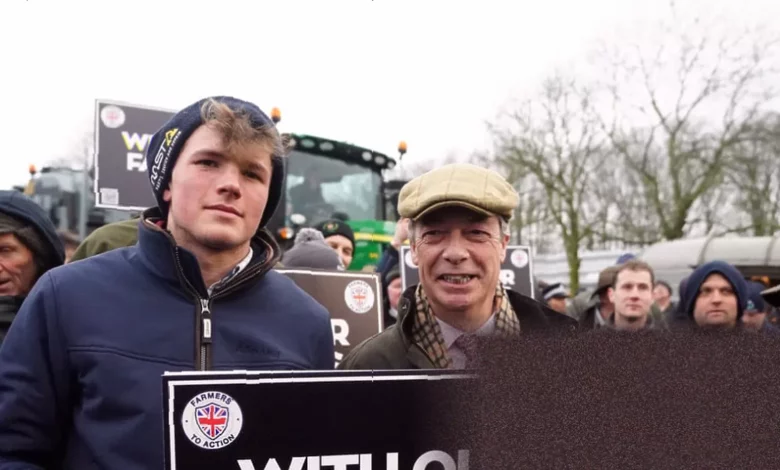
Farmers themselves are under significant strain, with a third reportedly failing to make a profit in 2024. Anger has focused on Labour government policies such as the introduction of inheritance tax on farmed land, cuts to farming subsidies, and tax hikes on farm vehicles. Bailye, who owns a 750-acre farm in Staffordshire and organised a “milling wheat strike” in 2025, has been a prominent organiser of protests against these measures, which Reform UK leaders like Nigel Farage have attended. The party has even pledged legal support for farmers arrested during demonstrations.
Party Response and Policy Process
Faced with criticism over the wheat price proposal, a Reform UK spokesperson moved to clarify the party’s position. “We do not support policies to increase food prices for consumers,” they stated. They argued that trade policy under both Conservative and Labour governments had “damaged our farmers and food security by undercutting British produce with lower unregulated cheaper quality imports.”
The spokesperson outlined a long-term vision for a “fair trade agenda that protects food security and secures farmers’ livelihoods,” emphasising that the UK should not be reliant on wheat imports. They also sought to downplay Bailye’s individual influence, stating he was “one of many people” offering input. “Policy is developed collectively under the direction of James Orr as head of policy and agreed through the party’s formal processes,” the spokesperson said. “No external contributor sets or determines party policy.”
James Orr, an associate professor at the University of Cambridge described as a leading “New Right” intellectual, was appointed Reform’s head of policy in February 2026. He has been characterised as JD Vance’s “British sherpa” and has ties to Donald Trump’s political circle.
Despite the party’s attempt to reframe the debate around fair trade and food security, the immediate political damage stems from the stark contrast between a call to double a fundamental commodity price and the reality of households still weathering historically high food inflation.