Reform UK has claimed that the legacy of the so-called ‘Boriswave’ of migration will cost every British household up to £20,000 annually, describing the projected financial impact as an “economic millstone” hanging over the country.
The £622 billion cost warning
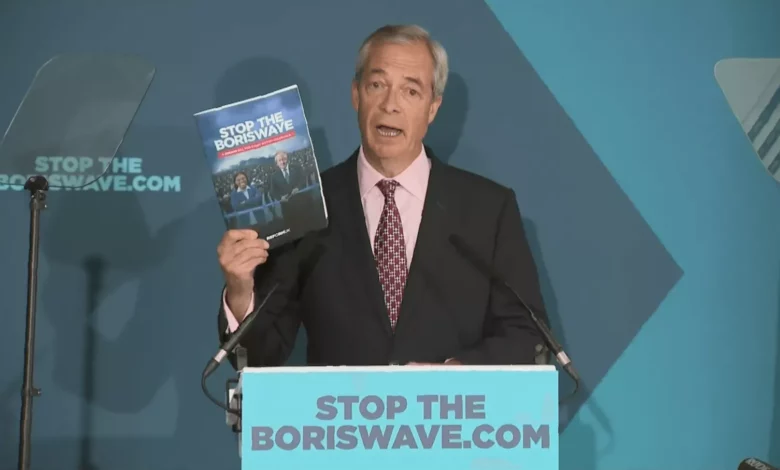
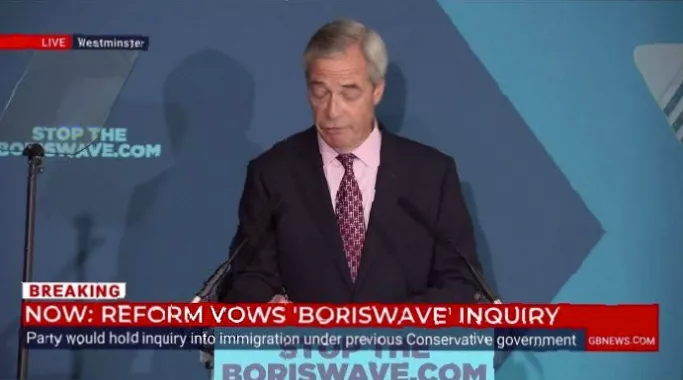
Unveiling what the party calls its ‘Boriswave Inquiry’, leader Nigel Farage argued that a window remains to avert the worst of the fiscal impact. He warned that if over two million people who arrived during the surge are granted indefinite leave to remain (ILR), it would be “catastrophic” for the UK. Reform UK’s report puts the total cost of granting ILR and citizenship to these migrants at £622 billion in real terms—a sum it equates to three times the annual NHS budget or ten times the defence budget.
The party contends that preventing this outcome could save households thousands. “It can, to a large extent, still be stopped,” Mr Farage said at a Westminster press conference. “And if we do it, it’ll save every household in Britain over the coming decades up to £20,000 a year.” This central claim of a massive household cost forms the core of Reform’s political argument against current settlement policies.
However, the fiscal picture is contested. The Centre for Policy Studies (CPS) previously estimated a different lifetime net fiscal cost of £234 billion, or £8,200 per household, linked to ILR. The CPS has since stated that the fiscal data in that report is disputed and should no longer be used, highlighting the complexity of calculating long-term migrant contributions against use of public services.
The scale of the ‘Boriswave’ migration
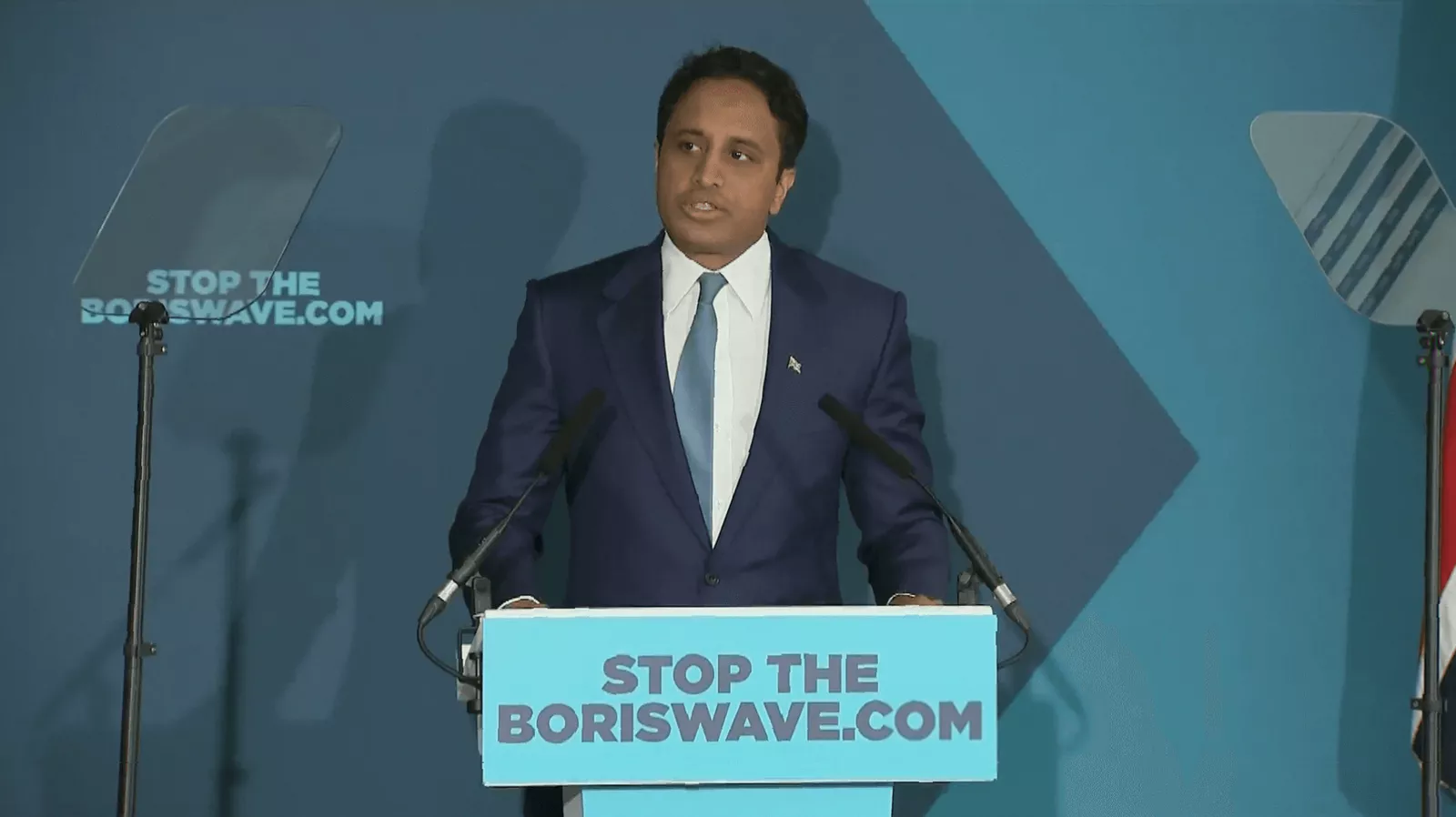
The term ‘Boriswave’ refers to the surge in legal migration that followed the introduction of Boris Johnson’s post-Brexit points-based immigration system from January 2021. Reform UK’s Home Affairs Spokesman, Zia Yusuf, presented figures claiming the period between January 2021 and June 2024 saw 4.8 million people move to the UK, with 3.8 million long-term visas issued, resulting in net immigration of 2.6 million.
These numbers align broadly with official statistics that show a significant spike. Revised figures from the Office for National Statistics (ONS) put net migration at a record 906,000 in the year to June 2023. While the year to June 2024 saw a decrease of 178,000 from that peak, the level remained historically high at 728,000. Mr Yusuf argued this “unprecedented mass immigration permanently altered the fiscal trajectory of the country.”
This trend was not unique to Britain. Other OECD nations, including Canada, France, Japan, and Switzerland, also experienced record immigration levels in 2023. In the UK, the profile of migration has shifted recently; visa grants for work categories fell by 37% in 2024 compared to 2023, with ‘Health and Care Worker’ visas down 81% from their peak.
The ILR eligibility timebomb
The focal point of Reform’s warning is the impending eligibility of ‘Boriswave’ migrants for permanent settlement. The party states that between 1.6 and 2.2 million migrants from this cohort are now becoming eligible for ILR, which can lead to British citizenship. Reform UK’s core policy proposal is to abolish ILR entirely, replacing it with a system of renewable five-year visas with stricter salary and English language requirements. The party also proposes making existing ILR holders re-apply under the new rules and restricting access to public funds to British citizens only.
This stance puts them at odds with both the previous Conservative government and the current Labour administration, though all parties are proposing stricter conditions. The Labour government, under Home Secretary Shabana Mahmood, has announced plans to double the standard qualifying period for ILR from five to ten years for most migrants. The proposed new conditions include having a clean criminal record, no debt to the taxpayer, and a consistent history of work and tax contributions. The government’s stated principle is that settlement should be “earned and not automatic.”
However, these reforms have sparked internal Labour dissent, with some MPs pushing for exemptions, particularly for migrants already in the UK. Meanwhile, the Conservative leader, Kemi Badenoch, has advocated for even tougher rules, suggesting a ten-year wait for benefits and doubling the time to qualify for settled status.
Reform’s plea to Starmer and wider critique
Addressing the current Prime Minister directly, Mr Yusuf urged Sir Keir Starmer to hold his nerve on ILR reform. “Do not U-turn on your ILR reform,” he said. “Your Home Secretary, to her credit, is aware of this fiscal time bomb about to explode on the British people. That’s why she announced retrospective changes… Such a delay would give a future Reform Government a chance to deal with this properly.”
The press conference also served as a broadside against the Conservative legacy on Brexit and immigration. Mr Farage argued that the previous government “never believed” in implementing Brexit properly and “never, frankly, wanted to implement it.” He was critical of Ms Badenoch, noting she had not removed retained EU laws and claiming it was a Conservative government that entered negotiations on the Chagos Islands. The Conservative Party has dismissed Reform’s inquiry as “cheap party political theatrics”.
Beyond settlement policy, Reform UK proposes further hardline measures, including suspending visa issuance to countries that refuse to accept the return of their nationals without legal status, and stopping visas for countries demanding slavery reparations. The wider context of migration pressures continues, with asylum claims in 2024 reaching 108,000, an 18% increase from 2023, and the cost of the UK asylum system rising to £5.38 billion in the 2023-24 financial year.