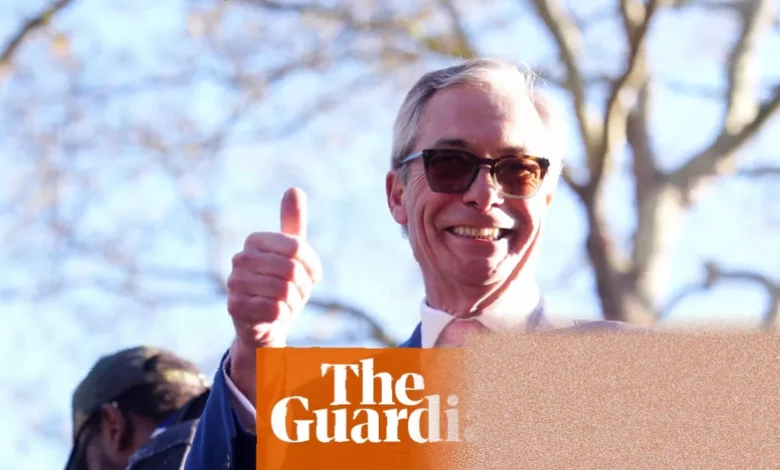
Nigel Farage is conducting a live experiment on the boundaries of British political tolerance, acting as both explorer and cartographer for the nation’s shifting moral landscape. His recent actions and hesitations reveal a figure, and a movement, engaged in a trial-and-error process to discover what the public will now accept, a process that is itself redrawing the lines of acceptable discourse.
Shifting Stances and Strategic Retreats
This testing is evident in Farage’s uneven responses to controversy. When Reform UK’s housing spokesperson, Simon Dudley, made what Farage called “shameful” remarks about Grenfell Tower fire victims—saying “everyone dies in the end” about a tragedy that claimed 72 lives—the reaction was swift: Dudley was sacked. This mirrored a similar misstep by the Conservative Jacob Rees-Mogg who, in 2019, said Grenfell victims lacked “common sense”. Some lines, it seems, remain clearly drawn.
Elsewhere, Farage’s boundaries are more flexible. He initially dismissed historic accusations of racism at school as “banter in the playground”—a common defence tactic to downplay offensive remarks—before issuing a full denial in January. When The Guardian revealed he had sold a personalised video on the Cameo website to a Canadian neo-Nazi group, giving them a “pep talk”, his first instinct was a free-market defence, comparing it to a shop selling shoes to a murderer in an ITN interview. Only later did he “pause” his account.
On policy and personnel, the calibrations continue. He condemned anti-gay comments in 2024, yet recently defended a Reform UK candidate caught making a homophobic joke. On immigration, the party’s pledge has hardened from stopping small boats to promising mass deportations, even for those with indefinite leave to remain, and a new plan to block visas for nationals of countries seeking slavery reparations. He briefly toyed with scrapping the pension triple-lock—a “sacred cow” of British politics guaranteeing pension rises—before firmly committing to it.
Britain’s Evolving Moral Limits
This trial-and-error approach speaks to a deliberate strategy. According to a book by Labour’s Liam Byrne, a hefty 40% of those considering Reform UK are more moderate. Farage is attempting to hold his core supporters while not alienating this wing. But his hesitations also map public sentiment, which can appear contradictory. A key driver for his voters is a dislike of anyone perceived to be “taking advantage”, particularly regarding welfare. Yet this sentiment reverses for pensioners, hence the unwavering support for the triple lock, and has done so for other groups historically.
The public attitude towards refugees is a prime example. While a crackdown on asylum seekers has been a political staple, the response to Ukrainians was markedly different: Britons threw open their homes and demanded exceptions to strict immigration rules, in a campaign notably championed by the Daily Mail. Farage himself was forced to reverse his stance, but only for Ukrainians, calling them “genuine refugees” and “some of the hardest working and most successful people in the country.” The unspoken rule becomes clear: public generosity is conditional, granted to some groups and vehemently withheld from others.
The Election and the Lasting Imprint
The ultimate test of these new boundaries will be the 2029 general election. While Westminster focuses on Farage’s chances of winning, a more profound question is how he will change Britain regardless of the result. Through his charismatic influence—as a darling of right-wing tabloids and a figure whom the Conservative party often follows—he doesn’t just probe the line of acceptable discourse; he to some extent sets it. A kind of “quantum politics” is at play, where the act of observing and testing public tolerance alters the political reality.
When he rows back, as with Dudley, it reinforces that some positions remain beyond the pale. When he holds the line despite backlash, it forces a conversation about whether this reflects wider, unspoken British views. As Tim Bale, professor of politics at Queen Mary, University of London, notes, Farage likely has his own ethical limits and “would draw the line at any sort of racism based on skin colour.” But Bale warns this perimeter may only hold until a “nastier successor” emerges.
The danger lies in an “imaginary herd” mentality, where positions sketched out by edgy right-wing groups and unregulated new media platforms become tolerated through sheer repetition. What outrageous stances might be condoned in three years’ time? For opponents, Bale suggests linking Farage to Donald Trump and MAGA, associations still beyond the tolerance line for most Britons. Liam Byrne argues for an alternative vision stressing fairness. Their challenge is to assert what the country will stand for with confidence, understanding that in the mapping of political tolerance, saying something is unacceptable can sometimes help make it so.