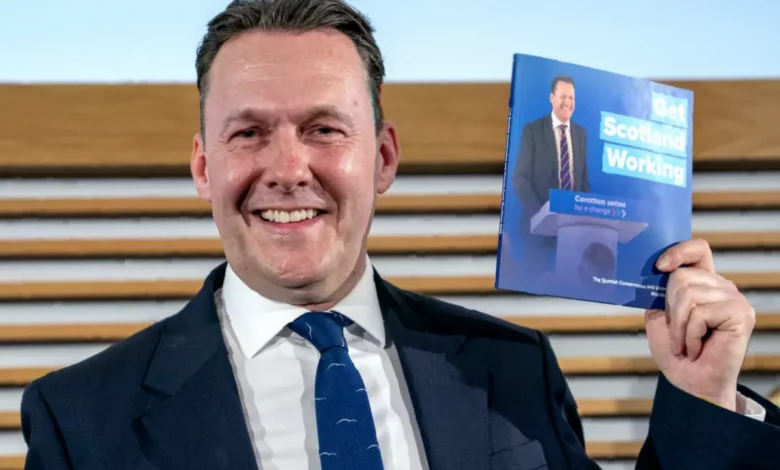
The Conservative Party has set out plans to impose a two-child limit on the Scottish child payment, a move that would see support cut for low-income families with three or more children. The policy, included in the Scottish Conservatives’ manifesto launched today, would mirror a now-scrapped UK-wide benefits rule and represents a significant shift in the welfare landscape for Scotland’s most vulnerable households.
Two-child limit: a direct hit on family finances
The proposed cap would restrict the weekly Scottish child payment – a devolved benefit designed to tackle child poverty – to the first two children in a family. This directly echoes the UK Government’s own two-child limit on Universal Credit, a policy which the Child Poverty Action Group estimates kept 350,000 children across the UK in poverty. That UK limit is itself due to be abolished in April 2026, a decision which had led the Scottish Government to cancel its own planned mitigation payment. The Conservative proposal would therefore reintroduce a restriction just as it is being removed elsewhere in the system.
Russell Findlay, the Scottish Conservative leader, has framed his party’s approach as part of a broader effort to “curb Scotland’s benefits bill” and reduce “government bureaucracy,” arguing the focus should be on lowering bills and boosting prosperity. The Scottish Government, however, has consistently argued that its social security system is founded on principles of dignity and respect, and has previously stated that cutting such support means cutting help for those most in need.
Broader package of cuts outlined
The limit on child payments is one element of a wider package of spending reductions proposed by the Conservatives. The party has also pledged to cut foreign aid spending dramatically, reducing the Official Development Assistance (ODA) budget to 0.1% of Gross National Income. This would represent a further sharp decrease from the current 0.5% level, following a previous cut from 0.7% in 2021. Shadow Chancellor Mel Stride has defended the approach, stating the party “cannot justify higher taxes at home to pay for more spending abroad.”
However, the NGO umbrella body Bond has condemned such cuts as “reckless, short-sighted, and morally indefensible,” warning they undermine the UK’s global standing and risk national security by dismantling systems that prevent conflict and address poverty.
Another target is free bus travel for asylum seekers. The Conservatives plan to end the provision, which has been the subject of campaigns across the UK. Asylum seekers, who are typically unable to work and survive on a weekly allowance of less than £50, argue such passes are vital for reducing isolation, aiding integration, and accessing essential services. A day ticket in Glasgow costs £5.60, a prohibitive sum from their limited funds. The Scottish Government had previously ended a pilot scheme in 2024 but has a commitment to provide free bus travel for people seeking asylum by 2026.
Closure of UK’s only safe drugs consumption room
The most specific public health cut outlined is the proposed closure of the UK’s only safe drugs consumption room (SDCR), located in Glasgow. The facility, known as “The Thistle,” opened following a statement of prosecution policy from the Lord Advocate, which prevents users from being prosecuted for possession within its walls. It was established in direct response to an HIV outbreak among people injecting drugs in public places in the city.
Such facilities are professionally supervised healthcare environments designed to reduce overdose deaths, the transmission of blood-borne viruses, and the public injecting of drugs. Over 200 operate globally, but the Glasgow pilot was the first in the UK due to legal barriers under the Misuse of Drugs Act 1971. Its impact on reducing drug-related deaths is considered highly localised, given the relatively small number of users it serves, but it acts as a critical point of contact for vulnerable individuals to access treatment and recovery services.
Closing the facility would remove this dedicated harm reduction service, with likely consequences including an increase in public injecting and discarded needles, and a loss of a lifeline for a marginalised group. The proposal sits in stark contrast to ongoing discussions about potentially expanding the service to accommodate shifts in drug use patterns, such as the move towards smoking substances.