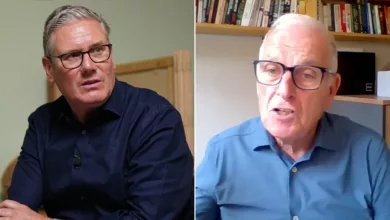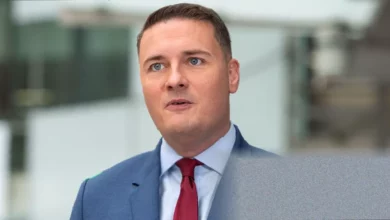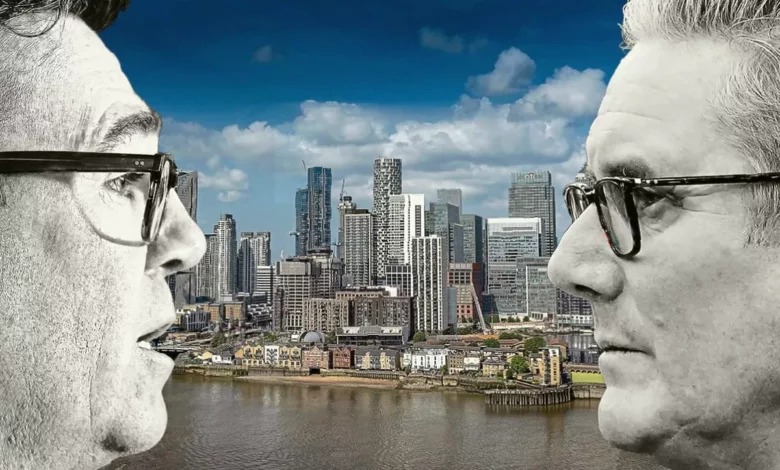
As the Labour government founders amid scandal and stagnation, attention is turning to a familiar figure who many believe could ride to the rescue: Andy Burnham, the Mayor of Greater Manchester, whose political resurrection has positioned him as the party’s most credible alternative to Sir Keir Starmer.
The Manchester model
Burnham’s standing as one of the country’s most popular politicians rests on a decade of practical achievement in the North West. Since becoming mayor in 2017, he has overhauled public transport through the “Bee Network,” a flagship reform that has given Greater Manchester an integrated, London-style system. He has been a vocal champion of regional devolution, arguing that centralised decision-making – exposed as harmful during the pandemic – has held back northern economies. His political identity, rooted in the soft left of the Labour Party and self-described as socialist, has allowed him to appeal both to the party’s traditional base and to disaffected voters in the North and Midlands.
Burnham’s return to Westminster politics via a by-election in the Makerfield constituency, a seat he previously held as an MP, was widely interpreted as a move to position himself for a leadership challenge. The Labour Party’s own rules mean a challenger needs the backing of 20 per cent of Labour MPs to trigger a contest – a threshold that, given the scale of backbench discontent, no longer seems insurmountable.
Starmer’s sinking ship
By contrast, the man who led Labour to a landslide victory in July 2024 has seen his premiership unravel with startling speed. Starmer, a former Director of Public Prosecutions and MP for Holborn and St Pancras, entered Downing Street on a manifesto titled “Change” that promised to kickstart economic growth, build 1.5 million new homes, create a publicly owned energy company and reform the NHS. But the reality of government has been defined by torpor and a “sheer inability to get things done,” as critics inside and outside the party have put it.
Policy reversals and abandoned pledges have mounted. The government scrapped Winter Fuel Payments for many pensioners, introduced an early-release scheme for prisoners, and settled public-sector strikes at considerable cost. On immigration, the approach has drawn fire from all sides; on welfare reform, left-wing MPs have accused Starmer of betraying Labour values. The party’s stance on the Gaza War has further alienated its traditional supporters, while scandals – including those linked to Peter Mandelson – have deepened public distrust. By the end of 2025, opinion polls rated Starmer as one of Britain’s least popular prime ministers, drawing unfavourable comparisons to Liz Truss.
The erosion of trust has been stark. A significant percentage of voters believe standards of behaviour in public life have worsened, with a sense that those in power no longer feel bound by the same rules as ordinary people. The “good chaps” theory of governance – that unwritten rules and personal integrity would suffice – is seen as insufficient to maintain ethical standards. Starmer’s net approval ratings have fallen sharply, and local election results have handed gains to Reform UK and the Green Party, further fracturing the Labour coalition.
A question of competence
The most damning assessment of Starmer’s leadership, however, came from an unexpected quarter: a captain of industry. Speaking privately to a journalist this week, the business figure described the Prime Minister as fundamentally ill-suited to the top job. “He is not a commander, a doer,” the source said, “not even a COO.” In a blunt verdict, the industrial leader suggested Starmer would be competent only as a “down table senior manager” – the sort of person who sits on an executive committee, “but as the lawyer.”
The critique echoes a broader sense of paralysis in Whitehall. Business confidence, already fragile after 14 years of Conservative government, has been further weakened by rising costs and geopolitical uncertainty. While Labour’s manifesto promised a National Wealth Fund and planning reforms to “kickstart economic growth,” firms remain cautious. The government has pledged full devolution across the North through a new English Devolution Bill and a Council of the Nations and Regions, but progress has been slow. Greater Manchester, with its deep devolution settlement, has seen significant growth – a model that some feel Starmer’s government has failed to replicate nationally.
Against this backdrop, the comparison with Burnham is inescapable. Where Starmer is seen as a lawyerly figure unable to command the levers of power, Burnham has reinvented himself as a doer, a problem-solver who has delivered tangible results. The question now is whether the Labour Party – and the country – will give him the chance to prove it at the highest level. As one business leader put it, the current occupant of No.10 would be best suited to a supporting role; the man from Manchester, by contrast, looks ready to lead.