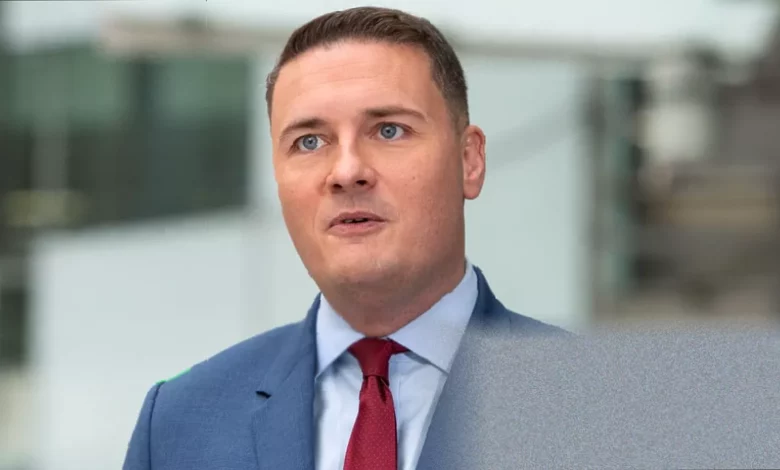
Wes Streeting has called for a targeted reduction in employers’ National Insurance contributions as a means of boosting hiring, particularly among young people, as the former health secretary and potential Labour leadership candidate lays out a platform that also includes backing new North Sea oil and gas drilling. His intervention comes amid mounting evidence that the rise in employer NICs introduced last year is weighing on the labour market, especially in sectors such as hospitality that rely heavily on younger workers.
National Insurance and youth unemployment
Streeting’s proposal focuses on reversing or scaling back the changes to employer NICs that took effect in April 2025. Under the current policy, the rate was raised from 13.8% to 15% and the earnings threshold at which contributions begin was lowered from £9,100 to £5,000. The Treasury designed the measure to raise an additional £25bn a year, but businesses have argued it actively disincentivises the hiring of lower-paid and part-time staff.
The impact on the hospitality sector has been particularly acute. Industry body UKHospitality said the sector lost around 100,000 jobs in the wake of the 2024 Budget and the NIC increase, describing it as a rapid contraction. Hospitality is the largest employer of young people in the UK, with almost 39% of its workforce aged 16 to 24. UKHospitality has called for a reduction in employment costs, arguing it is “crucial to unlocking youth jobs”.
The problem extends far beyond one industry. A report by former cabinet minister Alan Milburn warned that a shortage of hospitality vacancies is contributing to high youth unemployment, with the number of positions in the sector halving over the past four years. Milburn’s review cautioned that Britain risks a “lost generation” of young people costing the economy more than £125bn a year. Statistics bear out the severity: between January and March 2026, the youth unemployment rate for 16- to 24-year-olds stood at 16.2%, while the number of young people not in education, employment or training (NEET) exceeded one million for the first time since the pandemic. Analysis shows the UK now has the third-highest rate of 16- to 24-year-olds not earning or learning among wealthy European nations.
Streeting has said a “targeted reduction” in employers’ NICs would “actively incentivise” hiring, especially of young people. He has also indicated openness to reversing the increase introduced by the Chancellor, Rachel Reeves, in her first Budget.
The government’s response has been cautious. Pat McFadden, the Work and Pensions Secretary, acknowledged on Sky News that expanding NIC exemptions is a “fair point of debate” but stressed that any tax change carries a cost that has to be “netted off”. He pointed to the existing exemption for workers under 21, noting that businesses already do not pay employers’ NIC for that age group. McFadden also claimed the increased NIC rates had contributed to falling NHS waiting lists, describing the improvement as “a labour market measure too”.
North Sea drilling debate
Alongside his call on National Insurance, Streeting has waded into the internal Labour row over oil and gas development in the North Sea. Labour’s manifesto committed not to issue any new exploration licences for fossil fuels, but a loophole exists for the giant Rosebank and Jackdaw fields. Both were granted exploration licences by the previous Conservative government and now require only development consent to begin drilling.
Streeting argued that granting consent would not necessarily translate into cheaper household energy bills but would generate higher tax receipts for the Treasury. “We do have to take climate change globally much more seriously and go aggressively towards more renewable energy,” he said. “But there’s sometimes a danger of Britain wanting to lead the world. We cut off our own nose to spite our face without contributing to the greater whole.”
The decision rests with the Energy Secretary, Ed Miliband, who together with the North Sea Transition Authority must determine whether drilling at Rosebank and Jackdaw would be consistent with the UK’s climate commitments. Streeting expressed surprise if Miliband did not grant consent. “Yes. I think that’s probably where Ed will get to,” he said.
Both fields have faced legal and environmental challenges. Rosebank, located west of Shetland, is the UK’s largest undeveloped oil and gas field. A Scottish court ruled in January 2025 that the previous government’s approval was unlawful because it failed to consider downstream emissions from burning the extracted fuel. Nonetheless, operators Equinor and Ithaca Energy have taken a final investment decision for Phase 1, with start-up planned for 2026-2027. Jackdaw, a gas field 150 miles east of Aberdeen, was initially approved in 2022, but a High Court ruling in 2024 struck down the environmental consent, finding that regulators had not accounted for emissions from burning the gas. The Offshore Petroleum Regulator for Environment and Decommissioning (OPRED) is reassessing the project under tighter criteria. Shell, the operator, expects production to begin in the second half of 2025, with peak output in 2026.
Environmental groups have challenged both developments, arguing that the environmental impact assessments did not adequately consider downstream emissions.
Streeting’s interventions come as he positions himself for a potential Labour leadership contest. He has openly stated he wants Sir Keir Starmer to resign and has resigned as Health Secretary to mount a challenge. The current frontrunner in any hypothetical contest is the Mayor of Manchester, Andy Burnham, who is standing as Labour’s candidate in the Makerfield by-election on 18 June in an attempt to return to Parliament. Streeting has acknowledged Burnham as a potential opponent and has backed his support for devolution and greater state intervention. He has also echoed criticisms from former Prime Minister Tony Blair, who has expressed concern about Labour’s preparedness and lack of a coherent plan, and has stated he does not believe Starmer can lead the party into the next general election.