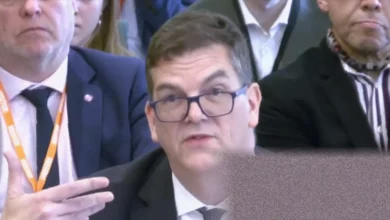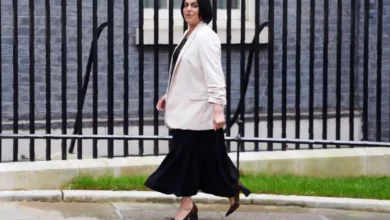
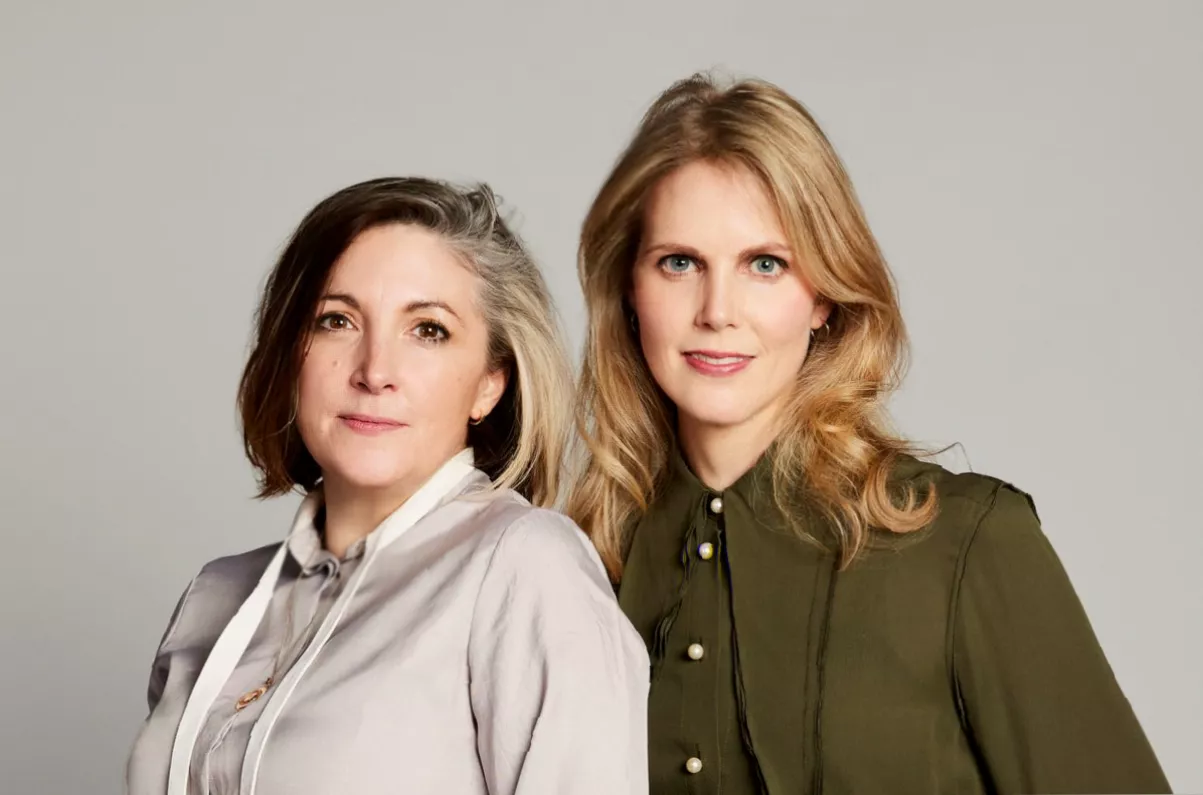
Former Downing Street insiders have revealed the surprising scruffiness of Number 10, describing the building as like a three-star hotel that has “slightly gone to seed” away from its public State Rooms. Helen MacNamara, a former deputy cabinet secretary, and Cleo Watson, a former political adviser to Theresa May and Boris Johnson, offered the candid assessment in an exclusive question-and-answer session for The Independent’s podcast In The Room, as Labour confronts the worst local election results by any party this century. Their remarks provide a rare glimpse into the physical reality of the seat of British power, where peeling wallpaper and dated fixtures sit alongside pieces of Moon rock gifted by the United States and a note from the 2010 Chilean miners wrapped around a stone. Watson recalled casually leaning against a Henry Moore sculpture while on a phone call in the garden, adding that the building is “crammed with culture and history” that staff barely notice when rushing between meetings.
Inside No 10: Culture, atmosphere and the Westminster bubble
MacNamara and Watson gave a frank account of life inside Downing Street, describing both its privileges and its pressures. Watson noted that at this time of year the Army band can be heard practising for Trooping the Colour on Horse Guards Parade, a “bizarre backdrop” to often fraught days. But she also recalled the “fearful and dejected” atmosphere that descends on the building when a prime minister is having a terrible time, and said she would not wish to be in charge of the WhatsApp message element of a Humble Address – the rarely used parliamentary procedure that petitions the monarch to compel the government to produce documents. MacNamara said she does not miss the job much, though she felt it a genuine privilege to work on the country’s biggest problems alongside dedicated public servants.
The pair also addressed Westminster’s drinking culture. Watson said she witnessed “the worst of this culture” in her old role, but acknowledged that having a drink with colleagues can be a useful way to build relationships given Parliament’s late working hours. She noted that some people adopt sensible rules about not drinking “on the job” and that others genuinely did not care. However, those who tip towards problematic behaviour often struggle with the wider culture of Parliament, and Watson suggested that sensible hours would help. Independent reports have confirmed concerns raised by the Independent Complaints and Grievance Scheme (ICGS) about excessive drinking in parliamentary bars leading to shouting, swearing and blurred boundaries between personal and professional life. A police investigation was launched in January 2025 after a parliamentary researcher alleged drink spiking in a Parliament bar, prompting calls for immediate action. A previous crackdown on subsidised drinking was proposed in 2017 following a series of sex scandals.
Power dynamics and political survival
MacNamara offered a blunt assessment of how power operates at the top. She said civil servants behave differently when they sense a prime minister is weakening – “just like any other humans in a workplace dynamic.” If the PM is perceived as weak, and a task conflicts with what a department or secretary of state thinks is right, officials are “less likely to bust a gut to get it done.” She added: “I would imagine there is some watching and waiting going on right now.” Cabinet members’ behaviour signals to the civil service whether the PM is seen as weak, she explained, because most civil servants work for their departmental boss.
When asked what determines whether a prime minister survives politically, MacNamara said it comes down to the individual’s character and the goodwill they have built with those around them. She pointed to Theresa May, who “lasted a lot longer than she might have because people didn’t dislike her that much and they didn’t have a better plan.” MacNamara said she used to think external forces drove politics and government, but now believes it is “far more random and luck-driven than you think.”
The insiders also discussed the shifting media landscape. MacNamara argued that politicians can no longer afford to care only about the next day’s newspaper front pages, because fewer people receive physical papers and social media drives “short synapse responses within the day.” She cited the reaction to recent tweets by Green Party politician Zack Polanski as evidence. Even if politicians stay off social media, their staff relay the reaction, making it hard to ignore. On the threat of misinformation, MacNamara expressed concern about how parliamentary answers are clipped for social media to create inaccurate impressions, “using the appearance of truthfulness to do the opposite.” She said it is more important than ever that MPs tell the truth and that the record is corrected, giving “more power to the House of Commons Library to correct the record and hold the truth.”
Labour’s communication struggles and internal challenges
The discussion devoted considerable attention to Labour’s difficulties, which both insiders said go far deeper than messaging. MacNamara was blunt: “Quite often ‘comms’ is an excuse used when the ideas or policies are bad.” She argued that Labour has done some good things but is “stuck in an old mode of announcing things and moving on, when they should be building a case for their arguments.” She said the party does not pick the right things to emphasise, giving the example of social housing: “Investing in social housing is great – but where are the stories about homes being built?” She called for simpler messages and for Labour to “try to win some arguments.”
Watson took a different but complementary view, arguing that the real problem is Labour entered office without a proper implementation plan. “You can have ideas – which is where I think the Blair gang made themselves useful while preparing for government – but you also need a Day 1, Day 10 etc plan to implement,” she said. Both insiders linked this to the party’s broader structural weakness. The local election results – described as the worst by any party this century – have reportedly undermined Keir Starmer’s authority. A research briefing prepared for this article notes that Labour MPs, including Catherine West, have openly called for his departure, with West threatening a leadership challenge if no action is taken by 11 May 2026. Health Secretary Wes Streeting is said to have significant backing as a potential successor, though he has been described as on the right of the party, formerly close to Peter Mandelson and a leading figure of the Blairite Progress wing, albeit reportedly shifting leftward on some issues.
Watson also addressed internal party dynamics, noting that if the local results are as bad as predicted, the party machine is in trouble. “Councillors are so important for winning elections because they do so much groundwork. Their level of rage – less likely to be briefed to the media – will be a red warning sign going off in No 10.” On the “10 pledges” controversy surrounding the Labour Together organisation, Watson said a certain amount of “salt pinching” is needed, and that people do not pay attention to such stories until something changes the balance of public interest.
On Brexit and the European Union, MacNamara said she would not be surprised if Labour eventually committed to rejoining. “Given the polling on the EU as things stand, it might be a good differentiator for them at the next election,” she said. The party is already moving much further towards the EU than she thought possible, with “dynamic alignment” – where UK law remains in line with evolving EU rules – representing a significant shift from the Brexit Parliament voted for in 2019/20. Four years ago she would have said rejoining was impossible; now she called it “possible.” The research briefing notes that 87 per cent of Labour members support the UK returning to the EU, though support dips if it requires adopting the euro. The government is reportedly planning legislation to enable dynamic alignment via secondary legislation, which critics have described as a “backdoor attempt to drag Britain back under European Union control.”
MacNamara warned that Starmer’s most critical decision in the next six months concerns the implications of the oil crisis. “It will further destroy people’s faith in government and democracy if they have to listen to a prime minister explain why everything is terrible next winter rather than seeing governments make smart choices in anticipation of the inevitable,” she said.
The opposition and the wider political picture
Watson said the Greens could become as significant a problem for Labour as Reform UK. “The strategy so far has obviously focused on heading off Reform, but the Greens are coming, and the problem for the PM is that lots of his own MPs will agree with a fair amount of what they have to say,” she noted. The European Green party has officially urged the UK to consider rejoining the EU, calling Brexit a “political and economic failure.”
On the prospects of the current opposition leaders, Watson expressed doubt about a Conservative return to government any time soon. While she acknowledged Kemi Badenoch is “hitting her stride,” she said the Tories are “dreaming if they think she has a realistic shot at becoming PM.” Polling indicates only one in five Britons expect Badenoch to become prime minister. As for Nigel Farage, Watson said he appears to be thinking more seriously about a plan for governing than the current Labour government did before entering office, but “if character is destiny we only need to look at how his team regularly bust up with each other.” She concluded: “All in all, I don’t foresee ‘strong and stable leadership’ just yet.”