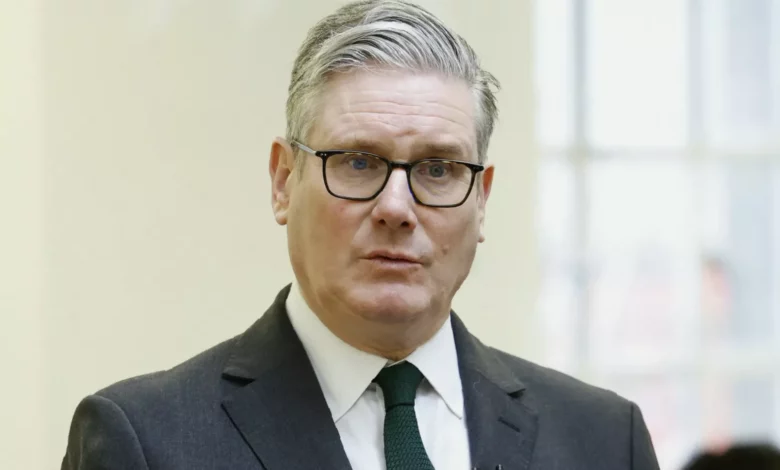
The Prime Minister’s absence from a crucial parliamentary vote has ignited a furious response from parents who have lost children to suicide, accusing Sir Keir Starmer of failing a fundamental test of leadership on one of the era’s most pressing issues: protecting children from social media harm.
In a scathing letter signed by 23 bereaved parents, including Esther Ghey, the mother of murdered teenager Brianna Ghey, Sir Keir was condemned for personally absenting himself from a House of Commons vote on Monday night. The vote saw MPs reject, by 307 to 173, an amendment to the Children’s Wellbeing and Schools Bill that would have banned social media access for under-16s. A total of 107 Labour MPs also missed the division.
“For all your talk of leadership, you remain firmly on the fence when it comes to protecting children and preventing more avoidable deaths online,” the parents wrote. They described regulating social media companies as “one of the defining challenges of our time,” and warned the government’s preference to avoid a firm position was painfully clear.
A Political Battle Forged in Grief
The emotional force behind the push for a ban is undeniable. The campaigning parents, who have lost 16 teenagers between them, cite social media as a factor in deaths linked to exploitation, radicalisation, and exposure to harmful content. Esther Ghey has spoken of how platforms exacerbated her daughter’s mental health struggles and obsession with online fame.
Their campaign found significant early support in the House of Lords, where in January peers overwhelmingly passed a similar amendment by 261 votes to 150. The Conservative peer Lord John Nash, who championed the measure, described the impact of social media on youth as a “societal catastrophe” and expressed deep disappointment at the Commons rejection.
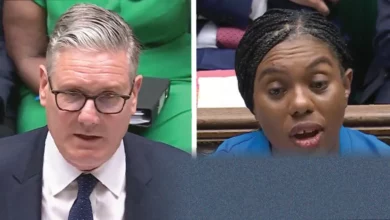
The issue has also become a key political dividing line. Conservative leader Kemi Badenoch has been a strong proponent of a ban, arguing social media is designed for adults and stating her party was the first in Britain to support an under-16 prohibition. She has shared personal experiences of family loss related to social media.
The Government’s Cautious Path
While resisting an immediate blanket ban, the government has not stood still. During the Commons debate, Education Minister Olivia Bailey articulated the official concerns, citing warnings from children’s charities that a ban could drive young people towards “less regulated corners of the internet” or leave them “unprepared” for the online world.
Instead, the government is pursuing a public consultation to gather views on measures including age restrictions, banning addictive features, and changes to digital consent rules. Ministers have accused campaigners of being influenced by “big tech” lobbying, a charge the bereaved parents fiercely reject as a delay tactic.
Critically, MPs did support a government amendment granting new powers to the Secretary of State—currently Science Secretary Liz Kendall—to implement future restrictions. These powers could ultimately be used to ban children of certain ages from social media, limit the use of VPNs to circumvent blocks, or restrict addictive algorithmic features.
A Global Precedent and a Complex Debate
The UK debate is watching international moves closely. In December 2024, Australia became the first country to implement a ban, requiring platforms to take “reasonable steps” to prevent under-16s from holding accounts, with large fines for non-compliance. Other nations, including Malaysia, Denmark, and France, are considering similar laws.
The arguments on both sides are complex. Proponents point to evidence linking social media use to increased risks of self-harm and suicide attempts, particularly for girls and LGBT youth, as well as issues of cyberbullying, addictive design, and exposure to content promoting eating disorders. They argue parents are in an “impossible position” to monitor activity alone.
Opponents, including over 62,500 signatories to a recent petition, contend that social media can be a “lifeline” and “supportive network,” especially for isolated young people. Some research suggests the link between screen time and long-term adolescent mental health is weak or complex. There are also practical concerns about enforcing a complete ban and the privacy implications of robust age-verification technology.
Powers in Place, But Action Delayed
The existing Online Safety Act 2023 already places duties on platforms to protect children with age-appropriate design and verification, but it stops short of a specific age ban. Meanwhile, a large-scale UK study involving 4,000 children is underway to examine the impact of restricting social media access on mental health and sleep.
For the grieving parents, studies and consultations are a form of evasion. They have vowed to continue their fight, warning that the House of Lords will have another opportunity to vote for a legally binding commitment to raise the age limit, which would then return to the Commons. “We hope, prime minister, that you will find the courage to give an answer then,” their letter concludes.
The government, now armed with new ministerial powers but opting for a consultative path, finds itself walking a political tightrope—balancing urgent calls for protection against warnings of unintended consequences, all under the intense scrutiny of those for whom the issue is tragically personal.