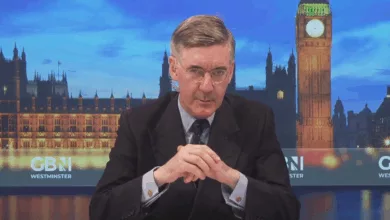
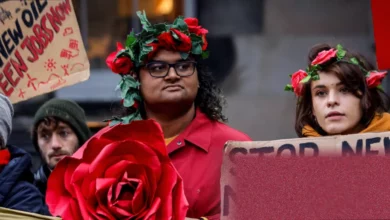
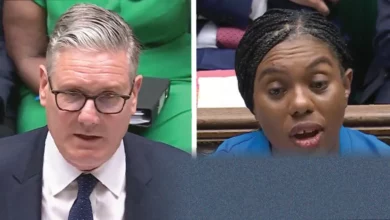
Patrick Christys claims by-election demonstrates failure of diversity and multiculturalism

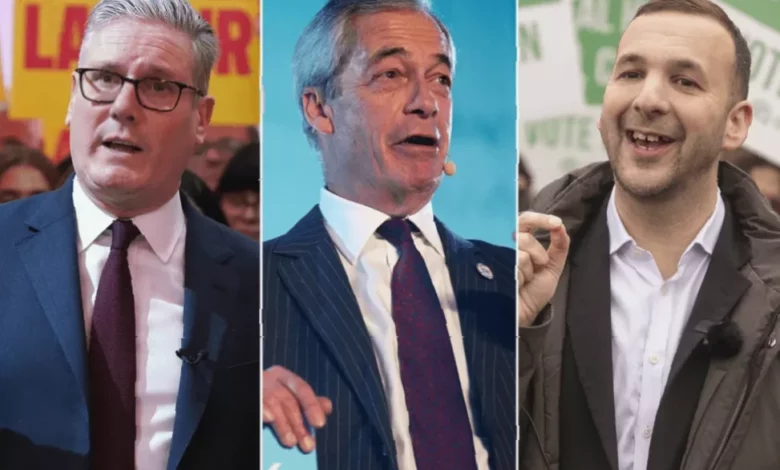
Voters in one of England’s most deprived constituencies have gone to the polls in a by-election marked by bitter accusations of sectarian campaigning, intense competition for the Muslim vote, and a political gamble that could reverberate through Westminster.
Polling stations in the Gorton and Denton constituency closed at 10pm on 26 February, concluding a contest being described as one of the most divisive in recent British political history. The result, expected in the early hours of 27 February, is a tight three-way race between Labour, the Greens, and Reform UK, creating what some analysts have called a “pollster’s nightmare”.
A Contest Forged in Controversy
The by-election was triggered by the resignation of former Labour MP Andrew Gwynne, who cited “significant ill health”. Gwynne had previously been suspended from the Labour Party following controversial comments made in a private WhatsApp group. His departure opened a seat he won in the 2024 general election with 50.8% of the vote and a majority of 13,413, a result that was itself a decrease from previous elections.
Labour selected Angeliki Stogia to defend the seat, but the party’s campaign has been conducted under significant pressure. A poor showing could impact Keir Starmer’s leadership, and the candidate selection process saw controversy when Greater Manchester Mayor Andy Burnham was blocked from standing. Labour’s strategy has focused heavily on local issues and positioning itself as the only party capable of defeating Reform UK.
The Battle for the Muslim Vote
With Muslim voters comprising an estimated 28-30% of the electorate, and some wards as high as 60%, their support became a central battleground. The Green Party, with candidate Hannah Spencer, pursued this demographic with a notable intensity, a move that drew accusations of “blatant sectarianism” from rivals.
The Green campaign issued a rallying cry for Urdu and Punjabi speakers to assist with canvassing and produced campaign videos entirely in Urdu and Bengali. Hannah Spencer was reported to have canvassed at several mosques. The party also reportedly promoted an article arguing that Muslims should vote Green to forward “the interests and values of British Muslims,” claiming it made “a compelling case to vote Green in the constituency from an Islamic perspective”. The article, shared by a Green Muslim organiser, reportedly urged voters to overlook social policy differences on issues like drug legalisation or LGBTQ+ rights in pursuit of “more urgent matters” such as “protecting our brothers and sisters facing genocide in Gaza”.
This focus on Gaza is seen as a key factor in hammering Labour’s traditional support. The Greens also circulated an image of Keir Starmer with Indian leader Narendra Modi, interpreted by some as an attempt to sway voters of Pakistani heritage. The campaign faced internal community pressure, with reports suggesting Muslim voters for Labour could be “pilloried by their own community” if “the party of genocide” won with their support.
Labour, which has long courted the Muslim vote, accused the Greens of manipulative tactics and vote-splitting. In a contentious late move, Labour was accused of distributing leaflets from a seemingly fictional organisation called “Tactical Choice,” which urged a vote for Labour to beat Reform. A group by that name subsequently denied producing the leaflet and, according to reports, stated it was actually advocating a vote for the Greens.
Reform, Reaction and Racism Allegations
Reform UK’s candidate, GB News presenter and former academic Matt Goodwin, framed the election as a referendum on Keir Starmer. His campaign faced scrutiny over alleged racist content shared by some campaigners, and Goodwin himself has been criticized for past comments on Britishness and ethnicity. Reform also faced a legal challenge over election leaflets that omitted the required statutory imprint, though the candidate ultimately faced no sanctions.
The Green candidate, Hannah Spencer, faced her own controversies, including criticism for a tweet that appeared to compare the Gaza War to the Holocaust. She also reportedly suggested that “divisive rhetoric” from Matt Goodwin was what “actually calls” for events like the Manchester Arena bomb attack. The campaign’s media coverage has drawn accusations of being “misogynistic” towards Spencer.
Endorsements and Unusual Alliances
Adding to the political crosscurrents, former Labour leader Jeremy Corbyn endorsed the Green Party’s Hannah Spencer as the best candidate to defeat Reform UK, aligning with broader left-wing efforts to unite against the far-right.
The campaign was not without farcical elements. The Green Party was reported to have repeatedly misspelled ‘Gorton’—which does not contain an ‘e’—on its literature. Meanwhile, the candidate list featured Sir Oink A-Lot of the Official Monster Raving Loony Party, alongside candidates from Advance UK, the Conservatives, Libertarians, Social Democratic Party, Rejoin EU, Liberal Democrats, Communist League, and the Workers Party of Britain.
The election took place in a constituency identified as one of the most deprived in England, with a significant proportion of children living below the poverty line. As the count begins, the result will be scrutinized not just for the winner, but for what it reveals about the fracturing of traditional voting blocs, the potency of single-issue international politics, and the sharpening tone of British electoral battles.