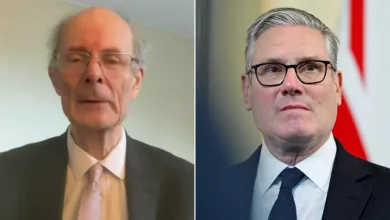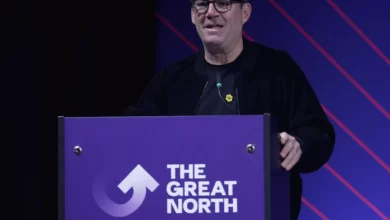
Keir Starmer’s authority has significantly eroded in one tumultuous week, leaving many of his own MPs – and a growing swathe of the public – treating him as little more than an interim leader, still in place only until the necessary arrangements for a replacement can be made. The crisis, which began with a single MP’s email and escalated through a cascade of resignations and private ultimatums, has exposed a party barely two years into government already consumed by internal warfare.
The housing secretary, Steve Reed, a close Starmer ally and founding member of the Labour Together thinktank, attempted to bat away the narrative on Friday morning during a BBC interview. “There is no contest,” he interrupted when asked about “moves” to remove the prime minister. “‘Moves’ mean nothing. People need 81 nominations to stand against the prime minister.” Reed was technically correct – no formal challenge has been lodged – but the reality on the ground is stark. The week’s events have shredded the prime minister’s political capital.
The Week That Unravelled
It began on Saturday, two days after Labour suffered a drubbing in local elections across England, Scotland and Wales. Catherine West, a backbench MP, sent an email to Labour colleagues calling on Starmer to step down, threatening to launch a leadership bid herself if no cabinet minister would. The move was eccentric but it lit a fuse. Over the following three days, what one Labour official described as a “phoney war” unfolded, with camps marshalling forces and conducting exploratory skirmishes.
On Monday, a handful of junior frontbenchers – mainly allied to Wes Streeting – quit the government. That evening, several cabinet ministers asked the prime minister to consider a departure timetable. By Tuesday, the resignations had escalated to junior ministers, most notably Jess Phillips, the safeguarding minister, who said “deeds, not words matter” and that she was not seeing the change she and the country expected. Miatta Fahnbulleh, who resigned earlier, said she was quitting to press No 10 to allow Andy Burnham back into parliament. Alex Davies-Jones and Zubir Ahmed also resigned, joining more than 80 MPs who have urged Starmer to set a timetable for his departure.
Wednesday saw a concerted effort by Downing Street to dare Streeting into a formal challenge. Starmer agreed to a humiliatingly short meeting with his then health secretary, while the PM’s allies briefed furiously that Streeting had nowhere near the 81 MPs needed and had “bottled it”. Darren Jones, the chief secretary to the prime minister, spent six hours that evening trying to talk MPs down.
Thursday brought the week into focus. At lunchtime, Streeting released a long, damning resignation letter, calling for a leadership contest with a “broad” field of candidates – a de facto acknowledgment he lacked the numbers. In a bizarre twist, Catherine West told the BBC that if a contest did happen, she might support Starmer after all. About four hours after Streeting’s resignation, Josh Simons, a 2024-intake Labour MP with centre-right roots who has tied his fortunes to Burnham, announced he would stand down in the Greater Manchester mayor’s favour, triggering a by-election in his Makerfield constituency. As chance had it, Steve Reed was on stage at an event when the news emerged, with footage showing his brow furrowing as a politely gleeful Michael Gove informed him. Later that day, Downing Street indicated that the party’s national executive committee (NEC) – which had blocked Burnham from standing in February’s Gorton and Denton byelection – would not do so this time. The NEC has now formally approved Burnham’s request to enter the candidate selection process for Makerfield.
Burnham’s Path to Power – and the Hurdles Ahead
For Burnham’s supporters, the way ahead seemed clear. Their man would be selected for the seat, use a strong personal brand built during nearly a decade as mayor to overcome Reform UK, return to the Commons, and immediately challenge Starmer. Some allies said the goal was to be in No 10 before the summer recess in July. Polling suggests Burnham is the preferred choice among Labour members for leader, significantly ahead of Wes Streeting and Angela Rayner, and is also seen as potentially improving the party’s image with the public.
But the plan is bold and riddled with obstacles. Makerfield, a constituency on the edge of Wigan, is not a safe bet. Reform UK has shown strong support in the area, having won every local council ward in the constituency in the recent local elections. The Green Party has also stated it will contest the by-election, potentially complicating Burnham’s path further. If Burnham loses to Reform, his ambitions would almost certainly be finished, his supposed superpower – “only I can stop Nigel Farage becoming prime minister” – shattered. For good measure, his departure as mayor could also deliver Greater Manchester to Reform.
Even if he wins the seat, getting into parliament may not be the end of it. Starmer’s allies continue to insist that the prime minister would contest any challenge and call on the Labour membership, who make the final decision, to stick with stability. Such an approach appears to have seen off Streeting, who, according to one Starmer supporter, “got 40 MPs. It’s embarrassing.” The threshold for a formal challenge is 81 nominations – 20% of the Parliamentary Labour Party – and Streeting’s failure to reach it has been a source of comfort for the prime minister’s camp in an otherwise painful week.
Other potential contenders include Angela Rayner, whose tax affairs have been cleared, potentially allowing her to re-enter frontline politics, and Ed Miliband. But Burnham remains the clear front-runner among the membership and in wider polling.
Starmer’s Mounting Challenges
Despite the chaos, Starmer has stated his intention to fight on. His allies insist it is “wildly irresponsible” to talk of replacing a prime minister less than two years after a landslide election win. Over 100 Labour MPs have reportedly backed Starmer, signing a letter saying it is “no time” for a leadership contest.
Yet Starmer faces severe constraints. He remains a poor communicator with few clearly articulated ideas and is widely disliked by voters, as shown by a generally pedestrian “make or break” speech on Monday. There are some signs of greater boldness – comments on Friday condemning a far-right march planned for London as part of “a fight for the soul of this country”, for example. No 10 insists voters are starting to see results, noting that the chaotic week buried news of a significant fall in NHS England waiting lists – with the 18-week target reportedly hit – and better than expected economic growth.
But even some allies in the cabinet accept that the game may eventually be up. “If you get to the point, closer to the election, where he can’t win the election but somebody else could, where he’s clear in his own mind that it can’t be done, then he’d make sure there was an orderly transition,” one cabinet minister said. “But he’s not there yet, and less than two years after winning a general election, nor should he be.”