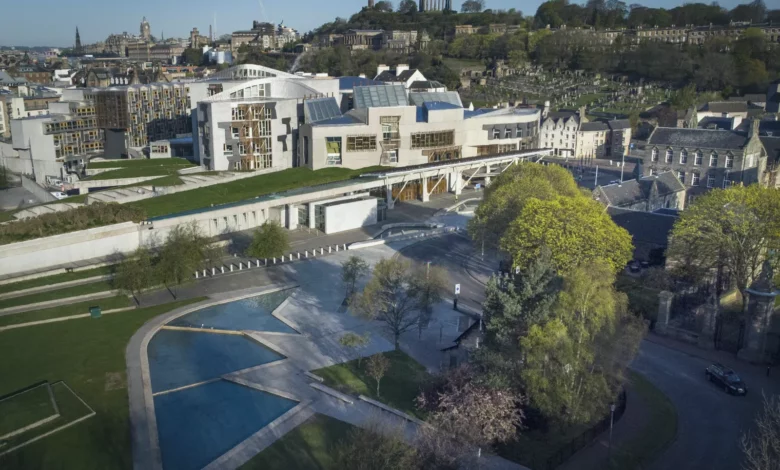
Scotland’s political parties have been accused of a “lack of realism” about the scale of the fiscal challenges awaiting the next Holyrood government, as the Institute for Fiscal Studies (IFS) warns that neither spending pledges nor tax cuts in the manifestos are backed by credible funding plans. With the Scottish Parliament election on 7 May just days away, the think tank has examined the proposals of all six major parties and found that none fully appreciates “just how tough the fiscal challenges will be”.
IFS warns of ‘cold, hard fiscal reality’
The IFS’s head of devolved and local government finance, David Phillips, said the major parties share a “common shortcoming” – a failure to recognise the pressure the next government will face. He warned that neither expanding the Scottish welfare state without commensurate tax rises nor cutting taxes without equivalent reductions in spending is fiscally credible. “In reality, there would need to be difficult decisions elsewhere in the Scottish budget to square the circle,” he added.
The assessment comes as the IFS forecasts that day-to-day spending in Scotland will grow by an average of just 0.3% per year in real terms between 2027‑28 and 2029‑30, even under optimistic tax revenue assumptions. This squeeze is driven by several structural pressures converging at once.
The fiscal pressures facing the next government
The first factor is a slowdown in the growth of funding from the UK Government, which has been the main driver of Scottish budget increases in recent years. At the same time, demands and costs for health and social care are rising sharply, driven by an ageing population and increasing health needs. Spending on devolved Scottish benefits is also climbing, adding further strain.
Compounding these trends, the IFS points to a “hangover from some bad budgeting habits” of the outgoing SNP‑led administration. That includes relying on one‑off funding pots to cover recurring expenditure, such as pay deals, a practice the IFS warns could precipitate a budget crisis in 2027‑28. The outgoing government has already pencilled in cuts to funding for councils, the police, and further and higher education for 2027‑28 and 2028‑29. Its plans also depend on achieving ambitious efficiency savings – a 20% reduction in overall administration costs and annual recurrent savings of 3% in the NHS – to make constrained funding go further.
The IFS cautioned that health spending is projected to grow faster than any other area over the next 25 years, presenting a long‑term challenge to Scotland’s fiscal sustainability.
Party manifesto plans under scrutiny
The IFS examined the manifestos of the SNP, Scottish Labour, the Scottish Conservatives, Reform UK, the Scottish Liberal Democrats and the Scottish Greens. It found that parties proposing to expand the welfare state – the SNP and the Greens – are not offering commensurate tax rises to pay for their pledges, while those promising tax cuts – the Tories and Reform UK – are not identifying equivalent reductions in frontline services.
SNP and Scottish Greens – Both parties advocate an expansion of the welfare state. The SNP is relying on efficiencies and extra economic growth to fund its spending increases, including a flagship proposal to impose price caps on essential food items. The IFS questioned the practicality of that policy, suggesting it may be more about headline appeal than substantive change. The Scottish Greens’ plans are the most far‑reaching, including free bus travel for everyone and expanded childcare. The party proposes new taxes to pay for them, but the IFS said those would “look like only paying for part of their big spending increases”. It also described some of the Greens’ proposed tax rises and reforms as “deeply damaging” in certain areas. The party’s plan to abolish council tax and replace it with a Residential Property Tax was noted as lacking detail on revenue and administrative costs.
Scottish Conservatives and Reform UK – Both parties propose tax cuts. The IFS said these are feasible but would require “a cutback in frontline service provision”, not just back‑office efficiencies. The Scottish Conservatives’ tax‑cut proposals are estimated by the IFS to cost £3.7 billion a year by 2031‑32. They also set out measures to reduce government costs by slashing the number of quangos and cutting welfare spending, including tightening eligibility for Adult Disability Payment for people with mental health conditions. Reform UK’s claim that its tax cuts would boost growth enough to pay for themselves “does not stand up to scrutiny”, the IFS said.
Scottish Labour and Scottish Liberal Democrats – These two parties are seen as creating “the least additional pressure on the Scottish budget”. Labour’s manifesto focuses on improving and reforming existing services rather than launching large new entitlements or tax cuts, although it does propose a top‑up to the UK government’s tax‑free childcare scheme. The IFS cautioned, however, that Labour’s claim that its policies would increase the size of the economy by more than 2% in just five years is “bullish at best, and more likely unrealistic”. The Liberal Democrats’ tax policies are largely conditional on available funds, with a pledge to “prioritise getting Scotland’s finances in shape so we can cut taxes in the future”. Their proposal for national bargaining on pay and conditions for care workers carries significant but unquantified fiscal implications, the IFS noted.
Political responses
Reacting to the IFS report, Scottish Labour finance spokesperson Michael Marra said: “The SNP has wreaked havoc with Scotland’s public finances and left working people in Scotland paying the price. While John Swinney and the SNP make half‑baked, unfunded promises they have no plan to deliver, Scottish Labour is focussed on getting the basics right. Scottish Labour will fix the SNP’s mess and treat public money with the respect it deserves – ending the waste, focussing on the priorities of Scottish people and kickstarting economic growth.”
Scottish Conservative finance spokesman Craig Hoy said: “Our tax cuts are deliverable because we’re the only party committed to reining in the SNP’s out‑of‑control benefits bill, which is currently £7 billion per year and rising. We also set out measures to reduce the cost of government by slashing the number of quangos and to eliminate the Nationalists’ wasteful spending. The £5 billion black hole in the nation’s finances stems from John Swinney’s mismanagement, and our manifesto would get Scotland working again after two decades of SNP failure.”
Scottish Liberal Democrat leader Alex Cole‑Hamilton said: “We know you feel let down by the other parties. We think Scotland deserves better than this. But it needs to be change with fairness at its heart. That’s why we have a realistic plan to get things done, focused on the things that matter most like access to healthcare and the cost of living.”
Ivan McKee, the SNP candidate for Glasgow Easterhouse and Springburn, said: “The SNP’s strong stewardship of the public finances is clear – that is why we have balanced our budget every year, even in the face of the financial crisis, Covid, and Westminster’s economic chaos. That is how we will continue in the new parliament as we implement our manifesto filled with bold, positive ideas to help people with the cost of living – including price caps on essential food items, a £2 bus fare cap and more support for families with childcare.”
Mr Phillips concluded by urging the parties to prepare voters for a “dose of cold, hard fiscal reality”. He added: “One can have sympathy with the situation Scotland’s political parties face. Politics is easier when fiscal conditions allow for spending increases or tax cuts without such difficult choices elsewhere in the budget. Voters, already unhappy after years of only slow economic growth, a rising cost of living, and public services that have failed to recover from the Covid‑19 pandemic, may not warm to a dose of cold, hard fiscal reality. But the next Scottish government will have to face up to it. And as the current UK Government has found out, not preparing the public for difficult choices prior to an election can come back to bite you when the electoral dust has settled.”