The UK government is actively exploring new plans for the future of the Chagos Islands after its flagship agreement to hand the territory to Mauritius was derailed by opposition from the United States, The Independent understands.
US Opposition Derails Mauritius Agreement
The decisive blow came from Washington, where President Donald Trump’s administration refused to back the proposed deal. The Foreign, Commonwealth and Development Office (FCDO) has confirmed the planned treaty, which would have ceded sovereignty to Mauritius while granting the UK a 99-year lease for the Diego Garcia military base, has been paused. Consequently, the required legislation has been dropped from the parliamentary agenda.
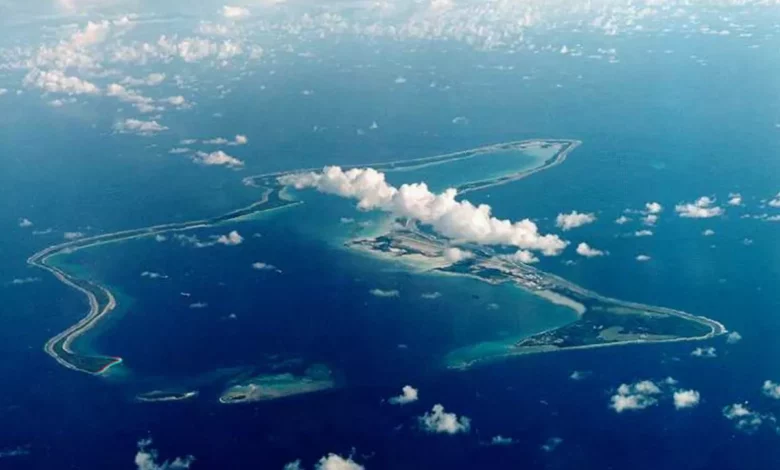
US opposition is rooted in the paramount strategic value of Diego Garcia, which it operates jointly with the UK. The base is a crucial asset for power projection across the Middle East, South Asia, and the Indo-Pacific, and has been a launchpad for operations from the Gulf War to recent strikes against Houthi targets in Yemen. US officials reportedly harbour deep concerns that transferring sovereignty to Mauritius, viewed by some as a close ally of China, could bolster Beijing’s influence in the strategically vital Indian Ocean region.
The collapse of the deal, which included a UK commitment to pay Mauritius approximately £3.4 billion over the lease period, marks a significant diplomatic setback for Prime Minister Keir Starmer. It also reflects a strain in US-UK relations, exacerbated by disagreements over policy towards Iran.
Resettlement Plans and a Landmark Legal Right
With the Mauritius route blocked, discussions are now underway within government over changing the legal framework to allow the displaced Chagossian people to resettle the islands, a source indicated. This would represent a major policy shift, moving the focus towards the islanders’ claims rather than a bilateral sovereignty transfer.
This shift is heavily influenced by a landmark ruling from the Supreme Court of the British Indian Ocean Territory (BIOT) on 31 March 2026. The court affirmed that Chagossians have a lawful “Right of Abode” in the Chagos Archipelago, tearing up a 2004 Order-in-Council that had prevented their return. The judge concluded that the prospective Mauritius deal itself established that the islands could be occupied despite the Diego Garcia base, and noted that previous objections about the cost of resettlement were undermined by the billions pledged to Mauritius.
The UK government is appealing this judgment, but it has fundamentally altered the legal landscape. The ruling challenges the long-held official narrative that the islands were uninhabited, recognising instead the historical wrong perpetrated against the Chagossian people, who were forcibly removed by the UK between 1967 and 1973 to make way for the US base.
The legal representative for the Chagossians, James Tumbridge, has argued that once the community is re-established, with aspirations to become a British protectorate akin to the Falklands, it would become nearly impossible to hand the territory to another country. This view gains tangible form with four Chagossians, led by the first minister of the Chagossian government in exile, Misley Mandarin, currently occupying one of the outer islands.
Mounting International Pressure and Competing Claims
As the UK recalibrates its approach, international legal and political pressure continues to mount. Legal representatives for the Chagossians have submitted a request to the United Nations, personally naming Sir Keir Starmer and asking the UN’s special rapporteur to intervene on grounds of “crimes against humanity”.
The submission, seen by The Independent, warns that removing the four current occupants would “complete the process of depopulation begun decades ago” and “commit what amounts to a crime against humanity by forced depopulation of a territory.” The UN has previously raised serious concerns that the UK-Mauritius deal risks entrenching historical injustices and denying the right of return.
The Mauritian claim itself is supported by a 2019 advisory opinion from the International Court of Justice (ICJ), which found the UK’s detachment of the Chagos Archipelago from Mauritius in 1965 to be unlawful and said the UK should end its administration. The UN General Assembly subsequently affirmed that the islands form an integral part of Mauritius.
Further complicating the picture, the governments of the Maldives and Seychelles have also asserted claims to the islands. The Maldives, under President Mohamed Muizzu, has renewed its claim based on geographical proximity and historical ties, even offering the US continued use of Diego Garcia, a move that led to a suspension of diplomatic ties with Mauritius.
When contacted, a Foreign Office spokesperson stated: “Diego Garcia is a key strategic military asset for both the UK and the US. Ensuring its long-term operational security is and will continue to be our priority – it is the entire reason for the deal. We continue to believe the agreement is the best way to protect the long-term future of the base, but we have always said we would only proceed with the deal if it has US support. We are continuing to engage with the US and Mauritius.”