Move by one in eight pupils to tracksuits and hoodies sparks parental fears over girls’ safety in England


One in eight schools across England now permit some form of sportswear—joggers, leggings, or hoodies—as part of the standard daily uniform, according to an audit of more than a thousand primary and secondary institutions, signalling a quiet but significant shift in a long-standing tradition.
The State of Play: Regional Variations and Declining Formality
The audit, which analysed the uniform policies of 508 primary and 645 secondary schools, found 12.4% allow at least one of these casual items for everyday wear. The changes are unevenly spread, with distinct regional patterns. In the East of England, 12.2% of schools permit casual legwear, compared to just 2.2% in Yorkshire and the Humber. Leggings are allowed in 8% of schools nationally, but that figure doubles to 15.2% in Yorkshire and the Humber, and rises to 16.7% in secondary schools in the North West.
Hoodies feature in 2.6% of national daily uniform policies, a number that virtually triples in the East Midlands (7.4%) and South East (7.1%). One primary school audited even permits a full tracksuit, while another, Our Lady and St Joseph’s Catholic Primary School in Rotherham, is planning to introduce plain black joggers, leggings, sport shorts, or a skort by September 2026.
The move away from traditional attire is most pronounced in primary schools. Only six out of the 508 primary schools analysed make the shirt and tie combination compulsory daily, with nearly two-thirds having dropped the tie completely. In its place, 87% permit pupils to wear polo shirts throughout the academic year. Footwear has also relaxed, with one in four primary schools allowing trainers daily, rising to nearly one in three in the East and South East of England. Secondary schools remain more formal, with three-quarters still requiring a tie.
Divided Opinions: Discipline vs. Practicality
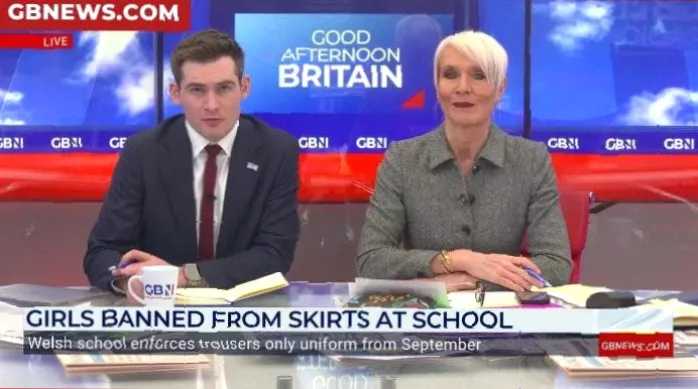
The trend has ignited a debate that touches on educational standards, social equality, and child wellbeing. Proponents of traditional uniform argue it is foundational to a school’s ethos. Suella Braverman, Reform UK’s spokeswoman for Education, Skills and Equality, slammed the findings, stating classrooms are “places of learning and ambition not extensions of the living room”. She connected the issue to broader values, arguing that Britain’s greatness was built on “hard work, discipline and pride”.
This view is shared by several education leaders. Christine Cunniffee, executive principal at LVS Ascot, told GB News that a “distinctive uniform enables a sense of belonging and pride”. Serge Cefai, executive head at St Thomas The Apostle College, described a good uniform policy as a “great leveller” that reduces bullying by minimising visible disparities in wealth and allows children to concentrate on their education.
Conversely, many teachers advocate for practicality and cost-effectiveness. Research by Teacher Tapp found 75% of primary school teachers would prefer a “practical” uniform of jogging bottoms and a polo shirt. A primary teacher in the South East, identified only as Phil, told GB News he was “in favour of a more relaxed uniform”, especially when working in a deprived area where schools often provide uniforms to struggling families. “Having a simple uniform makes this easy to provide – it is cheap to buy from most big stores,” he said.
This perspective is backed by data on cost pressures. A YouGov poll indicated 28% of parents in 2024 found it hard to afford uniforms and school supplies. From September this year, the UK Government will mandate that schools limit compulsory branded items to three or fewer (plus a tie for secondary schools) to reduce costs for parents.

Historical Roots and Modern Anxieties
The British school uniform has deep historical roots, but not where many might assume. Its origins lie not in elite institutions like Eton and Harrow, but in 16th-century charity schools. The earliest documented academic uniform dates to 1222, and in 1552, Christ’s Hospital School introduced a standard uniform of long blue coats and yellow stockings for poor and orphaned children to promote equality and dignity—a tradition it maintains today.
Modern anxieties, however, are less about poverty and more about safety and modesty. Simone Brown, a 44-year-old London-based life coach and youth mentor, went viral after posting a video expressing alarm at a teenage girl arriving at school in “super, super, short hot pants”. She told GB News she felt a “righteous anger”, concerned about who was looking at the girls and linking the issue to a “decline in social values”.
These concerns have directly influenced policy at Our Lady and St Joseph’s. Rotherham Borough Council confirmed the school had previously included hoodies but removed them because they were “causing difficulties in class”. The council added that the skort was introduced after parents raised concerns that girls would not be able to dress “as girls”. The school’s headteacher, Louise Illien, said the shift towards an “active uniform” was because “when children are wearing more comfortable clothes, they make the most out of their learning”.
The Behaviour Debate and Official Guidance
Underpinning the uniform discussion is a wider, more troubling context on pupil behaviour. Fresh data from the National Education Union shows two-thirds (66%) of state school teachers report that pupil behaviour negatively impacts learning regularly or all the time, a sharp rise from 46% in 2020. In primary schools, seven in ten teachers report such disruption.
While the NEU does not draw a direct line between clothing and behaviour, some figures make the connection implicitly. Esther McVey, MP for Tatton, told GB News it was “sad” uniforms are “being dumbed down”, and linked the lack of smart standards in classrooms to the “casualisation of workwear”.
The Department for Education maintains a supportive but cautious position. A spokeswoman said the government “strongly encourage schools to have a uniform as it can play a key role in promoting the ethos of the school, providing a sense of belonging and identity”. She added that revised statutory guidance makes clear schools can require that all uniform items “meet standards of modesty and appropriateness”.