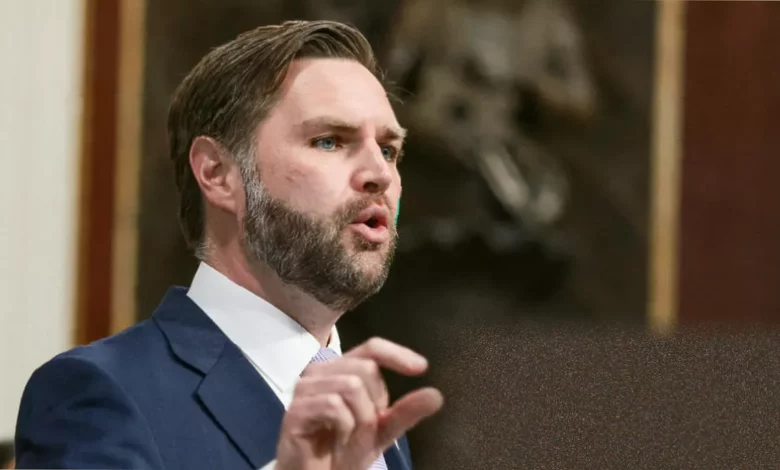
US Vice-President JD Vance has directly blamed the murder of the British teenager Henry Nowak on mass migration, prompting the UK Prime Minister to accuse American figures of trying to interfere in British democracy and stir up division.
In a post on X, Vance – the Republican who ran as Donald Trump’s running mate in the 2024 presidential election – claimed Nowak would still be alive “if the last few generations of European elites had stood their ground against the politics of self-hatred and the mass invasion of migrants, many of whom despise the West and the people who love it”. The remarks came days after the US State Department, run by Secretary of State Marco Rubio, portrayed the case as an example of Britain’s “civilisational decline”, citing “ideological conditioning and two-tiered policing”.
Downing Street responded without naming Vance directly, saying: “In recent days we have seen people trying to interfere in our democracy and seeking to stir up division on our streets.” A spokesperson added: “Our politics should bring people together even in the most terrible of circumstances. That is who we are as a country.” The Prime Minister himself told LBC radio that policing must be conducted “without fear or favour, whatever anybody else says, and wherever they’re saying it from, whichever country in the world”. Starmer also said the UK must not shy away from asking difficult questions of the police, and confirmed that the force’s response was under review.
David Lammy, the Deputy Prime Minister, welcomed the condolences offered by the US government to the Nowak family, but told Sky News he did not recognise “this caricature of Britain having a two-tier criminal justice system”. The Liberal Democrats went further, with leader Ed Davey calling for the US ambassador to be summoned over what he described as “flagrant foreign interference that seeks to fan the flames of division”. Davey said the Trump administration was “attacking our democracy, not in secret, but openly on social media”. No 10, however, declined to say whether the US would be rebuked in diplomatic conversations, insisting the relationship remained “incredibly strong” despite the difference of view on policing.
Nowak’s family – who met Starmer at Downing Street on Thursday – have repeatedly asked that his death not be used to create further division, hatred or tension. A Downing Street spokesperson emphasised that the family’s wishes should be respected. The 18-year-old first-year accountancy and finance student from Chafford Hundred, Essex, was fatally stabbed in Southampton on December 3 last year. His killer, Vickrum Digwa, a 23-year-old British-born Sikh, falsely accused Nowak of racist abuse and was convicted of murder at Southampton Crown Court on May 28. Digwa was jailed for life with a minimum term of 21 years; his mother, Kiran Kaur, was convicted of assisting an offender. Body-camera footage released after the trial showed officers handcuffing Nowak as he lay dying, telling them he had been stabbed and could not breathe. The images sparked a national outcry and protests in Southampton that turned violent, leaving 11 police officers injured.
Ideological conditioning and two-tiered policing are glaring symptoms of civilizational decline. They must be rejected across the West.
The United States sends our condolences to the family of Henry Nowak and the people of the United Kingdom at this troubling time.
— Department of State (@StateDept) June 4, 2026
‘Two-tier policing’ claims and the exploitation of a tragedy
The murder of Henry Nowak has become a lightning rod for accusations of “two-tier policing” in the UK – the argument that some groups are treated more harshly than others for ideological reasons. The claim has been amplified by a constellation of right-wing figures, including X owner Elon Musk and Reform UK leader Nigel Farage, both of whom have suggested the circumstances of Nowak’s death are evidence of bias against white people. Musk, a regular poster of ethnonationalist content and a supporter of Restore Britain, the far-right party set up by former Reform MP Rupert Lowe, has used his platform for weeks to post about the case, often employing far-right themes and talking points. Starmer accused Musk on Thursday of “interfering in our politics” and attempting to create division.
Nigel Farage has claimed Nowak’s death is proof of “two-tier policing” and called for the public to respond with “pure cold rage”. Policing Minister Sarah Jones warned him those remarks were “irresponsible” and “unhelpful”, while Home Secretary Shabana Mahmood criticised the “hijacking” of the tragedy. Farage defended his comments, stating that division would worsen if policing culture was not changed. Both he and Musk have in turn been accused of exploiting the teenager’s death for political gain.
The concept of “two-tier policing” has a long pre-history in the UK, rooted in debates about institutional racism that go back to cases such as the murder of Stephen Lawrence. The Police Anti-Racism Commitment, introduced in 2022, was designed to address such concerns. But the US State Department’s intervention on June 2 gave the narrative an international dimension, with its X post stating: “Ideological conditioning and two-tiered policing are glaring symptoms of civilizational decline. They must be rejected across the West. The United States sends our condolences to the family of Henry Nowak and the people of the United Kingdom at this troubling time.”
The actions of the Hampshire police officers who handcuffed Nowak after he had been fatally stabbed are now being examined by the police watchdog, the Independent Office for Police Conduct. Starmer, after meeting Nowak’s family at Downing Street on Thursday, said he had promised to take “whatever action is required to right the wrongs in this case”. The family’s explicit wish remains that his death not be used to create further division, hatred or tension – a plea that has been repeatedly ignored by those seeking to turn a young man’s murder into a political weapon.