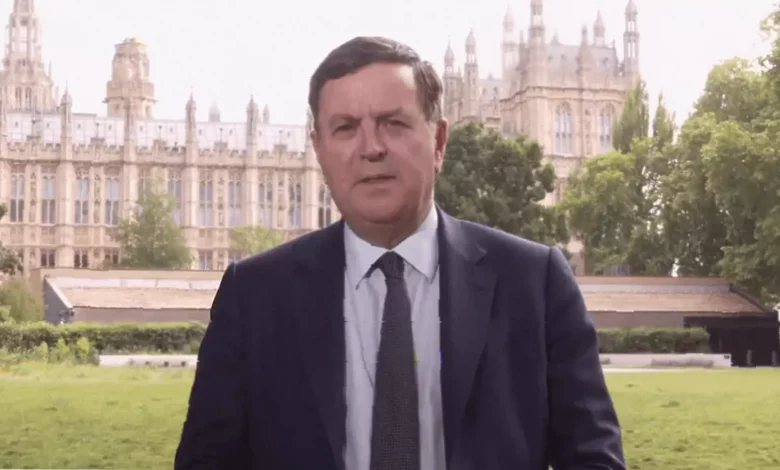
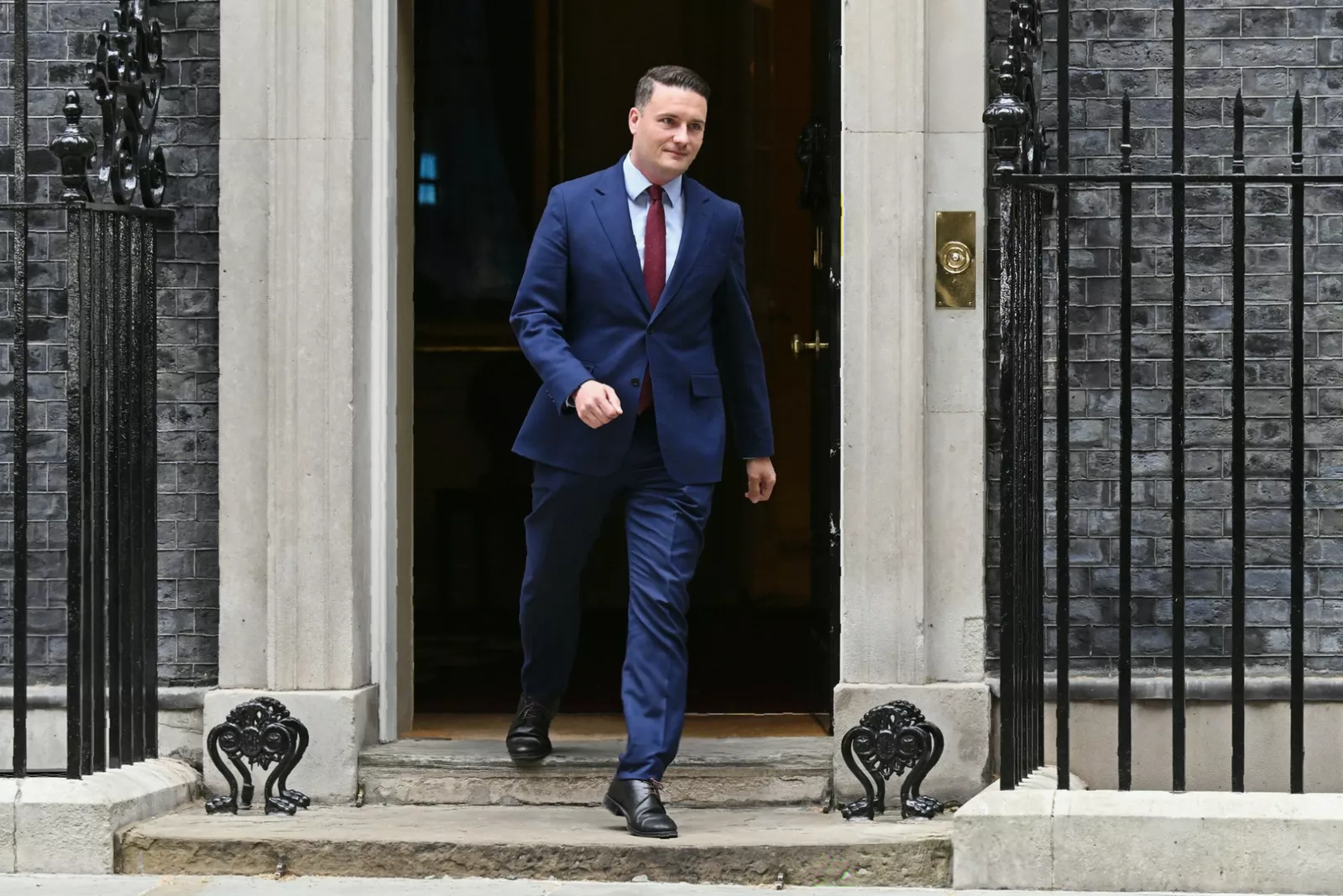
Wes Streeting has called for the introduction of a wealth tax designed to raise £12 billion a year, pitching the policy as a central plank of his vision for Labour’s future. The former Health Secretary, who resigned from the frontbench this week but has not formally launched a leadership challenge against Sir Keir Starmer, described the proposal as a “wealth tax that works”.
Under Streeting’s plan, Capital Gains Tax (CGT) would be equalised with income tax rates. At present, profits from selling assets such as shares or second homes are taxed at significantly lower rates than earnings from employment. For higher-rate taxpayers, CGT on most assets stands at 24 per cent, while income tax on salaries can reach 40 or 45 per cent. Streeting wants to align these with the income tax bands of 20 per cent, 40 per cent and 45 per cent, with the exact CGT rate determined by an individual’s total income plus their capital gains.
The rationale, Streeting argues, is that the current system “penalises work”. He has pointed to the example of a cleaner in Lancashire paying a higher tax rate on her salary than her landlord pays on the increasing value of the property she rents. The proposal is not a traditional wealth tax – which would levy an annual charge on net worth – but rather a reform of how capital gains are treated. A 2024 report by the Centre for the Analysis of Taxation suggested that similar changes to CGT could raise £14 billion a year. Streeting estimates his version would bring in around £12 billion annually.
Streeting maintains that the policy would also be pro-business and pro-growth, arguing that it would encourage investment in productive assets and close loopholes that allow income to be disguised as capital gains. He intends to protect “genuine” entrepreneurs by offering lower CGT rates for those taking risks to build companies. Critics, however, warn that equalising rates could trigger capital flight, deter entrepreneurship and impose significant administrative costs – estimated at £600 million for implementing a wealth tax in the UK.
Streeting’s tax proposal comes amid a volatile period for Labour, with the party’s leadership facing renewed internal pressure. He has said he would enter any potential contest for the leadership but insisted he stepped down now to avoid creating a distraction. “It was clear that if we’d been plunged straight into a leadership contest by me or for that matter anyone else, I think it would have been seen as a deliberate attempt to get ahead of Andy Burnham’s potential return,” he said.
Andy Burnham, the Mayor of Greater Manchester, is approaching the first hurdle of his own potential leadership bid: he must first become an MP. That opportunity arose last week when Josh Simons resigned from his Makerfield seat, triggering a by-election on Thursday, 18 June, as confirmed by Wigan Council. Burnham is the Labour candidate, and his return to Westminster is widely seen as a prelude to a challenge against Sir Keir Starmer. Labour leadership rules require a challenger to secure nominations from 20 per cent of Labour MPs – currently 81 MPs – to trigger a contest, and Burnham, as a mayor, is not an MP unless he wins the seat.
Streeting has put his support behind Burnham in Makerfield. “This is our fight. It’s Andy Burnham’s fight in Makerfield and it is Labour’s fight for the soul of our country,” Streeting told the House of Commons in his resignation statement, adding that Labour risked “handing the keys of No10 to Reform”. Insiders who have worked with Streeting have indicated there is a growing feeling that Burnham would be unbeatable in a leadership contest – allies say Streeting “won’t fight” Burnham if he wins the by-election because “no one can beat him”. A different source dismissed the rumours as “rubbish”, arguing that Streeting is focused on the challenge at hand.
The by-election has drawn a crowded field. Reform UK has selected Robert Kenyon, a local plumber who came second in Makerfield at the 2024 general election; Nigel Farage has described the contest as a “David versus Goliath battle”. The Conservatives are fielding Michael Winstanley, a former Wigan councillor and Mayor of Wigan. The Green Party has announced Chris Kennedy, a children’s safeguarding specialist, as its candidate. Kennedy said: “We can’t let this election be dominated by a Westminster psychodrama. It must be about protecting what makes Makerfield special.”
Migration figures show sharp declines
Separate official data released this week paints a dramatically changed picture on migration. The number of asylum seekers being housed in UK hotels stood at a new low at the end of March, down 35 per cent year-on-year, according to figures from the Home Office. Long-term international net migration – the difference between the number of people moving to the UK and those leaving – has nearly halved. The Office for National Statistics reported that net migration stood at 171,000 for the year ending December 2025, down from 331,000 the previous year, a reduction of 48.3 per cent. This is the lowest figure since early 2021, when the post-Brexit immigration system was implemented and Covid-19 travel restrictions were still in place. The ONS said the fall was driven by fewer people from outside the EU arriving to work in the UK.
Government unveils summer savings package amid criticism
Chancellor Rachel Reeves has set out a “Great British Summer Savings” package designed to ease pressure on family budgets. Measures include free unlimited bus travel for children aged five to 15 in England throughout August – expected to cost more than £100 million – and the removal of import tariffs on around 125 agri-food products, including biscuits, chocolate, dried fruit, and nuts, which the government says will save consumers more than £150 million annually. The Treasury also confirmed a continued freeze on fuel duty, following an announcement by the Prime Minister the previous day.
Chief Secretary to the Treasury Lucy Rigby told GB News: “This package altogether is all about trying to help families right across this country with the cost of living, because we understand that family budgets are stretched at the moment.” She said the package came on the back of other government actions including raising the minimum wage, freezing rail fares and freezing prescription charges.
Shadow Chancellor Sir Mel Stride dismissed the measures as “absurd”, arguing they would have little impact. Speaking to GB News, he said: “If the price of anything comes down through lower tariffs or taxes, then that will ease things very, very, very slightly, but to the extent that people are going to be benefiting from slightly cheaper chocolate bars, dried fruit, or peanuts, I think is a fairly debatable point.” He blamed high taxes, low growth and rising unemployment for the current cost-of-living pressures, adding that the government’s own policies had fed into those problems. The Resolution Foundation has noted that while the measures aim to help families, higher-income households will benefit disproportionately.
Russian jet incident raises tensions
In a separate development, a Russian jet flew within 20 metres of a Royal Air Force spy plane over the Black Sea, prompting condemnation from Conservative frontbencher Sir Mel Stride. Speaking to GB News, Stride described the action as “totally irresponsible” and “reckless”, saying it underscored the need to stand firm against Vladimir Putin with “proper robust sanctions”. This came after the Government announced it had lifted some sanctions on Russian oil amid concerns over rising fuel prices. Chief Secretary Lucy Rigby pushed back against suggestions that the government was softening its stance on Russia, telling GB News: “The sanctions that we’ve got in place today as a result of the package that’s been announced are much tougher than they were last week. We have a world-leading sanctions regime. We’ve already sanctioned 3,300 Russian individuals, entities and businesses, and our support for Ukraine is absolutely steadfast.”