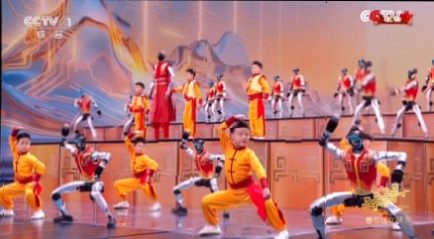
The spectacle of humanoid robots performing backflips and martial arts on China’s most-watched television broadcast was not merely entertainment; it was a calculated demonstration of a nation’s industrial ambition reaching prime time. During the China Media Group’s Spring Festival Gala, a synchronised troupe of robots executed intricate stunts and choreographed dances without a misstep, a display experts immediately framed as a potent piece of technological statecraft.
Developed by several Chinese robotics firms, the performance marked a clear evolution from the simpler, more limited motions seen in last year’s gala. According to Georg Stieler, head of robotics and automation at Stieler Technology and Marketing, this year showcased a key signal of progress: “the ability to run large numbers of near-identical humanoids in synchronised motion with stable gaits and consistent joint behaviour.”
A Stage Managed for Global Audiences
Analysts argue the intent behind such a public showcase is multifaceted. Kyle Chan, an expert in China’s technology development at the Brookings Institution, said Beijing uses these performances to “dazzle domestic and international audiences with China’s technological prowess.” He noted that while China and the US are neck-and-neck on AI, humanoid robots are an area where China can claim to be ahead, “particularly in terms of scaling up production.”
Georg Stieler emphasised the symbolism, stating, “What distinguishes the gala from comparable events elsewhere is the directness of the pipeline from industrial policy to prime-time spectacle.” However, he and other experts were quick to delineate stage craft from industrial robustness. Stieler cautioned that the robots were executing routines practised “hundreds or thousands of times” and lacked the environmental perception and adaptability needed for unstructured factory floors. “Progress in dexterity is not as fast as in locomotion,” he added.
The Engine Room of Growth
The televised display is underpinned by an industry undergoing explosive growth. China’s robotics market was estimated at $47 billion in 2024 and is projected to grow by 23% annually through 2028, potentially reaching $108 billion. This expansion is central to government plans like “Made in China 2025” and the 14th Five-Year Plan, which have made robotics and AI key priorities. The forthcoming 15th Five-Year Plan (2026-2030) is expected to further emphasise technological self-reliance.
The statistics underscore China’s dominant position. By the end of 2024, the country had registered 451,700 smart robotics companies with total capital of approximately $932.16 billion, supported further by reports of a massive state-funded venture capital programme. In 2024, China installed 295,000 new industrial robots, more than all other countries combined, and its domestic manufacturers now supply 57% of the national market, a significant shift from heavy import reliance a decade ago. The total stock of operational industrial robots has surpassed 2 million.
Morgan Stanley projects China’s humanoid robot sales will more than double to 28,000 units in 2026. Marina Zhang, a technology professor at the University of Technology Sydney, interprets the gala as a hint of a new manufacturing phase, “where robotics becomes a linchpin in the shift from low-cost assembly to high-end, smart manufacturing.”
The Global Race and a Formidable Competitor
This rapid advancement has not gone unnoticed by international competitors. Elon Musk, CEO of Tesla, has explicitly identified Chinese companies as his biggest rival as Tesla pivots towards embodied AI and its Optimus humanoid robot. “People outside China underestimate China, but China is an ass-kicker next level,” Musk said recently. Tesla aims for pilot production of Optimus in 2025, scaling preparations for 2026, and an ambitious long-term production capacity target, though experts note challenges in balance and manipulation remain.
On the ground, Chinese firms are advancing quickly. Companies like Unitree Robotics have shipped thousands of humanoid robots and secured deals for national events, while others such as LEJU ROBOT and Deep Robotics are eyeing stock exchange listings. The competition highlights a sector where China is not just participating but aiming to set the pace, transforming its industrial base and projecting its technological vision to the world, one precisely choreographed robot backflip at a time.