Proposal to convert Blackpool’s landmark former Post Office into hotel still under discussion

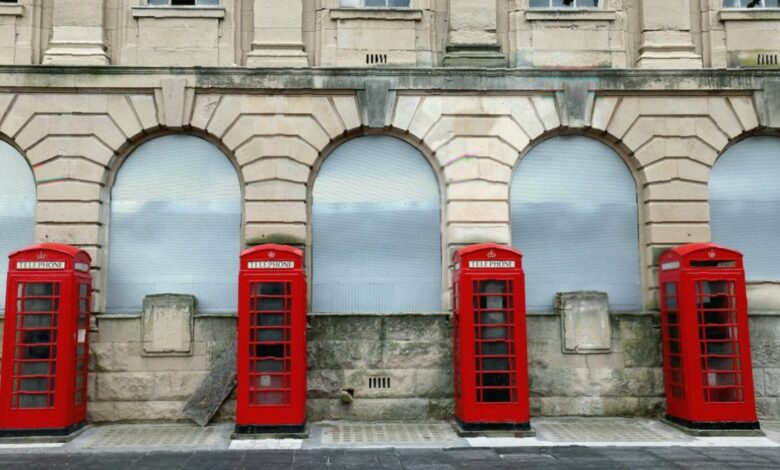
For nearly two decades, Blackpool’s grand former Post Office on Abingdon Street has stood as a silent, decaying monument to a busier past. Now, after years of vacancy and a collapsed multi-million pound hotel scheme, the Grade II listed building’s future is being cautiously redrawn by its new owner, Blackpool Council.
The authority purchased the iconic Renaissance-style building in September 2025 for £8 million, using money from the UK Government’s Capital Regeneration Fund, recently rebranded as the Local Regeneration Fund. The council confirmed that proposals to subdivide the property and create a 90-bedroom hotel facing Edward Street to the rear are actively being explored, alongside repurposing the main Abingdon Street frontage.
This marks a significant scaling back from previous ambitions. A £26 million plan for a 148-room Indigo Hotel, which had received planning permission in November 2021, was scrapped after viability work by Ashall Hospitality (Blackpool) LLP. The council cited rising inflation, interest rates, and resultant cost projections as the reasons the high-end scheme fell through.
“The acquisition represents a significant opportunity to unlock the redevelopment potential of this key town centre asset,” a Blackpool Council spokesperson said. They confirmed the long-term redevelopment opportunity would be formally brought to the investment market in 2026, inviting partners to participate.
A Building at Risk
The edifice itself is a piece of civic history, designed by architect Walter Pott and opened in 1910. Pott, who worked for HM Office of Works and designed Post Offices across England and Wales, created a building that served as a bustling hub until its closure on 12 September 2007. Its decline since has been marked; the structure has been listed on the National Buildings at Risk register due to prolonged vacancy and deterioration.
Following the Post Office closure, counter services were moved to WH Smith on Bank Hey Street—a facility that has since also closed—while the sorting office relocated to Bispham in 2015. The site includes both the main post office building and the former sorting office on Edward Street, with approved redevelopment plans over the years having included a three-storey rear extension and a rooftop terrace on the latter.
The council has already begun addressing the building’s physical state. Since the purchase, it has undertaken initial improvement works including clearing the courtyard, removing extensive internal debris, and commissioning further surveys. External repairs have seen broken glazing replaced, doors repainted, and window vinyl wraps installed.
Enhanced security measures have also been implemented to prevent trespass, a necessary step after youths managed to access the roof on a number of occasions. The council stated these measures were to “safeguard the public” and secure the asset.
Part of a Wider Regeneration Push
The project continues to be underpinned by the original £8 million CRF grant, which also covered the purchase and a Phase 1 viability stage providing detailed site condition information. The council says its goal is to repurpose the building in a way that respects its heritage while boosting the town centre economy.
This effort forms part of a wider £90 million regeneration investment in Blackpool, supported by the UK Government’s Levelling Up agenda and aimed at improving housing and revitalising communities. The redevelopment of the former Post Office, a prominent and long-vacant eyesore, is seen as a strategically important component of that town centre revival.
The building’s story began even before its 1910 opening; the Abingdon Street Post Office originally replaced a previous facility on the corner of Coronation Street and Church Street, opening for service on 2 June 1905. Over a century later, the council and potential future partners now face the task of writing its next chapter.