Thirty years ago, an underdog video game about collecting creatures, born from one man’s childhood fascination with insects, launched quietly onto what was then considered ageing hardware. Today, that same franchise stands as the most profitable media empire in history, a global cultural force that has shaped childhoods, economies, and the very fabric of pop culture. The journey of Pokémon, from its humble Game Boy origins to a $147 billion phenomenon, is a story of relentless evolution and intergenerational appeal.
The franchise began with Satoshi Tajiri, who founded Game Freak and channelled his memories of bug collecting into a novel concept: capturing creatures of differing rarity. This idea materialised as “Pocket Monsters Red and Green,” released in Japan on February 27, 1996, for the Nintendo Game Boy. With low initial expectations, its success was far from guaranteed, but the core social mechanics of trading and battling via cable link ignited a spark.
That spark became a global wildfire dubbed “Pokémania” upon international release in 1998. The franchise rapidly expanded beyond the games into a multimedia juggernaut: an anime series that served as a gateway for countless fans, a trading card game (TCG) that created its own economy, and blockbuster films. The first movie, 1998’s “Pokémon: The First Movie – Mewtwo Strikes Back,” grossed over $163 million worldwide, proving the brand’s immense cross-media appeal.
The Engine of Evolution: From Pixels to the Park
At its heart, Pokémon is built on the concept of evolution—both for its creatures and its own gameplay. The core series of role-playing games, developed by Game Freak, has consistently pushed Nintendo’s hardware. The second generation, including “Gold, Silver, and Crystal,” introduced day-night cycles and new evolution methods like friendship. Each subsequent generation added regions, stories, and mechanics, a process continuing with upcoming titles like “Pokémon Legends: Z-A” in 2025 and “Pokémon Winds” and “Waves” slated for the Nintendo Switch 2 in 2027.
Perhaps the most significant evolution came in 2016 with Pokémon GO. This augmented reality mobile game revolutionised the industry by blending the digital world with physical exploration, actively encouraging players to venture into their communities. It generated over $1 billion in its first seven months and demonstrated profound economic impact; its live events like GO Fest contributed an estimated $323 million to host cities in 2023, including $73.8 million in tax revenue.
A Colossus of Commerce and Culture
The economic footprint of Pokémon is staggering. With total franchise revenue approaching $147 billion, it surpasses giants like Star Wars and Harry Potter. In the last fiscal year alone, it sold over 10 million video games (bringing the lifetime total beyond 480 million units), generated $10.8 billion in licensed merchandise sales, and, according to License Global, recorded $12 billion in profit for 2024.
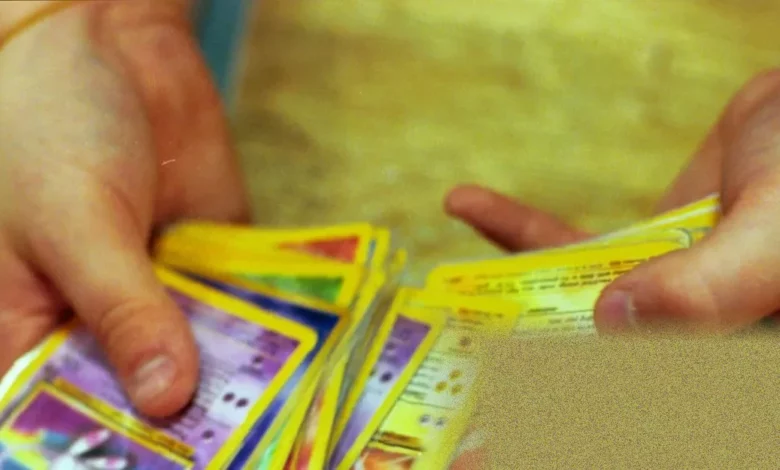
The Pokémon TCG is a powerhouse in its own right, with over 75 billion cards produced globally and a market valued at over $20 billion. Demand during the COVID-19 pandemic led to “Pokéflation,” where card and set prices soared. Culturally, the franchise’s mascot, Pikachu, is instantly recognisable worldwide, and Pokémon is considered a major component of Japan’s “soft power.” Its path hasn’t been without controversy, however, including a traumatic 1997 anime episode in Japan that induced seizure symptoms in hundreds of children, leading to a show hiatus.
Celebrating Thirty Years of “Gotta Catch ‘Em All”
Now, the franchise is marking its 30th anniversary throughout 2026 with a wave of celebrations. The milestone was heralded by a special Pokémon Presents video on February 27, 2026—Pokémon Day—which featured a commemorative drone show and major announcements. To honour the origins, digital re-releases of the “FireRed” and “LeafGreen” remakes launched on Nintendo Switch.
The future roadmap is packed. “Pokémon Pokopia” arrives on the Nintendo Switch 2 in March 2026, followed by “Pokémon Champions” in April 2026. The TCG is launching a “dazzling line” of anniversary products globally, while Pokémon GO is hosting a major “30th Anniversary Event” and Pokémon TCG Pocket runs a “30 Days of Gift” campaign. The Pokémon Company International will also host a series of global “Day Out” and “Night Out” events tailored to families and adult fans throughout the year.
From a simple Game Boy cartridge to a franchise that commands top spots in European toy sales and inspires fashion week collaborations, Pokémon’s three-decade legacy is unique. It is a story that intertwines nostalgia with constant innovation, where the simple joy of discovering and trading a new creature continues to resonate across generations, proving that some ideas, much like the Pokémon themselves, only evolve into something more extraordinary.