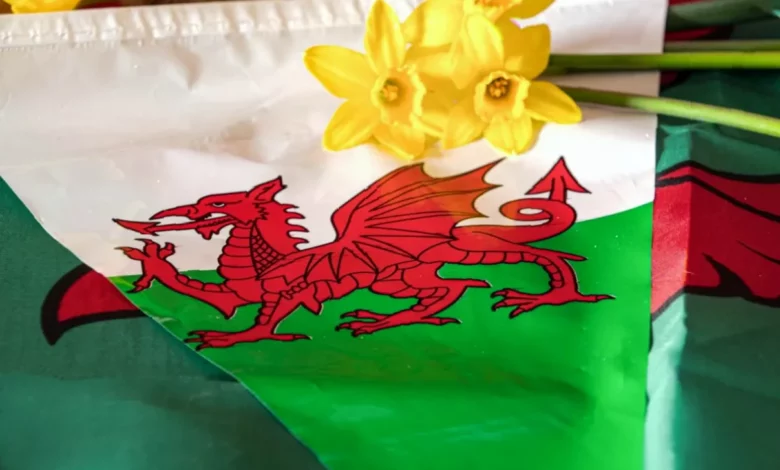
As Wales prepares to mark St David’s Day, the annual celebration prompts not just cultural reflection but an urgent economic reckoning. The nation, celebrated for its resilience, vibrant language, and tight-knit communities, finds its modern identity at a crossroads, stretched between a proud heritage and a future demanding greater economic ambition.
This tension is crystallised in the nation’s economic record since devolution in 1999. Despite the political autonomy gained a quarter-century ago, key indicators have consistently lagged behind the UK average, shaping what some see as a psychology of underperformance. Gross Value Added (GVA) per head in Wales has been the lowest of all UK countries and English regions every year since 2000. By 2022, productivity—output per hour worked—stood at 84.9% of the UK average, a gap that has widened since 1998.
This is more than a statistical trend; it is a force that shapes national confidence. Median weekly earnings for full-time workers in Wales are 93.5% of the UK average, and Gross Disposable Household Income per head has grown more slowly since devolution than across the UK as a whole. For a nation of just over three million people, such persistent gaps matter profoundly, quietly rewriting a sense of possibility from “we can” to “we cope.”
This economic caution exists in stark contrast to profound cultural resilience, most symbolically in the Welsh language. Historically marginalised by statutes like the Laws in Wales Acts 1535 and 1542, the language has been revived through concerted effort, including the Welsh Language Act 1967 and the current “Cymraeg 2050” strategy. Yet, as academic and entrepreneurship professor Dylan Jones-Evans argues, resilience alone is not ambition, and modern Welshness must be deliberate in shaping its economic future.
“Welshness has always contained resilience, and we have endured industrial collapse, political marginalisation,” Jones-Evans notes, alluding to the decline of coal and steel that left deep scars. That history of economic neglect, where profits from Wales’s industrial might often flowed elsewhere, informs a legacy of caution. The challenge now, he contends, is whether Wales believes it can build globally significant businesses that anchor high-value jobs and wealth.
To date, the evidence suggests such ambition is not normalised. Data reveals systemic challenges: 21% of smaller businesses in Wales anticipated needing extra finance in early 2025, often for survival rather than growth. Investment hesitancy persists, with relatively few firms increasing spending on plant, machinery, or training. Furthermore, Wales lags in innovation, with only 31% of businesses classed as ‘innovation-active’ between 2020 and 2022.
Jones-Evans, a professor at the University of South Wales and co-founder of initiatives like the UK Start-Up Awards, identifies a missing “conversion mechanism.” Wales, he says, possesses talent, ingenuity, and innovation “in spades,” but lacks the capital, institutional muscle, and cultural permission to “think outrageously big.” The focus, he warns, has too often been on a “development economy” obsessed with preserving existing jobs and avoiding failure, rather than aggressively creating new growth.
The mathematics are unforgiving for a small nation. Prosperity cannot be built on low productivity and low value-added activities. It requires “high value wins”—firms that invest, export, and scale. This demands what Jones-Evans calls “institutional courage”: serious mechanisms to turn university research into investable companies, development finance that takes calculated risks, and a political culture that values tangible outcomes over announcements.
Emerging efforts seek to answer the call for a modern economic proposition. Wales is positioning itself in sectors like AI, cybersecurity, and clean energy, with initiatives such as a £2.1 million fund to help businesses adopt artificial intelligence. It is also framing itself as a leader in a “well-being economy,” a holistic approach to development legally underpinned by the pioneering Well-being of Future Generations (Wales) Act 2015, which prioritises social, environmental, and economic health.
External factors add complexity, such as the replacement of European Union structural funds with the UK Shared Prosperity Fund, altering the landscape of regional investment. Yet, within this context, there are signs of a shift: a recent study identified Wales as a UK leader in high-value intangible business investments in areas like skills and digital capabilities.
So, what does it mean to be Welsh as the nation moves deeper into the 21st century? The question, posed anew this St David’s Day, demands an answer that links identity to agency. It means refusing to accept economic underperformance as a national trait. It means harnessing the famed Welsh sense of community not as a comfort blanket but as a springboard for ambition. It requires building an identity that is proud of what has been preserved—a language, a culture, a history of endurance—but is fundamentally confident about what can be created next.